What is your great question of the soul?

by sstacey
March 8, 2010

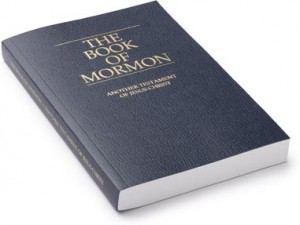
I read an interesting quote the other day, about how people in our church “need to know how to use the Book of Mormon to arouse mankind’s interest in studying it, and they need to show how it answers the great questions of the soul” (Ezra Benson).

That quote made me think: what are the great questions of the soul? I thought of several and I want to show you how the Book of Mormon answers them. Many of the questions I thought of are below, along with a specific passage in the Book of Mormon to help answer that question. There are many more questions and many more passages, but this is just a small glimpse into the book I love so much. I hope this helps some of you orient yourselves to the Book of Mormon, which has helped me answer my own soul’s greatest question.

Is there a god? (2 Nephi 2:14; Alma 30:43-44)

If so, how can I know? (Alma 22:16-18)

What is God like? (2 Nephi 26:23-24, 33, 27:23)

Does life have a purpose? (Alma 42)

Can I know that purpose? (Mormon 9:21, 27-28)

Is there life after death? (Alma 11:45, Alma 40)

I know that although this site is targeted to people who want to know more about what Mormons believe, it is frequently visited by members of our church. I encourage all of you who have read this far to leave a comment in this section. Tell about a great question of your soul, or simply ask it here. If you have found your answer in the Book of Mormon, put the scriptures that helped you. If you know of any scriptures to help anybody out, put them there. We can all gain something from this experience if you share your thoughts in the comments right now, and we need your contribution.

  • Share/Bookmark
2

Missionaries Knock On Your Door: What to Expect

by Thaddeus
March 2, 2010

You have probably already met a couple of LDS missionaries.  They’re the young men in dark suits and bicycle helmets, or the young ladies wearing skirts; they all have black name tags.  Maybe it was at your front door (or your back door, if you live in Wisconsin), or it could have been on the street, or a gas station, or at a friend’s house.  They waste no time searching for people to declare the gospel to.

Odds are, you didn’t hear their message.  Maybe you were in the middle of repairing your truck, or you were in a bad mood from a long day at the office, or you thought they were Jehovah’s Witnesses.  Could be you were curious of what they had to say, but didn’t want to let on.  Mostly, you didn’t know what to expect.

It’s understandable.  I hate being blindsided by unexpected surprises; not knowing what’s coming or how to control it.  Missionaries approaching you out of the blue is the epitome of being caught unaware.  My hope with this article is 1) to teach you what you can reasonably expect from these young men and women and 2) to give you some ideas of how to act the next time they arrive.

The Greeting

A missionary’s purpose is to share a vital message with you; it’s so important that they dedicate two years of their lives on their own dimes to come present it to you and your neighbors.  When they are new to being a missionary, they learn quickly how important trust is.  In order for their message to change lives, it must first be heard; for the message to be heard requires a person’s trust.  Establishing trust within 15 seconds at a complete stranger’s doorstep is a truly daunting feat!

From my own experience, I can testify that most missionaries are trustworthy.  They are typically honest, clean, kind, and very respectful of other’s beliefs.  It’s difficult to establish all of this in the first few moments of introduction, but they will try.  They will shake your hand,  introduce themselves as representatives of the LDS Church, give their names with a smile, and ask to be invited inside for a discussion.  The hope is that you will see or feel in them some spark of goodness that will persuade you to give them just one fair hearing.  Sometimes it happens, often it doesn’t.

Imagine that you are at this moment of decision: consider your options.  If you are like me, your gut will tell you to avoid the hassle, avoid the awkwardness of meeting new people and turn them away.  But, if you had a few minutes to weigh the consequences, your sense of adventure might say, “What the heck!  They’re no threat; I’ll listen to ‘em.  I can TiVo American Gladiators tonight.”

I hope that wherever you are, you will decide right now to invite them in next time.  Give them a chance.  If not, at least be civil.  A polite “No, thank you” is exactly as effective as a tirade of verbal abuse at keeping them from returning, so save your energy.

Let’s assume you invite them in.  Once inside, they won’t usually dive right into a religious discussion.  They will chat politely about your family, your job, hobbies, etc.  They will also be glad to answer questions you have about their backgrounds.  Ask them where they are from, what they plan to study in college, how long they have been missionaries, etc.  Again, they hope to establish a good relationship of trust with you.  This isn’t merely a gimmick; they really are interested in you because they hope eventually to become your friends.  If there’s one thing Mormon missionaries believe in (besides their message), it’s that everyone is a potential friend.  There are people I met on doorsteps as a missionary that I grew to love and I still keep in contact with.

Their Presentation

At some point, the missionaries will change the topic to religion and begin the presentation they arrived on their missions to give.  They may request to begin with a prayer in order to invite the Holy Spirit.  Because they are guests in your house, they will allow you to decide who should say the prayer and it’s just fine to pick one of them or to say it yourself.  Do whatever you feel most comfortable with.

Many people assume that the message they have to share will basically mirror a typical sermon from their local pastor, about Jesus suffering on the cross and how we can be saved if we believe in Him.  This is central to our beliefs and essential to understand; it will take a prominent role in the lesson, but the missionaries will go deeper into what makes the Church of Jesus Christ of Latter-day Saints unique.  The message is not only that Jesus saves, but that Jesus speaks.

The lesson is known as the Restoration of the Gospel.  Just as this is the first thing the missionaries teach, it was the first thing we published on this website two years ago.  Go read it! With more familiarity on the topic beforehand, you will have better comments and questions.  You’ll also be better able to listen to the whispering from the Holy Spirit during the meeting.

During the presentation, the missionaries will take turns discussing each topic.  It may sound somewhat rehearsed (because they do rehearse it; the rehearsals help them cover the essential points within a reasonable time-frame; their visit will probably last no longer than 20 minutes unless you invite them to stay longer), but I hope you will recognize that the missionaries really believe it.  They are committed to it.  You can also help them out of rehearsal mode by showing interest and asking them questions along the way.

Future Visits

The missionaries will end their talk by asking you to read from the Book of Mormon, ponder over the message, and pray to God about it.  They really don’t expect you to believe them at their word (you are still essentially strangers after all), but they have full confidence that Heavenly Father will confirm the truth through the Holy Ghost.  They will want to follow-up and see how He answers you, so they will request a return appointment, usually within a week.

My advice is to take their commitments seriously: read, ponder and pray all week.  Asking God if their message is true can do no harm, and it will do plenty of good.  Also, get their phone number so you can contact them if you need to reschedule or if you have questions or concerns that just can’t wait.

They have several more lessons, so they hope you will keep inviting them back after each visit.  Each subsequent lesson will resemble this first one except a bit longer (maybe up to an hour), they might bring along someone from the local congregation, and every visit you’ll move steadily from complete strangers to solid friends.  In fact, I’d wager it won’t be long before you’re asking them to come for dinner.

I’d like to open the comment section to stories of when the Elders or Sisters came to your house for the first time.  What was the experience like?  What did you learn from it?  Have they been back since?  If you don’t have a story to share, invite the missionaries over by clicking here!

  • Share/Bookmark
1

Why do bad things happen to good people?

by Ben
February 22, 2010

hurricane

We have all known people who have had bad things happen to them, or perhaps even wondered why terrible things happen to us–sudden deaths, incurable diseases, and natural disasters that destroy homes and prized possessions.  These types of events cause us to question from time to time, “why do bad things happen to good people?”  I don’t have a perfect answer for you, but what I do know is that trials and tribulation cause us to grow in ways that we might not comprehend or realize.  I can personally say that the most character-shaping times of my life have been the times that I have had to struggle the most.  Granted, I didn’t see this until the tribulation had passed, but I wouldn’t trade those hard times for anything now.  I am thankful for them.

In the most recent General Conference of The Church of Jesus Christ of Latter-Day Saints, Elder L. Whitney Clayton, in his talk “That Your Burdens May Be Light”, shared 3 points that have helped me to understand why bad things happen to good people.

“In a general sense, our burdens come from three sources. Some burdens are the natural product of the conditions of the world in which we live. Illness, physical disability, hurricanes, and earthquakes come from time to time through no fault of our own. We can prepare for these risks and sometimes we can predict them, but in the natural pattern of life we will all confront some of these challenges.

Other burdens are imposed on us by the misconduct of others. Abuse and addictions can make home anything but a heaven on earth for innocent family members. Sin, incorrect traditions, repression, and crime scatter burdened victims along the pathways of life. Even less-serious misdeeds such as gossip and unkindness can cause others genuine suffering.

Our own mistakes and shortcomings produce many of our problems and can place heavy burdens on our own shoulders. The most onerous burden we impose upon ourselves is the burden of sin. We have all known the remorse and pain which inevitably follow our failure to keep the commandments.

No matter the burdens we face in life as a consequence of natural conditions, the misconduct of others, or our own mistakes and shortcomings, we are all children of a loving Heavenly Father, who sent us to earth as part of His eternal plan for our growth and progress. Our unique individual experiences can help us prepare to return to Him. The adversity and afflictions that are ours, however difficult to bear, last, from heaven’s perspective, for “but a small moment; and then, if [we] endure it well, God shall exalt [us] on high” (D&C 121:7-8). We must do everything we can to bear our burdens “well” for however long our “small moment” carrying them lasts.”

This helped me to understand why bad things happen to us sometimes.  I hope that when something happens to you, you will remember what Elder Clayton said and realize that maybe this hard time is actually for your benefit; also, it is not an indication of God’s lack of love, remember that Christ suffered more than anyone else, and He is God’s most beloved Son.

  • Share/Bookmark
6

Mormon Fellowship – Visiting and Home Teaching

by Jan
February 12, 2010

When my family and I moved to south Texas three years ago, we joined a student Christian group for married couples.  It was a great little diversion once a month–to get out, talk with others who are devoted to religion and Christ, and to learn about what they believe and (we hoped) let them see that Mormons can be normal people.

One term that came up several times in conversation with them was “fellowship”, which I came to understand as a sort of social network  of other Christians (like that group); to lend support, help each other and just provide friendship.   I thought at the time, what a great idea, but also, how sad that “fellowship” isn’t built into their churches already.  I’m not claiming that Mormons are perfect at fellowshipping, because there are plenty of former Mormons who will say we really stink at it, but it is built in to the Church’s organization. And although there are some places in the church that don’t do it well, I’ve been in many places that do it perfectly, and it is a blessing to everyone involved.

Home_Teaching

The Visiting Teaching and Home Teaching programs are two complementary programs within the Church that provide “fellowship” from two different groups.  Home Teachers are men, anywhere from age 14-110 who are paired up into a companionship (like our missionary program) and then they are assigned usually three or four families within their same ward (congregation) to visit monthly.  While visiting them, they teach a spiritual thought from the First Presidency (the Prophet and his counselors), get to know the family generally, and assess any needs or concerns that they have.  They are the first point of contact for that family if there is a problem.  It may sound like having assigned friends, but it is a lot more substantial than that.  Home Teachers are assigned by the leaders of the Priesthood quorums by inspiration and after serious prayer.  It’s amazing to see some of the home teaching miracles that happen because just the right person visited at just the right time.  While the first visit or two may be a little awkward, especially if you are new to a ward (whether recently baptized, or recently moved), Home Teachers quickly become comfortable friends.  Growing up, our family had one home teacher for years.  Lanny.  He was also our neighbor across the ditch bank, and he took us all out to Chuck-a-Rama every Christmas.  He got to know us really well and we got to know him really well.  He wasn’t just an assigned friend, he really cared whether we were okay and was happy to help.

Visiting Teaching is about the same thing, only it is women, and they just visit women–not their entire families.  Every woman in the Church who is over 18 years old is a member of Visiting Teachingthe Relief Society, and are assigned visiting teachers.  These relationships are some of the dearest in my life.  Again, at the beginning it may just feel like assigned friends, but there is a real power in having people visit you in your own home, who really care about you.  I look forward to their visits every month.  They are also assigned by the Relief Society President after receiving inspiration about how to pair up  the companions and who to assign them to.  I think this is an especially inspired program because of the inherent social needs that women have.  We need to talk!  We need friends!  If we are new to an area, or to the Church, we need someone to sit by at our meetings.  We need someone to call if we are stuck sick in bed.  And visiting teaching gives a woman 6 possible friends automatically: their companion (who are often the dearest friends of all), the two visiting teachers who come to them, and the three ladies that they visit.  And because it is a church-wide system, there doesn’t need to be awkwardness, or worry that we are stepping on someone’s toes.  It’s just a lovely way to “fellowship”.

  • Share/Bookmark
1

Was Joseph Smith a Prophet?

by Ben
February 4, 2010

kapp-first-vision_MD

Joseph Smith is a very divisive figure in American religion–to found a church is one thing, but to have God and Jesus Christ appear to you is quite another.  Joseph Smith has been maligned time and time again, but his story, his life, and the events surrounding God calling him to be a prophet are not absurd, rather it is all congruent with how God has called a prophet and spoken to his children in all ages of the world.

The crux of any claim or statement that attempts to malign or discredit a Mormon’s belief, or The Church of Jesus Christ of Latter-Day Saints in general, originates in the validity of Joseph Smith’s testimony of The Father and The Son coming to visit him (Please see Joseph Smith History 1:13-20).  Either They did in fact visit him, or They didn’t.   It is not my wish to convince you that Joseph Smith was God’s prophet, rather it is my hope that you will see that Joseph Smith meets the qualifications of a prophet as found in the Bible.  I urge you to ponder these points as you read them, and please do so with an open mind and heart.

ChristOrdainingTheApostles-komprimerad-stor

  1. According to the Bible, God has always led His church and people through a prophet.  “Surely the Lord GOD will do nothing, but he revealeth his secret unto his servants the prophets.” (Amos 3:7, emphasis added).  This doctrine of governing the affairs of the church through a prophet was reaffirmed when Christ established the new covenant and built His church upon prophets and apostles, Jesus, Himself, being the chief cornerstone (Ephesians 2:19-22).  This is shown clearly by Christ giving Peter the keys of the kingdom, or the right to direct the affairs of Christ’s church, when Christ himself was not on the earth (Matthew 16:18-19).  Joseph Smith received instructions from Jesus Christ on how to govern His church, and these were compiled into what is now known as the Doctrine and Covenants.
  2. Prophets have always had direct authority from God to act in His name.  They did not just “feel” that they were called of God, they were actually given this right by either God Himself, or by another who could trace his authority back to God.  As clear example of this, before Aaron could officiate in the ordinances of the tabernacle, he was anointed and given the authority to do so by Moses who was a holder of this priesthood.  This same pattern of conferring the priesthood is still employed today in Jesus Christ’s church.  Furthermore,  this practice is in accordance with what Paul teaches the Hebrews, “No man taketh this honor unto himself, but he that is called of God, as was Aaron” (Hebrew 5:4).  John the Baptist who held the right to administer baptism for the remission of sins visited Joseph Smith in May 1829 and gave this authority to Joseph Smith (D&C 13:1 and section heading); furthermore, Peter, James, and John, Christ’s head apostles, came to Joseph and gave to him the authority to govern Christ’s church shortly after John the Baptist visited Joseph (D&C 27:7-8, 12).
  3. Prophets have always written down their revelations to be handed down to the future generations.  Their writings, however, weren’t to be intended as the end of all revelation (and no where in the Bible does it say there will be no more revelation).  Thus, we now have the Bible–it is the compilation of some 4000 years of God’s revelations and teachings.  Once again, this has been the pattern and will continue to the pattern.  Through Joseph Smith came The Book of Mormon, Doctrine and Covenants, and Pearl of Great Price.  These are physical evidences that God not only spoke to those of his children in Israel and the regions round about, but to others on a different continent and continues to speak to us today through prophets.
  4. Peter himself prophesied that before Christ would come again, all things would be restored (Acts 3:19-21).  Paul taught of a dispensation of the fulness of times when all things would come together (Ephesians 1:10) and he also taught that before the second coming of Jesus Christ there would come a falling away, or a turning from the truth (2 Thessalonians 2:3; 2 Timothy 4:3-4).  Furthermore, there is evidence from the New Testament that this falling away was already beginning to happen (Acts 20:29-31; 1 Corinthians 11:18; 2 Timothy 1:15; 1 John 2:18-19).  This restoration of all things began with Joseph Smith being visited by The Father and The Son.
  5. God has always had only one church that He personally endorses.  Paul taught this to the Ephesians (Ephesians 4:5) and it is clear that Jesus Christ (Jehovah) was leading only one house of Israel.  As another example, if Jesus Christ is the head of multiple churches, then why was Paul not content with letting the wolves enter the flock and lead them astray?  Why was he so concerned that the doctrine is being corrupted and changed by others?  This further underscores that Christ leads only one church.  Yes, there are many good churches who do many good things in Christ’s name and sincerely strive to do what Christ taught-they have many pieces, but not the whole pie.  Through Joseph Smith, Christ declared, ”And also those to whom these commandments were given, might have power to lay the foundation of this church, and to bring it forth out of obscurity and out of darkness, the only true and living church upon the face of the whole earth, with which I, the Lord, am well pleased, speaking unto the church collectively and not individually–” (D&C 1:30, italics added).
  6. A prophet of God does not doubt who God is–His character and attributes, because he knows God personally.  This pattern was established with Adam and has been reaffirmed over and over again down through history.  Joseph Smith and his prophetic calling is not out of context, rather it fits perfectly with the pattern that has long been established for God’s calling of a prophet.  He did not doubt if they came or what they looked like, he knew who it was that came to him in the spring of 1820.  He firmly declared the true character of God and His Son, Jesus Christ from that spring day until he gave his life.
  7. The last point is that a prophet giving his life for the Gospel of Jesus Christ is something that has frequently occurred throughout the course of time.  Joseph Smith was true to his testimony–of the restoration of the fullness of the Gospel of Jesus Christ–to his death.   There will always be those that scoff and point the finger of scorn towards Joseph Smith.  There will always be those who try to lay subtle traps and search for supposed loop holes in the teachings and doctrine that Jesus Christ gave to the world through him.  But just as the prophets of old, Joseph Smith’s blood was shed as a final testimony of the validity of Jesus Christ restoring His church and authority once more.  How can a man suffer what he suffered–beatings, being tarred and feathered, whippings, persecution wherever he went, being arrested multiple times and being incarcerated in the worst of circumstances, being rejected and maligned by even some of his closest associates, seeing his fellow disciples be beaten, driven from their homes multiple times, and suffering all manner of cruelty, and then to finally lay down his life, and all the time be living a lie? (Please see Elder Jeffrey Holland’s most recent General Conference address, text and on YouTube.)

I wish to emphasize that it cannot be proven empirically by me or any other human being that Joseph Smith was a prophet of God.  There will always be those who want this type of proof, but God does not work this way.  He teaches his children truth when they are willing to hear it and when they are willing to believe, and act accordingly.  God does not confirm his words through complex philosophical methods, rather through the undeniable feelings of the Holy Ghost, a burning in the heart so to speak.  In this way, I know that Joseph Smith is a prophet of God.  I cannot deny those feelings–I know it and I know that God knows I know.  You, too, are free to embrace the restored Gospel of Jesus Christ and you are free to accept Joseph Smith as one of God’s prophets.  This will take belief and action, pondering and sincere prayer, but the answers will come.  Please feel free to contact me through the question box by leaving your e-mail address, or by contacting the missionaries of our church through the link on the side bar of our website.

The Prophet Joseph Smith- Alvin Gittins

  • Share/Bookmark
0