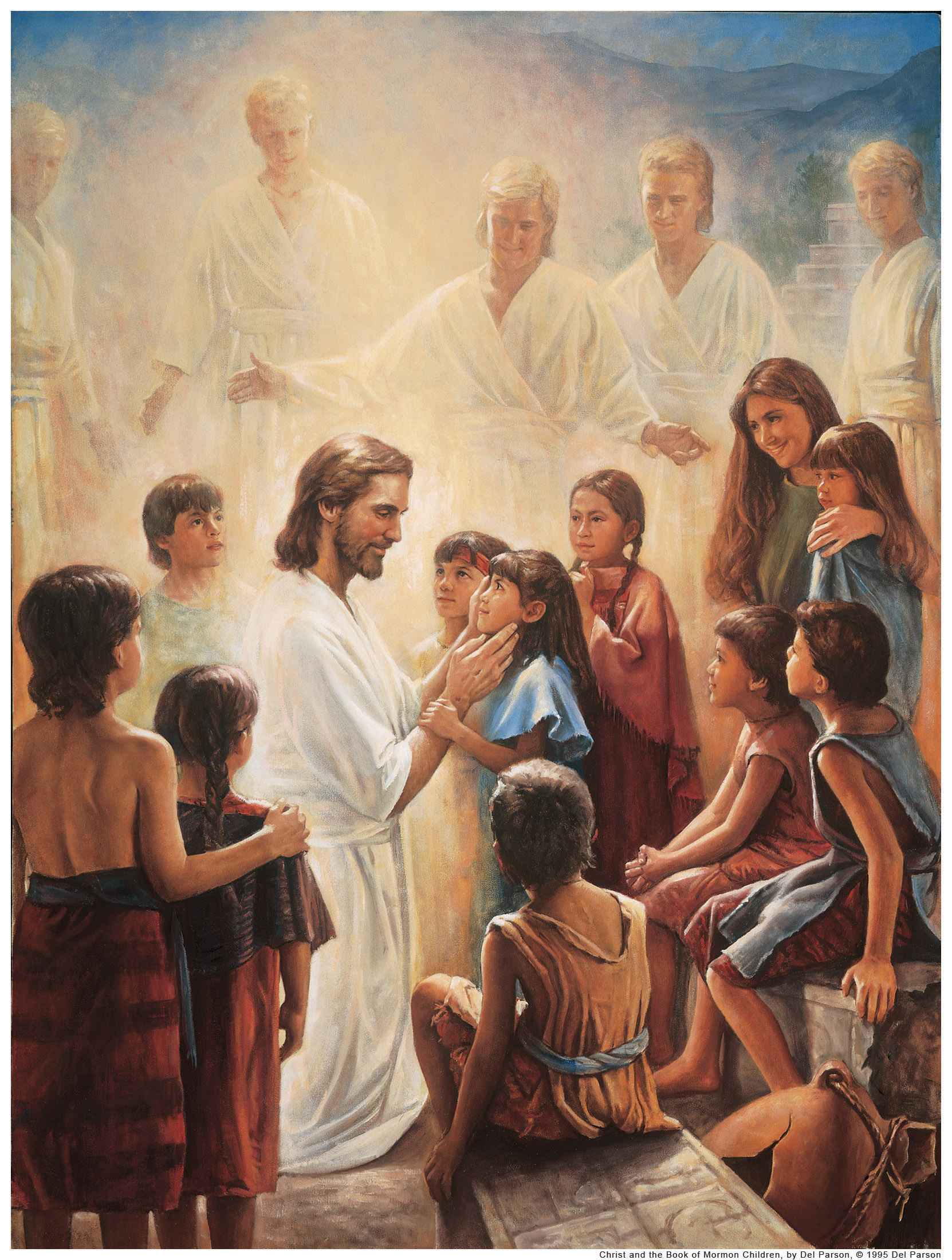
Livro de Mórmon cristãos
por BretAs pessoas nefitas do Livro de Mórmon que habitavam as Américas entre 600 aC e 400 dC eram, na maioria dos pontos da história, um povo justo. Ou seja, eles tinham a igreja de Cristo estabeleceu entre eles em que eles ensinaram o evangelho de Jesus Cristo. Eles viviam pela lei de Moisés e guardado os mandamentos dado a eles pelos profetas de Deus. Em tempos de maldade, eles foram humilhados pelo Senhor através espada nem fome. Em tempos de justiça, eles prosperaram e tiveram força para se proteger de seus inimigos. Isso estava de acordo com as promessas feitas pelo Senhor. "E [o Senhor] tem dito que: Na medida em que guardareis meus mandamentos, prosperarás na terra, mas na medida em que não vos guardardes os meus mandamentos, sereis cortados da minha presença" ( 2 Néfi 01:20 ).
Houve muitas profecias e escrituras que os nefitas tinham e todos eles apontam para um Jesus Cristo que ainda não havia chegado. Um profeta chamado Néfi, que viveu por volta de 600 aC, escreveu: "E falamos de Cristo, regozijamo-nos em Cristo, pregamos a Cristo, profetizamos de Cristo e escrevemos de acordo com nossas profecias, para que nossos filhos saibam em que fonte que pode procurar a remissão de seus pecados "( 2 Néfi 25:26 ). Eles estavam olhando para a frente em direção a Cristo muito da mesma forma que olhamos para trás, sua vida aqui na terra e olhar para a frente a sua segunda vinda. Outros profetas, como Benjamin , Abinádi , Alma e muitos outros ensinou as pessoas a respeito de Cristo, dando seus testemunhos também. Todos eles sabiam de Cristo e sabia que Ele viria para resgatar Seu povo.
De todas as histórias, lições e profecias no Livro de Mórmon, nenhum é tão poderoso, nem de importância tão grande como quando o próprio Jesus Cristo visitou as pessoas aqui no continente americano. Apenas cinco anos que precedem o Seu nascimento, um profeta foi enviado por entre as pessoas nomeadas Samuel. Suas profecias foram excepcionalmente simples e precisa.
E eis que ele lhes disse: Eis que vos dou um sinal, por mais cinco anos vir, e eis que então virá o Filho de Deus para resgatar todos aqueles que crerem em seu nome. E eis que esta vai vos dou um sinal no momento da sua vinda, pois eis que não haverá grandes luzes no céu, de modo que na noite anterior ele vem não haverá trevas, de modo que aparecerá a homem como se fosse dia. Portanto, haverá um dia e uma noite e um dia ... e deve ser a noite antes de ele nascer. E eis que é uma nova estrela aparecerá, uma que nunca vos vimos. E eis que isso não é tudo, deve haver muitos sinais e maravilhas no céu. Helamã 14:2-6
Profecias e sinais da morte de Cristo também foram dadas.
Mas eis que, como eu disse-vos sobre um outro sinal, um sinal de sua morte, eis que ... o sol se escurecerá ... e também a lua e as estrelas, e não haverá luz sobre a face desta terra, mesmo a partir do tempo que ele deverá sofrer a morte ... ao tempo que ressuscitará dos mortos. Sim, no momento em que ele dará o espírito haverá trovões e relâmpagos para o espaço de muitas horas, e a terra tremer e tremer ... e haverá muitos lugares que agora são chamados de vales que passam a ser montanhas ... E muitas rodovias deve ser quebrado, e muitas cidades devem tornar-se desolado. E muitas sepulturas serão abertas ... e muitos santos aparecerá a muitos. Helamã 14:20-25
Samuel explicou ainda a missão de Cristo na Terra ea importância da sua vinda. A maioria das pessoas não acreditava nas palavras de Samuel, mas isso não os impediu de vir a passar. A noite ficou iluminada cinco anos depois e uma nova estrela foi vista. Trinta e três anos depois, terremotos e tempestades nivelado cidades e escuridão prevaleceu por três dias. Para os sobreviventes, no entanto, o próprio Cristo apareceu.
Os capítulos 11 a 28 de 3 Néfi conter Suas palavras e obras entre os povos. Ele permitiu que eles venham a Ele para ser primeira-mão testemunhas da realidade de Sua ressurreição. Ele escolheu 12 homens para serem professores e líderes, dando-lhes a autoridade e os mandamentos relativos ao batismo. Então, Ele deu a todas as pessoas as palavras que Ele deu aos judeus no Sermão da Montanha (cf. Mateus 5 e 3 Néfi 12 ).
Ao longo dos próximos dias, ele continuou a ensinar-lhes as escrituras, curar os doentes , dar-lhes o sacramento , e rezar com eles. Gostaria de encorajar todos a ler estas palavras, porque são esses exemplos tocantes do amor de Cristo para o Seu povo. O efeito que esta visita teve sobre o povo não foi esquecido. Por centenas de anos, as pessoas foram diligentes em seguir as palavras que Jesus havia dado a eles e não foi até que eles tivessem se afastou essas palavras que faliram, assim como previu muitas vezes antes.
O Livro de Mórmon é um livro notável e contém muitas lições que se aplicam em nossas vidas. Ela também mostra a verdade sublime que Jesus é o Cristo , e que Ele comunicou-se a Seu povo aqui antigamente. Eles sabiam que Ele era o Salvador da morte e do pecado e atendi Suas palavras e foram abençoados. O mesmo vale para nós hoje também. Por seu testemunho eo testemunho do Espírito Santo, podemos saber as mesmas verdades.


Obrigado por dizer de forma simples e bem como Cristo-cêntrica do Livro de Mórmon é.
Eu gostaria de falar com todos os Mórmons e todos os que estão considerando moromonism para se certificar de que há um entendimento. O Senhor Deus é o único Deus ... período. Há apenas um céu, e apenas uma maneira de chegar lá, e que é através da salvação de Jesus Cristo. Você deve pedir-lhe em seu coração e em sua vida para ser o seu Salvador. Só depois de aceitá-Lo você vai entender o plano que Ele tem para sua vida. Não importa que religião você é. Batista, Batista do Sul, Pentecostal, Presbiteriana, etc Deus não se importa com a religião, Ele se preocupa com seu coração e você sabe que Ele conhece o seu coração. Não há como ir para o inferno e obter os seus pecados purificados e sendo permitido no céu. Você não tem que acreditar em quaisquer outros ensinamentos que os ensinamentos do Senhor. Eu amo todos vocês e oro para que o Senhor te enche vontade Seu Espírito Santo e atrai perto Dele! Que viria a conhecê-Lo ea relação pessoal que Ele está esperando para ter com você!
Bem, obrigado para sua opinião, Maranda. Parece que você já ouviu as nossas crenças de outras pessoas além de mórmons. Por que você não fuçar um pouco no site e ver o que nós realmente acreditamos?
Ei Tadeu - este é Brandon. Espero que a caminhada está indo bem.
Eu tenho algumas perguntas a respeito dos nefitas e arqueologia. Eu não estou tentando ser apenas exigente ou apontar erros, mas quão grande era este grupo de pessoas? Onde eles estavam geograficamente nas Américas? Encontraram registro deles?
Um dos nefitas enterrado o livro de ouro que Smith descobriu ... onde foi isso? Talvez eu tenha errado a história lá.
Enfim ... obrigado pelo seu tempo ... apenas algumas perguntas que eu tinha.
Brandon, bom de ouvir de você! Eu realmente não tenho sido muito desde caminhadas Goblin Valley, mas com o semestre quase acabou, espero mudar isso em breve.
Obrigado por fazer estas perguntas importantes. Muita pesquisa foi em terras do Livro de Mórmon e uma quantidade surpreendente de comprobatória evidência tornou-se, mas a maioria dos arqueólogos e antropólogos dizem que nós apenas arranhamos a superfície.
A visão que prevalece entre os pesquisadores de hoje é que o Livro de Mórmon no Novo Mundo coberto muito de geografia limitada de algumas centenas de quilômetros, e que a família de Leí provavelmente integrada com as culturas já estão aqui. Em apenas um par de navio cheio de talvez dezenas de pessoas ballooned em duas grandes civilizações gerações de Leí: os nefitas e lamanitas. Mais tarde no livro as pessoas são contados em milhões.
Há ainda alguma controvérsia sobre onde exatamente os nefitas e lamanitas viveu, mas um crescente consenso entre os estudiosos o coloca na Mesoamérica (sul do México e Guatemala). As partidas de terra que descritos no Livro de Mórmon, e civilizações com milhões de adeptos surgiu lá. A civilização nefita é normalmente combinada com pré-clássico tardio Maias e os jareditas (um anterior Livro de Mórmon grupo) é identificado com os olmecas.
Brandon, já que você é na Guatemala, você está na invejável posição de olhar para algumas dessas alegações a si mesmo. Eu adoraria continuar a discutir este assunto com você.
Acredita-se que Morôni, filho de Mórmon (o cara que praticamente compilado as placas de ouro) teve as placas em uma viagem fora da América Central até a costa de Nova York, onde ele enterrou no monte de Joseph Smith para encontrar mais tarde. Claro, como uma série fortuita de acontecimentos só poderia ser atribuída como um milagre de Deus, mas assim é a existência do livro muito.
Moroni sabia que, tendo o livro no valor nominal seria difícil para algumas pessoas. Em seu último capítulo, ele propõe que ir para a Autoridade, Ultimate Final e perguntar-lhe se é tudo verdade:
"Eis que eu vos exorto a que, quando lerdes estas coisas, se é sabedoria de Deus que vos deve lê-los, a vos lembrardes de quão misericordioso o Senhor foi para os filhos dos homens, a partir da criação de Adão até mesmo para baixo até o momento em que receberdes estas coisas, e ponderá-la em seus corações.
"E quando receberdes estas coisas, eu vos exorto a que pediria a Deus, o Pai Eterno, em nome de Cristo, se estas coisas não são verdadeiras, e se perguntardes com um coração sincero e com real intenção, ter fé em Cristo, ele se manifestará a verdade a ti, pelo poder do Espírito Santo.
"E pelo poder do Espírito Santo podeis saber a verdade de todas as coisas". Moroni 10:3-5
Eu sei que o Livro de Mórmon é verdadeiro, porque o meu Pai Celestial respondeu à minha oração. A arqueologia tem servido para fazer backup e fortalecer este testemunho original, mas não é a autoridade final quando se trata de verdade religiosa. Você também torná-lo um assunto de oração?
Ei Tadeu -
Obrigado por abordar essas questões. Estou na Guatemala, mas o que eu encontrei pesquisando a história maia não seria encorajador para você. Mas você trouxe um ponto diferente que eu gostaria de discutir. Não importa o que a arqueologia conseguiu desenterrar (literalmente) não afetaria a sua crença na veracidade do Livro de Mórmon, então eu não vejo nenhuma necessidade de discutir mais o assunto.
Eu tenho um tempo difícil conciliar os seguintes versos de 2 Pedro, capítulo 1:
"1Simon Pedro, servo e apóstolo de Jesus Cristo, aos que obtiveram fé igualmente preciosa conosco através da justiça de Deus e nosso Salvador Jesus Cristo:
2Grace e paz vos sejam multiplicadas, pelo conhecimento de Deus e de Jesus nosso Senhor, 3According como o seu divino poder nos deu todas as coisas que dizem respeito à vida e piedade, pelo conhecimento daquele que nos chamou para a glória e virtude : 4Whereby nos têm sido doadas superior a grandes e preciosas promessas para que por elas vos torneis participantes da natureza divina, havendo escapado da corrupção que há no mundo das paixões "
Peter escreveu que um longo tempo antes de o Livro de Mórmon foi traduzido. E Deus diz através de Pedro que na Bíblia temos "De acordo como o seu divino poder nos deu todas as coisas que dizem respeito à vida e piedade".
Ele diz que nos foi dado "todas as coisas que dizem respeito à vida e piedade". Ele diz então que nos foram dadas essas coisas ", pelo conhecimento daquele que nos chamou para a glória e virtude: 4Whereby nos têm sido doadas superior a grandes e preciosas promessas para que por elas vos torneis participantes da natureza divina, havendo escapado da corrupção que há no mundo das paixões "
Por que eu preciso o Livro de Mórmon para viver uma vida virtuosa, glorioso? Esta passagem diz-me que me foi dada "superior a grandes e preciosas promessas", e "todas as coisas que dizem respeito à vida e à piedade" e que por essas coisas que eu poderia ser um participante da natureza divina ", havendo escapado da corrupção que é no mundo através da luxúria ".
Por que eu preciso mais alguma coisa? Claro que há outras coisas boas e verdadeiras, que não estão na Bíblia, mas este versículo no contexto diz-me que Jesus, por minha fé nEle, me deu todas as coisas necessárias para um piedoso, santo, vida virtuosa, maravilhosa livre de a corrupção que está no mundo. Por que Deus voltar e adicionar algo mais tarde, quando Ele já disse que o que Ele nos deu o suficiente?
Eu vou admitir, eu rezava o seguinte: "Eu vos exorto a que pediria a Deus, o Pai Eterno, em nome de Cristo, se estas coisas não são verdadeiras, e se perguntardes com um coração sincero e com real intenção , tendo fé em Cristo, ele se manifestará a verdade a ti, pelo poder do Ghost.And Santo pelo poder do Espírito Santo podeis saber a verdade de todas as coisas. "
Pedi para que "com um coração sincero e com real intenção, tendo fé em Cristo". E Deus me levou para o versículo em 2 Pedro 1 e senti uma queimação muito forte no meu peito que as coisas em Moroni e do resto do Livro de Mórmon não eram de fato verdade e que o Deus da Bíblia é diferente do que o deus do Livro de Mórmon.
Orei isso, Tadeu, e Deus se manifestou a mim que o que você acha que é verdade é realmente falsa e não de Deus.
Como você concilia essas coisas?
Brandon, se essa é a resposta que Deus lhe deu, então você deve segui-lo.
Tenho razões para suspeitar que não foi a sua resposta, mas isso é um assunto entre você e Deus. Espero que um cristão tão maduro quanto você pode dizer a diferença entre o Espírito Santo e seus próprios desejos preconcebidas.
Eu ofereço a algumas perguntas para meditar, em particular com o seu Pai Celestial:
1 - Como a maior parte do Livro de Mórmon que eu ler?
2 - Será que eu dou-lhe um julgamento justo, ou foi rejeitado antes que eu peguei?
3 - Foi com real intenção Se Deus tivesse me dito que era verdade, eu pretendo adotá-lo ou eu teria rejeitado isso de qualquer maneira?
4 - Não acredito que "pelo poder do Espírito Santo [I] pode saber a verdade de todas as coisas?"
Essa última pergunta é fundamental. Se o Livro de Mórmon ensina nada, deixá-lo ensinar-lhe que você pode pedir a Deus e ele se manifestará a verdade através do Espírito Santo.
Você já tem um testemunho de que, desde que você disse que fez torná-lo manifesto para você. Por favor leia também um artigo que diz respeito a este tópico chamado " Vós não recebeis testemunho senão ... "
Brandon,
Vou tentar responder sua pergunta sobre "como conciliar" que a escritura em 2 Pedro.
Você citou Peter: "De acordo como o seu divino poder nos deu todas as coisas que dizem respeito à vida e piedade", e, em seguida, salientou que Pedro escreveu que bem antes de o Livro de Mórmon foi traduzido. Seu argumento-me corrigir se eu estiver errado, é que a passagem significa que tudo o que aconteceu após a declaração de Pedro é de alguma forma menos necessário?
Eu não tenho de lembrar que Pedro também escreveu que antes do Novo Testamento foi adicionado a Bíblia, ou sequer tinham sido totalmente escrita. No mínimo, sua linha de pensamento deve levá-lo a concluir que as epístolas de João, o Evangelho de João, o Livro de Apocalipse, e talvez Jude e Timóteo 2 são desnecessários.
Cremos que Deus deu a seus filhos todas as coisas que dizem respeito à vida e piedade, se eles eram o seguinte Hebreus Moisés no deserto, os filhos de Israel no tempo de Elias ou Ezra, ou as pessoas no tempo de Pedro eo apóstolos. A expiação de Jesus Cristo é infinito, e ninguém está condenado pelo simples facto de não ter o suficiente da Bíblia. Mas quando novas escrituras, saiu para essas pessoas, eles aceitaram de braços abertos. Por quê? Simplesmente porque eles foram as palavras de Deus, e quando Deus fala, você escuta.
Você está dizendo que se você soubesse o Livro de Mórmon continha as palavras de Deus, você ainda não seria particularmente interessados em lê-los, porque Deus lhe deu é suficiente?
Dave e Tadeu - obrigado por seus comentários.
Aqui está o ponto. Se Deus fala hoje, eu vou escutar. I know Him because He revealed Himself. And I love Him. I am indwelt with His Holy Spirit who leads me into the truth. This is not arrogance. Its faith. But everything I 'hear' that claims to be the 'word of God' I test against the Bible, because it is sufficient.
The Book of Mormon contradicts what the entire Bible teaches about who God is and what He does. The gospel is that we are saved by grace through faith and by nothing that we do except place our faith in Christ alone. Not our behavior. Not our efforts. Not our works. Not our church.
That's grace. We don't deserve it. That's what makes it grace. God's tells us as He told Paul that His grace is sufficient for us. His grace is all that is needed. Not grace plus obeying a set of rules – no matter how good those rules are.
Dallin H. Oaks says,
“We are not saved in our sins, as by being unconditionally saved through confessing Christ and then, inevitably, committing sins in our remaining lives (see Alma 11:36–37). We are saved from our sins (see Hel. 5:10) by a weekly renewal of our repentance and cleansing through the grace of God and His blessed plan of salvation (see 3 Ne. 9:20–22).”
If the grace of Christ is only sufficient for you after you have denied yourself ALL ungodliness, then my question is – have you? Have you denied yourself all ungodliness? If not, then his grace is NOT sufficient for you (according to the Book of Mormon). If you are only saved by grace AFTER ALL you can do, then the question is – have you done all you can? Even in light of 1 Cor 10:13? If doing all you can means “keeping the commandments” does he mean ALL the commandments?
That was a question my friend Chris, who posted on my blog, brought up.
To answer your question – I am satisfied with the Bible because God tells me, though the Bible, that the Bible is enough. It's not about my being satisfied but about God telling us that what He had given us in the Bible was enough – especially when that new 'revelation' is contrary to what had already been taught. And God knew the Bible would contain what it contains when He inspired Peter. If someone came to you and asked you to read the Koran or pick your religious book, and pray and ask if it was correct, would you do it?
Here's a challenge for both of you: Set the Book of Mormon down for a month and only study the Bible. You believe the Bible is Scripture so it should not be a stretch for you. We're told that the Bible is living and active, able to divide the deepest things within us. Ask God to teach you if there is any discrepancy between the Bible and the Book of Mormon and see what He does. Ask Him to teach you, to reveal to you the truth, by the power of the Holy Spirit.
One last thing. Thaddeus said, “If the Book of Mormon teaches you nothing else, let it teach you that you can ask God and he will manifest the truth through the Holy Ghost.”
The Bible already tells me that. I don't need the Book of Mormon to teach me 'truth' if that 'truth' contradicts what the One True God already taught me in the Bible.
Brandon,
Regardless of whether you believe that the Book of Mormon is the word of God (which is the real issue here, I think), I am at least glad that you are at the point where you can say, “If God speaks today, I will listen.” Bravo.
I've actually been taking your challenge for a while now. Though I try to draw from all scripture when writing these posts and making lessons and things, my personal study has been almost exclusively in the Old Testament lately. I have to say: I have always found them to be just as much in harmony as the bible is with itself. I know you disagree, but then you and I clearly have different interpretations of the same passages. (Also, wouldn't any glaring inconsistencies between the Book of Mormon and the Bible be more apparent when reading both anyway?)
As for grace and works: I think that the Evangelical Christian world largely misunderstands what we believe. Let's get this straight: there is nothing we can do to “deserve” our salvation. No true Christians believe they can work their way to heaven, and Mormons are no exception.
You've likely been reading up on what we believe by people who are not us. If you really want to know what we believe about grace, I would highly recommend the following:
Megan's article, from our own site (and the excellent articles linked on that site)
This speech , given at BYU by Dr. Stephen Robinson
This article
This article
I'm probably overlooking some good ones. Thaddeus, any other recommendations?
Dave,
Thanks again for your comments.
“…my personal study has been almost exclusively in the Old Testament lately.I have to say: I have always found them to be just as much in harmony as the bible is with itself. I know you disagree, but then you and I clearly have different interpretations of the same passages. (Also, wouldn't any glaring inconsistencies between the Book of Mormon and the Bible be more apparent when reading both anyway?)”
You are dead on in that we interpret passages differently.
And yes, reading both to look for inconsistencies is what I assumed you would do. I meant more to read the Bible and see inconsistencies from what you already knew of the Book of Mormon. I wasn't clear there. The real issue is that of eisegesis. (as opposed to exegesis) That is when someone reads a meaning into the text as opposed to getting your meaning from the text. It is very easy to approach the Bible with a set of beliefs, and then when reading it, find support there for your particular beliefs. Look at the Jehovah's Witnesses. They believe in the Bible, but they come to vastly different conclusions than either of us. That is because they read the Bible to find support for their beliefs. You can make the Bible support anything you want by doing that. I was hoping that by reading the Bible alone, you might see it for what it is, instead of through Mormon lenses. Basically, I know several Mormons who have read through the Bible (NT, too) and when they read the Bible for itself, began to have serious questions regarding the major tenants of the Mormon faith. I hope that makes sense.
“Let's get this straight: there is nothing we can do to “deserve” our salvation. No true Christians believe they can work their way to heaven, and Mormons are no exception.
You've likely been reading up on what we believe by people who are not us.”
I got that quote from here by Dallin Oaks: http://www.lds.org/conference/talk/display/0,5232,23-1-26-23,00.html
The context of that quote follows:
“Some Christians accuse Latter-day Saints who give this answer of denying the grace of God through claiming they can earn their own salvation. We answer this accusation with the words of two Book of Mormon prophets. Nephi taught, “For we labor diligently . . . to persuade our children . . . to believe in Christ, and to be reconciled to God; for we know that it is by grace that we are saved, after all we can do” (2 Ne. 25:23). And what is “all we can do”? It surely includes repentance (see Alma 24:11) and baptism, keeping the commandments, and enduring to the end. Moroni pleaded, “Yea, come unto Christ, and be perfected in him, and deny yourselves of all ungodliness; and if ye shall deny yourselves of all ungodliness, and love God with all your might, mind and strength, then is his grace sufficient for you, that by his grace ye may be perfect in Christ” (Moro. 10:32)”
He said, “for we know that it is by grace that we are saved, after all we can do” After all we can DO? But the Bible teaches in Ephesians 2, ” 8For by grace are ye saved through faith; and that not of yourselves: it is the gift of God: 9Not of works, lest any man should boast. "
He is indeed a Mormon and if you don't believe what he taught, I'm not sure what to say.
How do you reconcile that difference there? How do you interpret away that difference between the Book of Mormon and the Bible?
I truly am curious about that – not just in some academic or debate sense. I have a lot of other questions too, but maybe I have overextended my visit on this particular post.
Brandon,
There are two kinds of works or deeds. Faithful works, and dead works.
Faithful works are things that Christians do because of their faith in Jesus Christ. As James said, “Shew me thy faith without thy works, and I will shew thee my faith by my works” ( James 2:18 ). Heavenly Father still requires us to repent, get baptized, read the scriptures, pray, etc. But we do these things because we have faith in Jesus Christ. We don't believe obedience saves us in and of itself, but earnest effort to be obedient to God is finished by the grace of Christ.
Dead works are not associated with Christ at all. It's the same reason Cain's sacrifice was unacceptable. He was going through the motions of sacrifice without any thought of a Savior. Same with the Pharisees. It's when we think our good deeds have power to erase our sins that we are in danger of hellfire.
We do believe we must show ourselves faithful to Christ through our actions, and not merely in our words and thoughts. Jesus taught, “Not every one that saith unto me, Lord, Lord, shall enter into the kingdom of heaven; but he that doeth the will of my Father which is in heaven” ( Matthew 7:21 ). The after all we can do phrase is talking about faithful works.
If you are interested in discussing this any further, please read the articles we've already recommended first. It will help you see where we are coming from.
Dear Brandon, I have been reading this back and forth between you, Thad and Dave and I think that it is a great discussion. It is a nice thing to to see someone who is dedicated to their beliefs, thank you.
I want to ask three questions, why do you believe that the Bible, in and of itself, is sufficient? What do you mean by it being sufficient? Also, why can't God give us additional scripture, or call prophets today just as he always has?
Brandon,
First, I think you need to give people more credit. You can do that without agreeing with them. Everyone interprets the Bible through the lens of what they believe (more than that, everyone interprets their whole life experience through the lens of what they believe).
Quando você ler Mateus 25, onde a diferença entre as ovelhas e as cabras é que eles têm feito a seus colegas homens, sem dúvida, você interpreta que a escritura para significar algo diferente de "obras são importantes para a sua salvação." Quando você lê James '" fé sem obras é morta em si mesma, "você pode argumentar que as palavras de James aplicam-se apenas aos judeus, ou algo parecido. Você pode argumentar que quando Paulo fala da necessidade de confessar o nome de Cristo e ter fé, que essas ações de vocês não se limitam a livre graça. Todos palavra escrita será interpretado, não há nenhuma obtenção em torno dela a menos que o próprio autor explica o que ele queria dizer.
De qualquer forma, novamente, suas perguntas são mais bem explicado por esses artigos, eu vinculados, especialmente os dois últimos. Obrigado por ter vindo em!
Também aproveitando o diálogo.
Trata-se de citações de um dos artigos que você recomendou:
"Eu me tornar um com Cristo, e como parceiros, trabalhamos juntos para a minha salvação ea minha exaltação. [Eu não acredito que isso]. Minhas responsabilidades e seu fluxo de bens em si. Eu faço tudo que eu posso fazer, e ele faz o que eu ainda não podem fazer. Os dois juntos são perfeitos. "
"Eu vou te dizer o quê. Você me dá tudo que você tem e um abraço e um beijo, ea moto é sua. "Bem, ela nunca foi estúpido. Ela me deu um abraço e um beijo. Ela me deu os sessenta e um centavos .... Eu dirigi devagar ao lado dela, ocorreu-me que esta era uma parábola para a expiação de Cristo. [Eu não acredito que isso seja]
"Não é uma boa notícia e uma má notícia aqui. A má notícia é que ele ainda exige o nosso melhor esforço. [Exige para quê?] Nós temos que tentar, temos que trabalhar-que devemos fazer tudo o que pudermos. Mas a boa notícia é que, tendo feito tudo o que pudermos, é o suficiente para agora. "
Com base nestas citações do artigo que você recomendou, eu tenho as seguintes perguntas:
1. E se eu não faço tudo que posso. Se eu só fazer um pouco de esforço, posso ser salvo? É a graça de Cristo suficiente para mim se eu não faço o meu "melhor esforço?"
2. Você já fez tudo o que puder? Você realmente estendeu o seu melhor esforço? Não há nada que você poderia fazer que você não está fazendo? Se não, então é a obra de Cristo suficiente para você? Como você sabe?
Eu gostaria de explicar os nossos pensamentos sobre isso, dependendo do que suas respostas são as perguntas acima. Eu realmente aprecio vocês tomam o tempo para tratar dessas questões. O que eu vejo como problemas graves, como você vê a sã doutrina, então para mim, é importante que nós nos entendemos.
Aguardamos a sua resposta.
bfrancisco - Quero responder às suas perguntas: Deixe-me primeiro obter este comentário para fora e uma resposta a ele. Eu não quero acrescentar muito a esta discussão, mas eu quero que você saiba que eu acredito.
Caro Brandon, estas são todas as boas perguntas. Eu não vou mesmo tentar suplantar Dave ou Thaddeus nesta conversa, mas todas essas são questões com que lidamos também. Quando é suficiente o bastante, estou fazendo tudo que posso, etc? Como eu li sobre as suas mensagens algumas vezes eu vejo que você está realmente pensando e tentando entender o que acreditamos e que todos nós apreciamos isso, você está ótimo!
Eu gostaria de acrescentar meus dois centavos para o que vale a pena. Quando entramos nas águas do batismo nós estamos fazendo uma aliança com Deus para servi-lo e manter o seu e os mandamentos de seu Filho. Como acontece com qualquer aliança há promessas de ambos os lados. Entende-se que nunca será capaz de fazer tudo perfeitamente, mas isso não nos exime de tentar fazer o nosso melhor. À medida que avançamos de graça em graça, em nosso entendimento nossas habilidades para manter o aumento mandamentos. Em cada ponto ao longo do caminho, se estamos fazendo um esforço diligente então estamos perfeitos em Cristo, que é o que você citou Morôni 10:32-33.
Então, como podemos saber se o que estamos fazendo é suficiente? Eu acho que é muito fácil, na verdade. Quando eu me deitei à noite eu fazer um inventário do dia. Eu me pergunto há alguma coisa que eu fiz hoje, que não era o que Jesus teria feito? Se houver fico de joelhos para a direita então e pedir o perdão de Deus, que o perdão é possível por causa da expiação do seu Filho em meu nome e eu prometo fazer melhor amanhã. Então eu vou à igreja no domingo e renovar meus convênios com Deus que eu fiz nas águas do batismo por tomar o sacramento. Eu prometo que eu estou disposto a tomar sobre mim o nome de Cristo (ser seu discípulo) e recordá-lo sempre e guardar os mandamentos que ele me deu. No retorno para isso, estou prometeu que eu possa sempre ter o Espírito Santo comigo. Ser digno de ter o Espírito Santo comigo o tempo todo é sinal de Deus para mim que eu sou perfeito em Cristo. Será que vou errar de novo? Claro, mas eu rapidamente arrepender-se e cada semana tomar o sacramento. Assim, em essência em todos os momentos, eu posso ser limpo por causa da graça de Deus, não por causa dos meus trabalhos, mas eu estou dando o meu melhor com a ajuda de Cristo. Assim, o meu fim do pacto é sustentado e pela graça de Deus, que é disponibilizado através de seu Filho, eu estou limpo e "perfeito" diante de Deus. Não porque eu sou perfeito pelas minhas obras, mas porque estou jugo de Jesus Cristo e faz-me perfeita.
Obrigado, bfransico, para compartilhar seus pensamentos.
Oh, o que é um fardo que você carrega. Lendo isso me deixa triste, porque a verdade é que você nunca vai
ser capaz de fazer TUDO o que você pode fazer. Nunca. Você sempre (deste lado do céu) pecado de propósito, fazer escolhas erradas, luxúria em seu coração, cobiçar, passear de justiça. Você vai fazer essas coisas (como eu vou fazer essas coisas), porque, em essência, você não se esforçou o suficiente. Você poderia ter feito mais em seus esforços. Você poderia ter orado mais, leia os seus livros mais, mais sacrificado. Se você pudesse ter feito mais, tentado mais, então de acordo com o Livro de Mórmon, a graça de Cristo não é suficiente.
Você disse acima: "Como acontece com qualquer aliança há promessas de ambos os lados." Isso é parte do problema. Isso nem sempre é verdade. Podemos olhar para a aliança com Abraão em Gênesis 12:1-3. Esta é uma aliança entre o Senhor e Abraão (e seus descendentes) Não foi um pacto condicional. Não importava o que Abraão fez, Deus iria cumprir o pacto. A aliança davídica em 2 Samuel 7:12-16 (o Messias prometido) foi também um pacto não-condicional. Deus iria cumprir (e fez cumprir) a Sua promessa, independentemente da obediência / obras dos israelitas. Now, don't get me wrong, there are conditional covenants laid out in the Bible, but God makes it clear at the time of the covenant what is required. The final covenant is the covenant of grace, and that is the unconditional promise of God to those who believe.
You also stated that “When I lay down at night I take an inventory of the day. I ask myself is there anything that I did today that was not what Jesus would have done? If there is I get down on my knees right then and ask for God's forgiveness, which forgiveness is possible because of his Son's atonement in my behalf and I promise to do better tomorrow.” (Do you always do better tomorrow…I mean is that an appropriate promise?) As a Christian, I desire to please my Savior. I desire to obey Him in all that I do. The difference between the Bible and the Book of Mormon, is that the Bible teaches that I must first be transformed through the work of Christ (who we believe is God eternal, not created…not like us) in order to have any hope of living rightly. Then, I live rightly as a response to the grace I've been given, not as a condition of it. God will NOT remove His Spirit from me if I screw up. Even if I screw up royally, if He did, I would be screwed, b/c I have no power in myself to do good. When I screw up, or sin (which I do every time I think a bad thought, judge the heart of another, lust, get angry with my kids, act impatient on the highway, just to name a few) it is the Spirit IN me that brings me to repentance. The Holy Spirit in my life is the seal that guarantees my inheritance. It would not be a guarantee if it could be voided by my lack of trying or my sin.
O seguinte é um aparte, e eu realmente não quero entrar em um debate sobre este que temos muito a discutir com o tema em questão. Acreditamos que em dois acórdãos, tal como descrito na Bíblia. O primeiro é o Julgamento do Grande Trono Branco, onde os cordeiros serão separados das cabras. Isso é basicamente onde Deus julga os tanto para a salvação, ou condenação (Apocalipse 20:11-14). A segunda é a sede Bema (1 Cor. 3:10-15). Esse julgamento é para aqueles que são crentes, e isto é onde os trabalhos são julgados como quer ouro / prata, ou feno / palha. Um será consumido pelo fogo, o outro vai ser apresentado a Cristo como uma oferta e uma recompensa será dada. Uma recompensa de Cristo! Mas, independentemente do que acontece com as obras, a pessoa que está sendo julgado na Bema é salvo da condenação. Agora ... eu não acredito (posso estar errado) que você acredita nisso, e eu não levá-la a fim de debater esta teologia, apenas para dar razão por que as boas obras / assuntos obediência à não-mórmon. Ninguém diria que a obediência não importa. Não importa muito de acordo com a Bíblia (que é como nós demonstramos que amamos Jesus - isso é importante) é justo que uma vez que não pode ser perfeito (como acredito) e não podemos nem mesmo fazer o nosso melhor para ser perfeito (não sei se você acredita), então as nossas obras não contam como agachamento para a nossa salvação. Nem mesmo 61 centavos. Mas eles não contam como uma demonstração de nossa fé e amor.
Eu forneço as referências bíblicas não a "Bíblia bash", mas apenas para oferecer suporte bíblico para o que estou dizendo. Claro que são convidados a olhar esses versos se e lê-los em contexto, como tenho certeza que você vai.
Grace por sua definição, não é a graça que é verdadeiramente suficiente. Se fosse, então por que você deve "fazer tudo o que você pode fazer?"
Eu ainda gostaria Thadeus e Dave para responder às perguntas que eu colocados no último comentário que fiz bem, se você tiver tempo. E uma pergunta final: Toda noite você se arrepender, e todos os domingos você renovar o seu voto, a sua promessa ... o que acontece com a Igreja Mórmon que morre antes da noite? Ou antes de domingo de manhã, ou que tiveram uma semana muito ocupada e se esqueceu de realmente se arrepender de tudo por um par de dias e depois morre? (Não estou perguntando isso retoricamente ... Eu gostaria de saber o que você acredita em relação a este).
Um outro dos estados artigos que "uma das doutrinas falsas encontradas na cristandade moderna é o conceito que o homem pode alcançar a salvação (significado no reino de Deus) somente pela graça e sem obediência. Esta doutrina destruidora da alma tem o efeito óbvio de diminuir a determinação de um indivíduo estar em conformidade com todas as leis e ordenanças do evangelho. "Esta afirmação não poderia ser mais falso. Eu não obedecem por causa da ameaça do inferno. Eu acredito na graça somente para minha salvação. Isso me faz querer servi-Lo ainda mais. Conhecendo a enorme dívida que não tenho maneira de pagar, mas Cristo pagou a dívida (na íntegra) me faz querer servi-Lo. Quando os cristãos não desejam servir ao seu Senhor com todo o coração, é mais porque muitas vezes eles não entendem a grandeza da sua pena, e sua necessidade absoluta e completa por ele. Eu quero servir e obedecer o meu Senhor Jesus, porque eu amo ele e não por outro motivo. Estou motivado pelo amor, não o medo, para o perfeito amor lança fora o medo.
Obrigado mais uma vez para esta discussão.
Por favor, se você tiver tempo, vá ao meu blog ( http://brandonandjenny.blogspot.com/2009/03/mormons-mormons-everywhere.html ) e leia o comentário de Chris Ore. É perto do fundo.
Caro Brandon,
Eu realmente aprecio a forma como você explicou muito bem o que você acredita no que diz respeito à graça. Eu não sinto qualquer encargo, porém, eu faço o que faço porque eu amo a Deus e seu Filho, não por causa do medo ou culpa. Como eu já pensei sobre o assunto tantas vezes e tentou elucidar como explicar esses conceitos de forma simples, eu só não sei como posso explicar isso melhor. Eu acho que ele iria servir-nos bem para perceber que em muitos aspectos, queremos que a coisa para fazer mesmo o que Cristo faria e viver uma vida centrada em Deus.
Brandon, que está fazendo tanta coisa boa no mundo, ou melhor, Deus está fazendo tanta coisa boa no mundo através de você e estou tão feliz de ver que você ama a Deus e quer servi-lo. Estou certo de que você está mudando vidas e ajudar os outros a encontrar a felicidade em Cristo e que é maravilhoso. É uma pena que não haja mais pessoas como você em todo o mundo.
Brandon,
Eu sei que você está preso a esse "tudo o que podemos fazer" redacção. Talvez as palavras em 24:11 Alma iria ajudá-lo:
"E agora eis que, meus irmãos, uma vez que tem sido tudo o que poderíamos fazer (como nós éramos os mais perdidos de toda a humanidade) para se arrepender de todos os nossos pecados e dos muitos assassinatos que temos cometido, e para chegar a Deus para levá-los longe de nossos corações, pois era tudo o que podíamos fazer para arrepender-se suficientemente diante de Deus que ele iria tirar a nossa mancha. "
Quando eu li essa conversa, parece ridículo. Estamos falando completamente passado uns aos outros. Você aponta que nunca podemos fazer "tudo o que podemos fazer", no sentido de que assim que passar apenas uma pouca oportunidade de fazer algo, e assim que cometer um pequeno pecado, oops! Nós não fizemos tudo o que podemos fazer, e nós não se qualificam para a salvação!
Isso é ridículo, e não acredita que Mórmon. O que estamos tentando dizer, e que Ben (se é que posso presumir) estava tentando dizer é que a arrepender-se diante de Deus, e ser capaz de testemunhar-lhe que nós estaremos dispostos a guardar os seus mandamentos e lembre-se que ele ... é tudo que podemos fazer. Entre em relacionamentos de aliança com Deus, isto é tudo que podemos fazer.
Agora, se acontecer de você ser calvinista (você escreve como um), e você acredita em graça irresistível, então sim, estamos em desacordo. Nós pensamos que você realmente tem que fazer alguma coisa para aceitar a graça de Deus. Fé. Arrependimento. Batismo. Mas há um monte de arminianos lá fora, que também discordo de você sobre isso.
Eu fiz uma aula de Novo Testamento do homem que deu aquele discurso BYU. Ele sempre se queixam de que as pessoas mal interpretada a sua "parábola da bicicleta." Eles, como você, acho que da menina pagando seus sessenta e um centavos como um símbolo de nós contribuir de alguma forma a nossa própria salvação. Mas apenas o. Contrário, o ponto é mostrar que nunca poderia esperar para sempre fazer mesmo o menor dos alunos da nossa dívida com a justiça Que Jesus paga 100%. (Esta é da boca do próprio homem).
Agora, nós acreditamos que a salvação depende da nossa aceitá-lo (em que possamos discordar). E a "aceitar" consiste em fazer e manter convênios. Mas ter coisas boas ser uma parte de aceitar Jesus Cristo está muito longe de ser salvo por seus próprios méritos.
Eu pessoalmente achei que os artigos terceiro e quarto Eu ligadas à você lidou com isso especialmente bem. Você lê-los?
1. E se eu não faço tudo que posso. Se eu só fazer um pouco de esforço, posso ser salvo? É a graça de Cristo suficiente para mim se eu não faço o meu "melhor esforço?"
Jesus Cristo deu a si mesmo como sacrifício para acabar com a tirania de condenação sob a lei de Moisés incrivelmente rigoroso. Ao invés de julgar a lei nossa culpa toda, Jesus se tornou nosso novo juiz e Ele oferece misericórdia para o penitente (ver Alma 42 ). A penitência não é medido com um rol de boas e más escolhas, mas é uma condição do coração de alguém.
Just after His ascension to heaven in Jerusalem, Jesus came to America and declared, “Ye shall offer up unto me no more the shedding of blood…and ye shall offer for a sacrifice unto me a broken heart and a contrite spirit” ( 3 Nephi 9:19-20 ).
2. Have you done all you can? Have you really put forth your best effort? There is nothing else that you could do that you aren't doing? If not, then is Christ's work sufficient for you? How do you know?
Like Dave said, it isn'ta matter of doing everything we can possibly think of without missing an iota. That just takes us back to the strictness of the law. It's a matter of doing what is available for us. “All we can do” to show Christ our broken heart and contrite spirit is to enter into prescribed covenants and honor them in our hearts, minds, and deeds.
Effort is required to maintain our penitence. We don't believe that once we first feel forgiveness, we are forgiven for every sin we will subsequently commit. Thus, humility before God and repentance are essential throughout life. The purpose of life is to become more and more like Christ each day. This kind of metamorphosis doesn't happen in an instant; it takes a lifetime or more, and it's why we're here .
We can feel assured that the Lord accepts our sacrifice of a broken heart and contrite spirit as we continue feeling our sins lifted, and as we are guided by the Holy Spirit.
Brandon, since we have very different views on this topic, would you tell us what you believe the purpose of life is?
Hello gentleman (not to offend any ladies out there – just haven't seen any post here),
Been busy. Thank you for your answers and honesty.
I'd like to answer bfrancisco's question but that will take more time than I have right now so if it's alright I will defer that until later in the week. Please excuse the delay…I'm not deflecting!
Thaddeus – You asked, “Brandon, since we have very different views on this topic, would you tell us what you believe the purpose of life is?”
I'd love to. But I'm going to steal from what some other's have said. I believe the purpose of life is to love the Lord my God with all my heart, mind, soul and strength and to love my neighbor in the same way. That sounds familiar, I know. I'll also steal from the Westminster Confession (which just because I agree with the shorter catechism doesn't make me a Calvinist). It states, “Man's chief end is to glorify God, and to enjoy him forever.”
The purpose of life is to glorify God by being in an eternal love relationship with Him.
Dave – I did read the articles and already quoted one of them. I'm not a Calvinist. I hold some of the tenets of Calvinism, but only 3-4 of the TULIP doctrines, and not limited atonement. My wife is a Methodist and I enjoy Wesleyan theology, but I'm not going to get in a fist fight defending prevenient grace either.
I think one of the issues between Mormons and Christians is that we say the same words but do not always mean the same things.
For example, when we say, “God” we mean two different things.
What I mean:
There is only one God.
É. 44:6 “Thus says the Lord, the King of Israel and his Redeemer, the Lord of hosts:
'I am the first and I am the last,And there is no God besides Me. (Also see Deut. 6:4,Isaiah 43:11; 44:8; 45:5)
God is a Spirit without Flesh and Bones; not a man.
John 4:24 “God is spirit, and those who worship Him must worship in spirit and truth.”
What Mormon's (from my understanding and from the literature that I have read) mean:
There are more than one God. (Maybe only one God for this world, but God's father was a god, and it is also possible for you, in your theology, to someday be a god)
“And they (the Gods) said: Let there be light: and there was light (Book of Abraham 4:3)”
God is like us.
“God himself was once as we are now, and is an exalted man, and sits enthroned in yonder heavens!!! . . . We have imagined that God was God from all eternity. I will refute that idea and take away the veil, so that you may see,” (Teachings of the Prophet Joseph Smith, p. 345).
God is a man, or very like a man.
“”The Father has a body of flesh and bones as tangible as man's,” (Doctrine and Covenants 130:22; Compare with Alma 18:26-27; 22:9-10).
“Therefore we know that both the Father and the Son are in form and stature perfect men; each of them possesses a tangible body . . . of flesh and bones,” (Articles of Faith, by James Talmage, p. 38)”
When I say, “Jesus”, we mean two different things.
What I mean:
Jesus is the eternal Son. He is second person of the Trinity. He is God in flesh and man: God incarnate.
“In the beginning was the Word, and the Word was with God, and the Word was God.” John 1:1
(See also John 1:14; Col. 2;9) and the creator of all things (Col. 1:15-17).
Jesus was born of the virgin Mary.
Isaiah 7:14″Therefore the Lord Himself will give you a sign: Behold, a virgin will be with child and bear a son, and she will call His name Immanuel. See also (Matt 1:22-25, Luke 1:26-35)
What Mormon's mean (Again, our understanding, and if this is wrong, it must be clarified):
“The birth of the Saviour was as natural as are the births of our children; it was the result of natural action. He partook of flesh and blood – was begotten of his Father, as we were of our fathers,” (Journal of Discourses, vol. 8, p. 115)”
“Christ was begotten by an Immortal Father in the same way that mortal men are begotten by mortal fathers” (Mormon Doctrine, by Bruce McConkie, p. 547)”
“Jesus is the literal spirit-brother of Lucifer, a creation (Gospel Through the Ages, p. 15)”
A large reason for the miscommunication is our failure to agree on terms and their meanings. I say this with all respect to you guys as people. I am not trying to be personally critical, just critical of the texts presented in light of what the Bible teaches and in light of what the Church has taught since Christ. I have an enormous amount of respect for the diligence and the strength of your faith. As your friend (and I do consider you a friend) I feel a burden to point out what seems to me to be enormous and critical errors. Especially since these errors may have eternal significance. Please know that this entire dialog has been in the spirit of love and respect.
Brandon,
You started with asking for archaeological proofs for the Book of Mormon. Then you moved to the necessity for post-biblical revelation. Then it was grace and works. Now the trinity and the nature of God.
I'm beginning to suspect that you don't really want to know what we believe, and that you're just going to go down the well-known laundry list of favorite evangelical arguments against Mormons, and try to show that our beliefs contradict the Bible. All you will do is show that our beliefs contradict your interpretation of the Bible. We can do the same. For instance, the trinity. Here is a list of 65 scriptures in the Bible that seem to indicate that the Father and Jesus are two separate beings. I have no doubt that you will interpret them differently.
This is not a forum for arguing about whether the Bible contradicts our beliefs. This is a place where people come to find out from us what we believe, not to tell us what they think we believe and why they think it's wrong. There are probably forums for that though. For our responses to those arguments, I recommend fairlds.org and farms.byu.edu. So we'll probably just refer you to those sites, where all your questions are already answered.
The quotes you posted about the nature of God and Jesus are, in fact, quotes from early church leaders (or Bruce R. McConkie). Aside from that, I don't know anything about them. They haven't much been elaborated on. How was Jesus fathered? Eu não sei. Where did God come from? Eu não sei. You'll find that these topics are not anything like mainstream in the LDS world. I've watched the LDS general conference for ten hours twice a year for my entire life, and I've never heard any of those topics mentioned, ever. That's not to say they're not true, it's just if you're looking for some clarification, there isn't much we can do for you. Perhaps God will see fit to clarify them.
With regards, however, to Jesus and Satan being brothers, that statement is a little misleading. I refer you to this article.
Dave,
I seem to have offended you. That was not my intention. I was truly trying to clarify terms but in the process I stepped on some toes. I apologize if I said something offensive.
With all respect, however, you make too many assumptions. You assumed I was a Calvinist (which I am not) and you assume I have some grand plan to debunk Mormon theology (which I do not). The progression of thoughts in your first paragraph stem from my assumption that this was a discussion and those thoughts flowed as I sought to discover what you guys really believe. You cannot dismiss me by squeezing me into a category.
I was answering Thadeus's questions regarding the point of life, and then I just wanted to clarify what I thought were assumptions you had made because we misunderstood one another's meanings of the same words.
The title of this website is “What Mormon's Believe”. Debate and discussion are meant to bring clarity, and though you answer many of my questions very well you get defensive and throw assumptions at me to dismiss what I am saying. I am sure I often do the same thing, though I hope to avoid that.
I have Mormon neighbors. We really love them. We're watching their poodle while they are out of town. I want to understand better what they believe and so I came here for some dialog and even debate in order to better understand Mormonism. We do indeed talk to them about what we believe, but surely you understand that most conversation is about kids and how much it rained and when are you coming over for another movie night. So we came here because Thaddeus had very graciously commented on my blog and directed me here for further questions. Yet when I sought clarity by asking what I thought were genuine questions, I am dismissed.
I'm not trying to be misleading. I'm trying to figure out how Mormons believe both the Bible and the Book of Mormon can stand side-by-side as equal revelation from God and I did that by trying to get some agreement on terms.
If when I say “tree” you think of a coat tree or a parrot and I think of an Elm tree, then when I say, “Let's go look for trees in the forest” we will not be doing the same thing. I was attempting to bring clarity to our discussion by coming to an agreement on two very important things: Who is God and Who is Jesus.
It seems clear that we are indeed not talking about the same thing when we say those terms. If we cannot agree on those terms (the 'definition' so to speak of God), then our discussion may have come to an end. Espero que não.
This discussion has been wonderful for me. I hope it at least of benefit to you.
Grace and peace to you, Dave.
Brandon,
You certainly haven't offended me, and I apologize for making assumptions about you being a Calvinist. I definitely know what it's like to have people assume things about what we believe, so I really should know better.
I have had a lot of that conversation with my Calvinist friends lately, who truly do believe that it is 100% grace that saves us. Being a Calvinist isn'ta bad thing either; when I said that I was just trying to point out that if you were a Calvinist, we definitely disagree on that point. And as my Calvinist friends have pointed out, anything less than irresistible grace admits that we ourselves are required to do something in order to be saved. So I was trying to point out that in the grace and works debate, the idea that God would require something of you before he saves you is not uncommon in Christianity. I apologize if that didn't come off right. And I'm happy to know that I was wrong when I said I suspected that you were just here to try to show us that our beliefs contradict the bible.
I understand what you mean about terminology. Words like “God”, “Jesus”, and “saved” are loaded with theological assumptions. I think, though, I disagree with your statement that “if we cannot agree on those terms, then our discussion may have come to an end.” I think it just boils down to understanding each other. To use your analogy, as long as I understand that when you say “tree,” you're talking about an Elm tree, I understand you completely. So we believed different things about God. As long as we both understand what we each respectively are picturing in our heads when we say things like “God” and “Jesus,” then we can have meaningful conversation without needing to agree.
I'm sorry that you feel “dismissed.” That was most definitely not my intention. On what questions do you feel dismissed?
I'm also glad that you feel this conversation has been a benefit to you. In what ways has it helped you?
Brandon,
For what it's worth, it did seem like you were just looking for the chance to one-up us in an argument, by your darting from topic to topic. Especially since we see these same tired arguments frequently from evangelical Christians who have no other object than declaring our doctrines false.
We are happy to entertain questions, but we'd prefer to do it with people who listen to our side and give our arguments full consideration.
Which is why I'm thrilled to learn you are willing to do that! We'd love to demonstrate how our theology is fully compatible with the Bible, as long as you recognize that you and we don't share the same interpretation of every verse.
Like Dave said, our beliefs don't contradict the Bible, but they may contradict your interpretation of it.
Groovy. Glad we can keep chatting. Dave, I felt dismissed on my stance on grace. But that's Ok. I know that wasn't your intention.
Well, we disagree on who God and Jesus are (at least I think that's what Dave was saying).
And our interpretation of the Bible is different. That seems clear since our conclusions are different. So…if we're both reading the same verses and we both think we're right, can both of us be right?
I only assume you guys think you are correct in your interpretation of the Bible. I sure believe I'm correct. It would be really silly for one of us to KNOW we were wrong and say we were right. But I'm almost certain neither of us is doing that.
we disagree on who God and Jesus are
I would hesitate to phrase it that way. When we talk about Jesus, we are talking about the same person, but our conceptions of Him are different. We believe different things about Jesus.
The reason I nitpick is because I've run into a few people who claim that “Mormons believe in a different Jesus,” but that leads naive listeners to think we worship some Jesus Jones from Connecticut or something.
The Jesus we believe in was born of Mary in Bethlehem. He walked on water in Galilee. He was crucified on Calvary by Roman soldiers. We believe everything that is written about Him in Matthew, Mark, Luke, John, etc. He has a LOT in common with the Jesus you believe in. So much in common, I think it's safe to assume we're talking about the same person.
We may disagree on some details of His exact nature, but we agree on who He is (in general terms). Please read an article called “ Jesus the Christ ” to see for yourself.
Sorry for the gap here. I just have not had the time.
I definitely agree that we're talking about the same guy, Jesus of Nazareth. But we do not believe the same things about Him or His nature. I say that instead of 'details of His exact nature' because I don't think the things we disagree on are not details at all, but come down to the very nature of God.
There is a wonderful book named Knowledge of the Holy by AW Tozer and I would recommend it to you guys to read. It's all about the attributes of God. In it, Tozer says,
“What comes into our minds when we think about God is the most important thing about us. The history of mankind will probably show that no people has ever risen above its religion, and man's spiritual history will positively demonstrate that no religion has ever been greater than its idea of God.”
The book is about thinking rightly about God, not just thinking about Him. It's one of my favorite devotional books.
Sorry I never got into the sufficiency of Scripture. It's really a moot point given that we will not agree on one another's interpretation.
To that point, however. Do you believe there is ONE correct interpretation of Scripture?
Our ideas about God are different
Interesting to read some people here playing doctrinal ping pong. Strike one is dealing with people we don't know in person on the Internet. I think many people see any issue as entertainment. Any situation that does not require action, that does not present consequences and accountability, is by nature, a fantasy.
Is The Book of Mormon the word of God or not? I know it is. I've paid the price to know….reading, pondering, praying about it. I worked for two years solid to create a free site for anyone who wants to really understand the Book of Mormon…..plainBookofMormon.com.
It seems that online, we find more intellectuals who want to pretend they are humble and have faith in Christ, but in the end, will be found to be egg-heads who really wanted everything their way. To be a true Christian is to be humble and teachable…..willing to do anything to further the Lord's will. It's the least we can do, if we love Him. He did say, “my sheep hear my voice”. And another man said, “If we don't follow the voice of the Good Shepard, than whose sheep are we?” I like that line of reasoning. Satan is so clever, to entrap people with their own smug form of Christian living.
I hope we can all rise above the smugness, and just do the will of the Lord, expecting His grace to save us, “after all we can do” as John wrote.
Tim
Tim
I have prayed about whether the book of Mormon was true and God's answer to me was “No”. In addition to my prayers,
When the Book of Mormon has so many errors, inconsistencies and alterations that the only way to explain them away is to say “Just pray to see if it is true”, then you've got a real problem with what you believe. I implore all Mormons to examine what you believe critically, independent of the LDS church and your elders. You cannot go to your elders with the questions the outside world is asking. They will only tell you the same thing they've always told you. That's like asking Hulk Hogan if he belives WWF is real wrestling. OF COURSE he's going to tell you “yes” and tell you what you want to hear. He IS a wrestler.
Step outside of the Mormon bubble and examine what you believe critically. Read and learn about all the true information that the rest of the world has access to about Mormonism. Believe it or not, you can really get access to all the original Mormon documents and files and see what has changed between then and your present day materials. If the Mormon scriptures are as perfect & true as the LDS church boasts, why all the changes over the years? If you ask me, the problem is a false religion coupled with cultural relativism.
And don't give me the old “so as it is correctly translated” excuse. Mormons basically took what Josheph Smith had “translated” from the tablets at face value. Furthermore, “Reformed Egyptian hieroglyphics” never existed! Talk about a “so as it is correctly translated” conundrum. And I venture to say that if both the first AND second tablets had broken, JS would have produced a third tablet……tada!
Regarding the comment “We may disagree on some details of His exact nature, but we agree on who He is (in general terms).”
The “some details” are PRETTY IMPORTANT details. Mormons basically trample the very essence of who Jesus is, based on the Holy Bible, and it's a slap in the face to Christians (yes…the “real true ultra super” Christians of the Holy Bible). …..(just poking a little fun at the latest “true Christian campaign headed up by the LDS church)
Jesus WAS NOT a brother of Satan.
Jesus IS a part of the Holy Trinity of Father-Son-Holy spirit as ONE GOD-HEAD, not three separate Gods.
GOD was, is, and always will be the same. God was NOT created from a man. The belief God came from a man basically disempowers God in blasphemy and renders Him incapable of all that He has actually done with Creation. Man cannot do what God can do. Man cannot become a God. When Mormons claim that they become Gods, they are making the same mistake Satan did.
Those are a couple of the “some details” that Mormons try to pass off as unimportant.
Mormons, I implore you to step outside your “comfort zone” and really take a look at what you believe from an impartial perspective. Take a look at all the questions and evidence available that proves Mormonism is NOT christianity and is not true . Don't hold on to something false just because you're worried what you're family will think or if your church will excommunicate you (that's some loving church). It's a tough thing to swallow your pride and humble yourselves into researching information that would prove what you believe to be wrong. Who wants to find out they've believed something false for so long? I know I wouldn't, but it would be worth it if my eternity depended on it, which it does! And so does yours!
the prolonged discussion with Brandon suggests that if God is really interested in using the scriptures to help the people understand the gospel, then more clarity is needed. Here we see a few articulate and educated individuals who can't seem to come to an agreement on what certain scriptures say or mean. Over 600 “Christian” churches have different interpretations as to what some of the key concepts of the scriptures mean. Has God just given mankind a big puzzle to figure out, which they apparently can't do, (In fact some groups have killed people over these disagreements)? Or is God interested enough in us lowly humans to provide some clarification through other scriptures and even some living prophets?
As for Terry, you sound pretty mad.?
“Over 600 “Christian” churches have different interpretations as to what some of the key concepts of the scriptures mean.”
While this is true, the interpretations of scriptures of the different “Christian” churches is still based on the same bible. As a non LDS christian, the use of the Book of Mormon by the LDS church is the part that is hard for me to reconcile.
In the end… I don't believe it matters. As long as a person accepts christ and recognizes that he is our saviour… I think he/she is in a good place.
I am a Somali young man,i live in Mogadishu,I need to know where to go after death,which religion is true? Here Islam is been used to kill people,please need advice and prayer.
I say all people who live in this world are 1 and they are brothers regardlss of colour or geographical
Abdi, you are very right. We are all brothers and sisters no matter where you live or what color of skin you have. I am glad you have found this website.
I will pray for you. You must also pray for help and to know what to do. We know that God is our Father and He loves us. He will help you find the true religion. Please read more about prayer here , and begin reading the Book of Mormon here . The Book of Mormon helps me every day to know what Heavenly Father wants me to do. I am sure it will also help you.
I wish the Church had a presence in Somalia, but right now there are no chapels or missionaries there. Abdi, if you want to keep learning about the Church of Jesus Christ of Latter-day Saints, please keep posting comments. We'd love to hear more about you and what you are thinking about.
Eu sinto muito a ler este Abdi! Você está certo como Thaddeus disse, somos todos irmãos e irmãs em Cristo, criado por um Deus todo-poderoso de amor. Eu tenho minhas opiniões sobre a religião muçulmana, assim como a religião mórmon, mas vou deixar isso quieto porque eu não estou aqui para fiscalizar ou criticar ninguém. Eu concordo com o Tadeu também em dizer que você deve orar a Deus sobre este assunto e ele vai certamente dar-lhe uma resposta, mas você deve orar com fé. Eu discordo em ler o livro ou Mórmon no entanto, sua primeira fonte deve ser a Bíblia Sagrada que é a palavra de Deus, inspirada por Deus.
Deus te abençoe Abdi e pode continuar a sua busca da Verdade!
Harmony abril