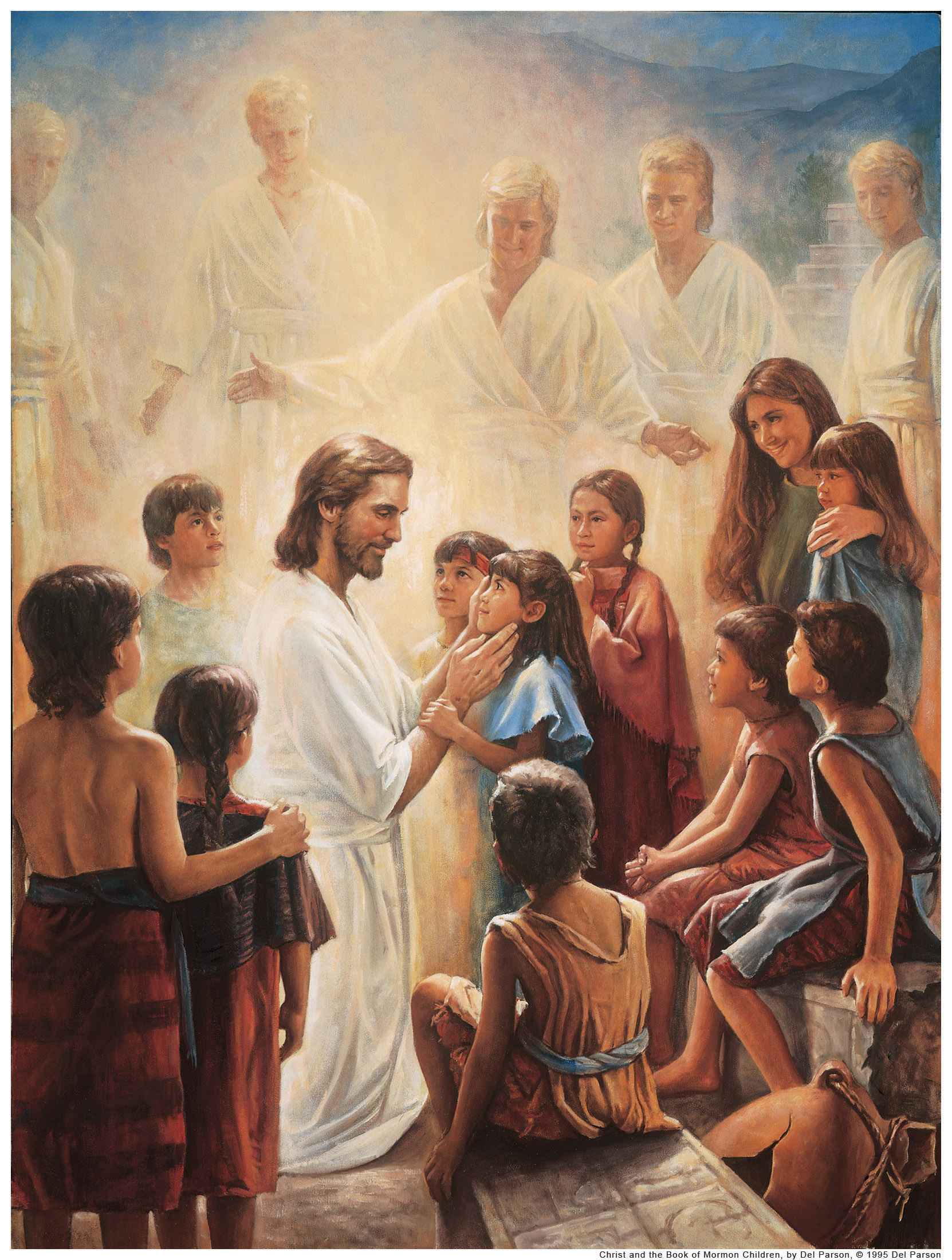
Boek van Mormon christenen

door
13 april 2009
Sociale Knoppen door Linksku

De Nephitische mensen van het Boek van Mormon, dat het Amerikaanse continent bewoond tussen 600 voor Christus en 400 na Christus waren, op de meeste punten in de geschiedenis, een rechtvaardig volk. Dat wil zeggen, ze hadden Christus 'gemeente door hen onderling vastgestelde waarin ze het evangelie van Jezus Christus leerde. Zij leefden door de wet van Mozes en de geboden die hun door de profeten van God. In tijden van goddeloosheid, werden ze vernederd door de Heer door middel van zwaard of hongersnood. In tijden van gerechtigheid, ze voorspoedig en kregen de kracht om zichzelf te beschermen tegen hun vijanden. Dit was volgens de beloften van de Heer. "En [de Heer] heeft gezegd dat: zoverre gij zult mijn geboden te onderhouden zult gij voorspoedig in het land, maar omdat gij het ​​niet zult mijn geboden gij zult uitgeroeid worden uit mijn aanwezigheid" ( 2 Nephi 01:20 ).

Er waren vele profetieën en geschriften die de Nephieten had en alle van hen wees op een Jezus Christus, die nog niet gekomen was. Een profeet met de naam Nephi, die leefde rond 600 voor Christus, schreef: "En wij spreken van Christus, wij verheugen ons in Christus, wij prediken Christus, wij profeteren van Christus, en wij schrijven volgens onze profetieën, opdat onze kinderen zullen weten op welke Bron zij mogen vertrouwen voor vergeving van hun zonden "( 2 Nephi 25:26 ). Ze werden naar uit in de richting van Christus veel op dezelfde manier waarop we terugkijken op zijn leven hier op aarde en kijken uit naar Zijn tweede komst. Andere profeten, zoals Benjamin , Abinadi , Alma en vele anderen leerde de mensen over Christus, het geven van hun getuigenissen ook. Ze wisten van Christus en wist dat hij zou komen om Zijn volk te verlossen.

Van alle verhalen, lessen en profetieën in het Boek van Mormon, geen daarvan is zo krachtig, noch van zo groot belang als wanneer Jezus Christus Zelf bezoek gebracht aan de mensen hier in het Amerikaanse continent. Slechts vijf jaar voorafgaand aan zijn geboorte, werd een profeet gezonden onder de mensen met de naam Samuel. Zijn voorspellingen waren zeer duidelijk en nauwkeurig.

artbook__081_081__samuelthelamaniteonthewall____ En zie, hij zeide tot hen: Ziet, Ik geef u een teken; voor vijf jaar meer komt, en zie, dan komt de Zoon van God aan allen die in zijn naam geloven te verlossen. En zie, dit geef Ik u tot een teken op het moment van zijn komst, want zie, er zal grote lichten in de hemel, alzo dat in de nacht voordat hij komt, zal er alzo geen duisternis zijn, dat de alfabetische volgorde wordt tot man alsof het dag was. Daarom zal er een dag en een nacht en een dag ... en het zal de nacht voordat hij geboren is. En ziet, een nieuwe ster is er ontstaan, zo iemand als gij nog nooit aanschouwd. En zie, dit is allemaal niet, dan moeten er vele tekenen en wonderen in de hemel.
Helaman 14:2-6

Profetieën en tekenen van de dood van Christus werden ook gegeven.

Maar zie, zoals ik al zei tot u met betrekking tot een ander teken, een teken van zijn dood, zie ... de zon zal verduisterd worden ... en ook de maan en de sterren, en er zal geen licht op het gezicht van dit land, zelfs uit de tijd dat hij de dood lijden ... om de tijd dat hij zal opstaan ​​uit de dood. Ja, op het moment dat hij zal geven de geest er zullen donderslagen en bliksemen voor de ruimte van vele uren, en de aarde zal schudden en beven ... en er zijn veel plaatsen die nu worden genoemd dalen dat tevens het bergen ... En vele snelwegen worden opgebroken, en vele steden zullen worden verlaten. En vele graven worden geopend ... en vele heiligen zullen verschijnen aan velen.
Helaman 14:20-25

artbook__084_084__jesusblessesthenephitechildren____ Samuel legde ook uit de missie van Christus op aarde en het belang van zijn komst. De meeste mensen geloofden niet Samuel's woorden, maar die niet te stoppen kunnen komen door te geven. De nacht bleef vijf jaar later aangestoken en een nieuwe ster werd gezien. Drieëndertig jaar na dat, aardbevingen en stormen genivelleerd steden en duisternis heerste drie dagen lang. Voor de overlevenden, maar Christus zelf verscheen.

De hoofdstukken 11 tot en met 28 van 3 Nephi bevatten Zijn woorden en daden onder de mensen. Hij stond hen toe om tot Hem te komen als eerste hand getuigen van de realiteit van Zijn opstanding. Hij koos 12 mannen te zijn leraren en leiders, waardoor ze het gezag en de geboden met betrekking tot de doop. Dan, Hij gaf aan alle mensen de woorden die Hij aan de Joden gaf op de Bergrede (zie Matteüs 5 en 3 Nephi 12 ).

In de komende dagen, Hij ging door met hen de Schriften, de zieken te genezen , ze geven het sacrament , en bidden met hen. Ik wil iedereen vragen om deze woorden te lezen, omdat het zulke raken voorbeelden van de liefde van Christus voor Zijn volk. Het effect dat dit bezoek gehad op de bevolking werd niet vergeten. Voor honderden jaren, de mensen waren ijverig in het volgen van de woorden die Jezus had gegeven aan hen en het was niet tot ze zich afgewend had van die woorden dat ze er niet, net zo vaak op voorhand voorspeld.

Het Boek van Mormon is een opmerkelijk boek en bevat een groot aantal lessen die van toepassing zijn in ons leven. Het toont ook de sublieme waarheid dat Jezus is de Christus , en dat Hij gecommuniceerd Zich aan Zijn mensen hier vroeger. Zij wisten dat Hij was hun Verlosser van de dood en de zonde en ze opgevolgd Zijn woorden en werden gezegend. Hetzelfde geldt voor ons vandaag ook. Door hun getuigenis en het getuigenis van de Heilige Geest, kunnen we weten diezelfde waarheden.

35 Responses to "Boek van Mormon christenen"

  1. Bedankt voor het vertellen zo eenvoudig en goed hoe Christus-centrische het Boek van Mormon is.

  2. Maranda Tyra

    Ik wil graag spreken met alle mormonen en alle die overwegen moromonism om ervoor te zorgen is er een begrip. De Here God is de enige God ... periode. Er is maar een hemel, en slechts een manier om er te komen, en dat is door het heil van Jezus Christus. U moet Hem vragen in je hart en in je leven aan je Redder zijn. Pas als u akkoord met Hem zul je het plan dat Hij voor je leven te begrijpen. Het maakt niet uit welke religie je bent. Baptist, Southern Baptist, Pinkster, presbyteriaanse, etc. God geeft niet om religie, Hij geeft om je hart en je weet dat Hij kent uw hart. Er is geen weg naar de hel en het krijgen van uw zonden gereinigd en worden toegelaten tot de hemel. Je hoeft niet te geloven in een leer dan de leringen van de Heer. Ik hou van jullie allemaal en bidden dat de Heer vult u zal Zijn Heilige Geest en trekt u in de buurt aan Hem! Dat je zou komen om Hem en de persoonlijke relatie weten dat Hij staat klaar om met u!

  3. Dave

    Nou bedankt voor je mening, Maranda. Het lijkt erop dat je hebt gehoord onze overtuigingen van andere mensen naast de mormonen. Waarom ga je niet rond te snuffelen een beetje op de site en zie wat we werkelijk geloven?

  4. Hey Thaddeus - dit is Brandon. Ik hoop dat de wandel gaat goed.

    Ik heb een aantal vragen over de Nephieten en archeologie. Ik probeer niet om gewoon kieskeurig of wijzen op fouten, maar hoe groot was deze groep mensen? Waar waren ze geografisch gezien in Zuid-Amerika? Hebben ze gevonden record van hen?

    Een van de Nephieten begraven de gouden boek dat Smith ontdekte ... waar was dat? Misschien heb ik het verhaal mis.

    Hoe dan ook ... bedankt voor uw tijd ... maar een paar vragen die ik had.

  5. Thaddeus

    Brandon, goed om te horen van u! Ik heb niet echt veel wandelen sinds Goblin Valley, maar met het semester net achter de rug, ik hoop dat snel veranderen.

    Dank u voor het stellen van deze belangrijke vragen. Veel van het onderzoek is besteed aan het Boek van Mormon landen en een verrassende hoeveelheid ondersteunend bewijs is opgedoken, maar de meeste archeologen en antropologen zeggen dat we hebben slechts de oppervlakte gekrast.

    De heersende opvatting onder onderzoekers vandaag is dat het Boek van Mormon in de Nieuwe Wereld een zeer overdekte beperkte geografie van een paar honderd mijl, en dat Lehi's familie waarschijnlijk geïntegreerd met culturen al hier. In slechts een paar van het schip generaties Lehi's vol met misschien wel tientallen mensen explosief gestegen in twee grote beschavingen: de Nephieten en de Lamanieten. Later in het boek de mensen worden meegeteld in de miljoenen.

    Er is nog enige discussie over waar precies de Nephieten en Lamanieten leefde, maar een groeiende consensus onder wetenschappers plaatst deze in Midden-Amerika (Zuid-Mexico en Guatemala). Het land komt overeen met die beschreven in het Boek van Mormon en beschavingen nummering in de miljoenen ontstond daar. De Nephitische beschaving wordt meestal gekoppeld aan laat Preclassic Maya's, en de Jaredieten (een eerdere Boek van Mormon groep) wordt geïdentificeerd met de Olmeken.

    Brandon, aangezien je in Guatemala, bent u in de benijdenswaardige positie van het kijken naar een aantal van deze claims jezelf. Ik zou graag in discussie over dit onderwerp met u.

    Het wordt algemeen aangenomen dat Moroni, de zoon van Mormon (de man die grotendeels samengesteld van de gouden platen) de platen nam op een reis uit Midden-Amerika langs de kust naar New York, waar hij ze begraven in de heuvel voor Joseph Smith te vinden later. Natuurlijk kan zo'n toevallige reeks van gebeurtenissen alleen worden toegeschreven als een wonder van God, maar zo is het boek bestaan.

    Moroni wist dat het nemen van het boek tegen de nominale waarde zou moeilijk zijn voor sommige mensen. In zijn laatste hoofdstuk, stelt hij voor dat we naar het ultieme, uiteindelijke Autoriteit en vraag hem of het is allemaal waar:

    "Zie, spoor ik u dat wanneer gij deze dingen te lezen, als het de wijsheid in God, dat gij ze te lezen, dat gij zou herinneren hoe barmhartig de Here is aan de kinderen der mensen, vanaf de schepping van Adam zelfs tot tot het moment dat gij deze dingen zult ontvangen, en nadenken over het in uw harten.
    "En wanneer gij deze dingen ontvangt, spoor ik u, dat gij God, de Eeuwige Vader, bidden in de naam van Christus, of deze dingen niet waar zijn, en indien gij vraagt ​​met een oprecht hart, met een eerlijke bedoeling, met het geloof in Christus, zal hij duidelijk de waarheid er van aan u, door de kracht van de Heilige Geest.
    "En door de kracht van de Heilige Geest kunt gij de waarheid van alle dingen." Moroni 10:3-5

    Ik weet dat het Boek van Mormon waar is omdat mijn hemelse Vader heeft mijn gebed verhoord. Archeologie heeft gediend om een ​​back-up en deze originele getuigenis te versterken, maar is het niet de hoogste autoriteit als het gaat om religieuze waarheid. Wil je ook het een kwestie van gebed?

  6. Hey Thaddeus -

    Bedankt voor het aanpakken van die vragen. Ik ben in Guatemala, maar wat ik heb gevonden onderzoeken Maya geschiedenis zou niet bemoedigend voor jou. Maar je bracht een ander punt dat ik wil bespreken. Maakt niet uit wat de archeologie in geslaagd om graven (letterlijk) het zou niet uw geloof in de juistheid van het Boek van Mormon invloed op, dus ik zie geen noodzaak om verder te bespreken.

    Ik heb een harde tijd het verzoenen van de volgende verzen van 2 Peter hoofdstuk 1:

    "1Simon Peter, een dienstknecht en apostel van Jezus Christus, aan hen die even dierbaar geloof verkregen met ons door de gerechtigheid van God en onze Zaligmaker, Jezus Christus:
    2Grace en vrede zij u vermenigvuldigd door de kennis van God en van Jezus onze Heer, 3According als zijn goddelijke kracht gegeven heeft aan ons alle dingen die betrekking hebben tot een vroom leven, door de kennis van Hem die ons geroepen heeft tot heerlijkheid en deugd : 4Whereby worden gegeven aan ons kostbare en zeer grote beloften: dat door deze gij zou kunnen zijn deelachtig aan de goddelijke natuur, ontkomen aan het verderf dat in de wereld is door middel van lust "

    Peter schreef dat een lange tijd voordat het Boek van Mormon is vertaald. En God zegt door Peter, dat in de Bijbel hebben we "Volgens als zijn goddelijke kracht gegeven heeft aan ons alle dingen die betrekking hebben tot leven en godsvrucht."

    Hij zegt dat we hebben gekregen "alle dingen die betrekking hebben op het leven en de godzaligheid". Hij zegt dan dat we die dingen gegeven "door de kennis van Hem die ons geroepen heeft tot heerlijkheid en deugd: 4Whereby worden gegeven aan ons kostbare en zeer grote beloften: dat door deze gij zou kunnen zijn deelachtig aan de goddelijke natuur, ontkomen aan het verderf, dat in de wereld is door de begeerlijkheid "

    Waarom moet ik het Boek van Mormon een deugdzaam, glorieuze leven te leiden? Deze passage vertelt me ​​dat ik zijn "kostbare en zeer grote beloften", en gezien "alle dingen die betrekking hebben op het leven en de godzaligheid" en dat door deze dingen die ik misschien een deelgenoot in de goddelijke natuur ", ontkomen aan het verderf dat is in de wereld door lust ".

    Waarom moet ik iets anders? Natuurlijk zijn er andere goede, ware dingen die niet in de Bijbel, maar dit vers in zijn context vertelt me ​​dat Jezus, door mijn geloof in Hem, heeft mij alles wat nodig is voor een goddelijke, heilige, deugdzaam, prachtig leven vrij van het verderf, dat in de wereld. Waarom zou God terug te gaan en later iets toevoegen, als Hij al gezegd dat wat Hij had genoeg met ons?

    Ik geef toe, bad ik dit: "Ik zou u vermanen, dat gij God, de Eeuwige Vader, bidden in de naam van Christus, of deze dingen niet waar zijn, en indien gij vraagt ​​met een oprecht hart, met een eerlijke bedoeling , met geloof in Christus, zal hij duidelijk de waarheid er van aan u, door de kracht van de Heilige Ghost.And door de kracht van de Heilige Geest kunt gij de waarheid van alle dingen weten. "

    Ik vroeg dat "met een oprecht hart, met een eerlijke bedoeling en met geloof in Christus". En God leidde me naar het vers in 2 Peter 1 en ik voelde me een heel sterk brandend gevoel in mijn borst dat de dingen die in Moroni en de rest van het Boek van Mormon inderdaad NIET waar is en dat de God van de Bijbel is anders dan de god van het Boek van Mormon.

    Ik bad dit, Thaddeus, en God geopenbaard tot mij dat wat je denkt dat waar is is eigenlijk vals en niet van God.

    Hoe verzoent u die dingen?

  7. Brandon, als dat het antwoord God u heeft gegeven, dan moet je volgen.

    Ik heb reden om te vermoeden dat het niet Zijn reactie, maar dat is een zaak tussen jou en God. Ik vertrouw erop dat een christen als volwassen als je kunt het verschil tussen de Heilige Geest en je eigen vooropgezette verlangens te vertellen.

    Ik bied een paar vragen om te mediteren op, in prive met je hemelse Vader:
    1 - Hoeveel van het Boek van Mormon heb ik gelezen?
    2 - Heb ik geef het een eerlijk proces, of werd het afgewezen voordat ik raapte het op?
    3 - Was het met een eerlijke bedoeling Als God had me verteld dat het waar was, had ik van plan aan te nemen of zou ik hebben verworpen dat een van beide manier?
    4 - Moet ik geloven dat "door de kracht van de Heilige Geest [I] kan de waarheid van alle dingen weten?"

    Die laatste vraag is de sleutel. Als het Boek van Mormon leert je niets anders, laat het je leren dat je kunt God te vragen en zal Hij de waarheid door de Heilige Geest.

    Je hebt al een getuigenis van dat, omdat je zei dat hij maakt het openbaar voor jou. Lees ook een artikel dat betrekking heeft op dit onderwerp genaamd " gij ontvangt geen getuigenis dan ... "

  8. Dave

    Brandon,

    Ik zal proberen om uw vraag over "hoe we met elkaar te verzoenen" dat de Schrift in 2 Peter te beantwoorden.

    U geciteerd Peter: "Volgens als zijn goddelijke kracht gegeven heeft aan ons alle dingen die betrekking hebben tot een vroom leven," en dan wees erop dat Peter, die daar schreef ruim voor het Boek van Mormon is vertaald. Uw argument-correct me als ik fout zit, is dat de passage dat alles dat ontstond na Peter de verklaring van een of andere manier minder noodzakelijk betekent?

    Ik heb geen u eraan herinneren dat Peter schreef ook dat voor het Nieuwe Testament werd de Bijbel toegevoegd worden, of was zelfs al volledig afgeschreven. Op zijn minst moet uw lijn van denken leiden tot de conclusie dat de brieven van Johannes, het Evangelie van Johannes, het boek Openbaring, en misschien Judas en 2 Timotheüs zijn allemaal overbodig.

    Wij geloven dat God heeft gegeven zijn kinderen alle dingen die betrekking hebben tot een vroom leven, of ze waren de Hebreeën volgende Mozes in de woestijn, de kinderen van Israël in de tijd van Elia of Ezra, of de mensen in de tijd van Peter en de apostelen. De verzoening van Jezus Christus is oneindig, en niemand is veroordeeld uitsluitend wegens niet genoeg van de Bijbel. Maar als er nieuwe geschriften voortkwam voor die mensen, ze accepteerden hen met open armen. Waarom? Simpelweg omdat zij waren de woorden van God, en als God spreekt, je luistert.

    Wil je zeggen dat als je wist het Boek van Mormon bevat de woorden van God, nog steeds zou je niet bijzonder geïnteresseerd in het lezen, want God heeft u voldoende?

  9. Dave en Thaddeus - bedankt voor uw opmerkingen.

    Hier is het punt. Als God spreekt vandaag de dag, zal ik luisteren. Ik ken Hem, omdat Hij Zichzelf geopenbaard. En ik houd van Hem. Ik ben huist met Zijn Heilige Geest die mij leidt naar de waarheid. Dit is geen arrogantie. Zijn geloof. Maar alles wat ik heb te horen 'dat claimt de' Woord van God 'Ik test tegen de bijbel, want het is voldoende.

    Het Boek van Mormon in tegenspraak met wat de hele Bijbel leert over wie God is en wat Hij doet. Het evangelie is dat we zijn gered door genade, door geloof en door niets wat we doen, behalve ons geloof in Christus alleen. Niet ons gedrag. Niet onze inspanningen. Niet onze werken. Niet onze kerk.

    Dat is genade. We verdienen het niet. Dat is wat maakt het genade. God vertelt ons zoals Hij vertelde Paul dat Zijn genade is u genoeg voor ons. Zijn genade is alles wat nodig is. Niet genade plus gehoorzamen van een set van regels - het maakt niet uit hoe goed die regels zijn.

    Dallin H. Oaks zegt:
    "We worden niet opgeslagen in onze zonden, zoals door ze onvoorwaardelijk behouden, door het belijden van Christus en dan, onvermijdelijk, het plegen van zonden in onze resterende leven (zie Alma 11:36-37). We zijn gered van onze zonden (zie Hel. 5:10) door een wekelijkse vernieuwing van onze bekering en reiniging door de genade van God en Zijn gezegende heilsplan (zie 3 Nephi. 9:20-22). "

    Als de genade van Christus is alleen voldoende voor u nadat u hebt geweigerd zich over alle goddeloosheid, dan is mijn vraag is - heb je? Heb je zelf ontkende alle goddeloosheid? Zo niet, dan zijn genade is niet voldoende voor je (volgens het Boek van Mormon). Als u alleen door genade behouden na alles wat je kunt doen, dan is de vraag is - heb je alles gedaan wat je kunt? Zelfs in het licht van 1 Kor 10:13? Als doet alles wat je kunt betekent "het houden van de geboden" bedoelt hij alle geboden?

    Dat was een vraag mijn vriend Chris, die geplaatst op mijn blog, opgevoed.

    Om je vraag te beantwoorden - Ik ben tevreden met de Bijbel omdat God zegt me dat, hoewel de Bijbel, dat de Bijbel is genoeg. Het gaat niet om mijn tevreden, maar over God ons te vertellen dat wat Hij had ons in de Bijbel was genoeg - vooral wanneer die nieuwe 'openbaring' is in tegenstelling tot wat al geleerd. En God wist dat de Bijbel zou bevatten wat het bevat, toen Hij inspireerde Peter. Als iemand tot u gekomen en u gevraagd om de Koran te lezen of je religieus boek te kiezen en en bidden te vragen of het correct was, dan zou je het doen?

    Hier is een uitdaging voor jullie beiden: Stel het Boek van Mormon naar beneden voor een maand en alleen bestuderen van de Bijbel. Je gelooft de Bijbel is de Schrift dus het moet niet een stuk voor u. We zijn verteld dat de bijbel is levend en krachtig, in staat om de diepste dingen in ons te verdelen. Vraag God om je te leren of er een discrepantie tussen de Bijbel en het Boek van Mormon en zien wat Hij doet. Vraag Hem om je te leren, om aan u te openbaren van de waarheid, door de kracht van de Heilige Geest.

    Nog een laatste ding. Thaddeus zei: "Als het Boek van Mormon leert je niets anders, laat het je leren dat je kunt God te vragen en zal Hij de waarheid door de Heilige Geest."

    De Bijbel zegt al me dat. Ik hoef niet het Boek van Mormon te leren me 'waarheid' als dat 'waarheid' in tegenspraak met wat de Ene Ware God me al geleerd in de Bijbel.

  10. Dave

    Brandon,

    Ongeacht of u van mening bent dat het Boek van Mormon is het woord van God (dat is het echte probleem hier, denk ik), ik ben in ieder geval blij dat je op het punt waar je kunt zeggen: "Als God spreekt vandaag, ik zal luisteren. "Bravo.

    Ik heb eigenlijk al het nemen van uw uitdaging voor een tijdje. Hoewel ik probeer te trekken uit alle geschriften bij het schrijven van deze posten en het maken van lessen en dingen die er, is mijn persoonlijke studie bijna uitsluitend geweest in het Oude Testament de laatste tijd. Ik moet zeggen: Ik heb altijd gemerkt dat ze net zo goed in harmonie zijn als de bijbel is met zichzelf. Ik weet dat je het niet eens, maar dan jij en ik hebben duidelijk verschillende interpretaties van dezelfde passages. (Ook zou geen opvallende tegenstrijdigheden tussen het Boek van Mormon en de Bijbel meer duidelijk bij het lezen van beide eigenlijk?)

    Wat genade en werken: ik denk dat de evangelische christelijke wereld grotendeels verkeerd begrijpt wat we geloven. Laten we dit goed begrijpen: er is niets dat we kunnen doen om "verdienen" onze verlossing. Geen ware Christenen geloven dat ze zich op te werken naar de hemel, en de Mormonen zijn geen uitzondering.

    Je hebt waarschijnlijk al het lezen over wat we geloven door mensen die ons niet. Als je echt wilt weten wat we geloven over genade, zou ik aanbevelen het volgende:

    Megan's artikel, van onze eigen site (en de uitstekende artikelen gelinkt op die site)
    Deze toespraak , gegeven aan de BYU door Dr Stephen Robinson
    Dit artikel
    Dit artikel

    Ik ga waarschijnlijk met uitzicht op een aantal goede. Thaddeus, een andere aanbevelingen?

  11. Dave,

    Nogmaals bedankt voor uw opmerkingen.

    "... Mijn persoonlijke onderzoek is vrijwel uitsluitend geweest in het Oude Testament lately.I moet zeggen: Ik heb altijd gemerkt dat ze net zo goed in harmonie zijn als de bijbel is met zichzelf. Ik weet dat je het niet eens, maar dan jij en ik hebben duidelijk verschillende interpretaties van dezelfde passages. (Ook zou geen opvallende tegenstrijdigheden tussen het Boek van Mormon en de Bijbel meer duidelijk bij het lezen van beide eigenlijk?) "

    U bent dood op de in die verschillend interpreteren we passages. :-) En ja, het lezen van beide om te zoeken naar inconsistenties is wat ik dacht dat je zou doen. Ik bedoelde meer de Bijbel te lezen en inconsistenties van wat u al wist van het Boek van Mormon te zien. Ik was niet duidelijk daar. Het echte probleem is dat van eisegesis. (In tegenstelling tot exegese) Dat is als iemand leest een betekenis in de tekst, in tegenstelling tot het krijgen van uw betekenis van de tekst. Het is heel gemakkelijk om de Bijbel te benaderen met een set van overtuigingen, en dan bij het lezen het, vinden steun er voor uw specifieke overtuigingen. Kijk naar de Jehovah's Getuigen. Zij geloven in de Bijbel, maar ze komen tot zeer verschillende conclusies dan elk van ons. Dat is omdat zij de Bijbel lezen om steun voor hun geloof te vinden. U kunt de Bijbel support alles wat je wilt door dat te doen. Ik hoopte dat door het lezen van de Bijbel alleen, je kan het zien voor wat het is, in plaats van door middel van Mormon lenzen. Kortom, ik ken meerdere mormonen die het hebben gelezen in de Bijbel (NT, ook) en als ze de Bijbel lezen voor zichzelf, begon serieuze vragen over de belangrijkste huurders van het mormoonse geloof te hebben. Ik hoop dat zinvol is.

    "Laten we even op een rijtje: er is niets dat we kunnen doen om" verdienen "onze verlossing. Geen ware Christenen geloven dat ze zich op te werken naar de hemel, en de Mormonen zijn geen uitzondering.
    Je hebt waarschijnlijk al het lezen over wat we geloven door mensen die ons niet. "

    Ik heb dat citaat uit hier door Dallin Oaks: http://www.lds.org/conference/talk/display/0 ,5232,23-1-26-23, 00.html

    De context van dat citaat volgt:

    "Sommige christenen beschuldigen Heiligen der Laatste Dagen die geven dit antwoord van het ontkennen van de genade van God, door te beweren kunnen ze hun eigen zaligheid te verdienen. We beantwoorden deze beschuldiging met de woorden van twee Boek van Mormon profeten. Nephi heeft gezegd: 'Want wij arbeid ijverig. . . aan onze kinderen te overtuigen. . . te geloven in Christus, en om met God verzoend worden, want wij weten dat het door genade dat we gered zijn, na alles wat we kunnen doen '(2 Nephi 25:23.). En wat is 'alles wat we kunnen doen "? Het bevat zeker bekering (zie Alma 24:11) en de doop, de geboden en volharding tot het einde. Moroni pleaded, “Yea, come unto Christ, and be perfected in him, and deny yourselves of all ungodliness; and if ye shall deny yourselves of all ungodliness, and love God with all your might, mind and strength, then is his grace sufficient for you, that by his grace ye may be perfect in Christ” (Moro. 10:32)”

    Hij zei: "want wij weten dat het door genade dat we gered zijn, na alles wat we kunnen doen" Na alles wat we kunnen doen? Maar de Bijbel leert in Efeze 2, "8For door genade zijt gij zalig geworden door het geloof, en dat niet uit u, het is een gave van God: 9Not uit werken, opdat niemand roeme. "

    Hij is inderdaad een Mormon en als je niet geloven wat hij geleerd, ik ben niet zeker wat te zeggen.

    Hoe verzoent u dat verschil er? Hoe interpreteert u weg dat verschil tussen het Boek van Mormon en de Bijbel?

    Ik ben echt benieuwd naar dat - niet alleen in sommige academische of discussie zin. Ik heb veel van de andere vragen ook, maar misschien heb ik overbelast mijn bezoek aan dit bericht.

  12. Thaddeus

    Brandon,

    Er zijn twee soorten van werken of daden. Trouw werkt, en dode werken.

    Trouw werken zijn dingen die christenen vanwege hun geloof in Jezus Christus. Zoals James zei: "Toon mij uw geloof uit uw werken, en ik zal u mijn geloof tonen uit mijn werken" ( Jakobus 2:18 ). Hemelse Vader vraagt ​​ons nog steeds te bekeren, laten dopen, de Schriften te lezen, bidden, enz. Maar we doen deze dingen omdat we het geloof in Jezus Christus. We geloven niet dat gehoorzaamheid bespaart ons in en van zichzelf, maar serieuze poging om gehoorzaam te zijn aan God wordt afgewerkt door de genade van Christus.

    Dode werken worden niet in verband gebracht met Christus op alle. Het is dezelfde reden waarom Kaïn's offer was onaanvaardbaar. Hij ging door de bewegingen van het offer zonder enige gedachte aan een Redder. Zelfde met de Farizeeën. Het is als we denken dat onze goede daden hebben de macht om onze zonden te wissen dat we in gevaar zijn van het hellevuur.

    Wij geloven dat we moeten laten zien onszelf trouw aan Christus, door onze handelingen, en niet alleen in onze woorden en gedachten. Jezus heeft gezegd: 'Niet een ieder, die tot Mij zegt: Here, Here, zal ingaan in het Koninkrijk der hemelen binnengaan, maar wie doet de wil mijns Vaders, Die in de hemelen "( Matteüs 7:21 ). De na alles wat we kunnen zin heeft het doen trouwe werken.

    Als u geïnteresseerd bent in de discussie over dit verder gaat, lees dan de artikelen die we al hebben aangeraden eerst. Het zal u helpen zien waar we vandaan komen.

  13. bfrancisco

    Beste Brandon, heb ik het lezen van dit heen en weer tussen u, Thad en Dave en ik denk dat het een grote discussie. Het is een mooi ding om te zien iemand die is gewijd aan hun geloof, dank je.

    Ik wil drie vragen te stellen, waarom zou je geloven dat de Bijbel, op zich voldoende is? Wat bedoel je met het voldoende is? Ook, waarom kan God ons aanvullende Schriftuur, of bel profeten vandaag de dag net zoals hij altijd heeft?

  14. Dave

    Brandon,

    Ten eerste, ik denk dat je nodig hebt om mensen meer krediet. U kunt dat doen zonder het eens met hen. Iedereen interpreteert de Bijbel door de lens van wat zij geloven (meer dan dat, iedereen interpreteert hun hele leven ervaring door de lens van wat zij geloven).

    Wanneer u Mattheüs 25, waar het verschil tussen de schapen en de geiten is wat ze gedaan hebben tot hun medemensen te lezen, zonder twijfel je interpreteert dat de Schrift op iets anders dan betekenen "werken belangrijk zijn voor uw heil." Als je James 'lezen' geloof zonder de werken dood is, om alleen te zijn, "je zou kunnen stellen dat James 'woorden alleen van toepassing op de Joden, of iets dergelijks. Je zou kunnen stellen dat toen Paulus spreekt van nodig om de naam van Christus belijden en geloof hebben, dat die acties van jou niet de vrije genade. Alle geschreven woord zal worden geïnterpreteerd, er is geen ontkomen aan, tenzij de auteur zelf legt uit wat hij bedoelde.

    In ieder geval, nogmaals, worden je vragen veel beter te verklaren door de artikelen die ik verbonden, met name de laatste twee. Bedankt voor het komen op!

  15. Ook genieten van de dialoog.

    Dit zijn citaten uit een van de artikelen die u aanbevolen:

    "Ik heb een worden met Christus, en als partners werken wij samen voor mijn heil en mijn verhoging. [Ik geloof niet dat dit]. Mijn verplichtingen en zijn vermogen in elkaar. Ik doe alles wat ik kan doen, en hij doet wat ik nog niet kan doen. De twee van ons samen zijn perfect. "

    "Ik zal je vertellen wat. U geeft mij alles wat je hebt en een knuffel en een kus, en de fiets is van jou. "Nou, ze nooit is dom geweest. Ze gaf me een knuffel en een kus. Ze gaf me de eenenzestig cent .... Ik reed langs langzaam naast haar viel het me op dat dit een parabel voor de verzoening van Christus. [Ik ook niet geloven dat dit]

    "Er is goed nieuws en slecht nieuws hier. Het slechte nieuws is dat hij nog steeds onze beste inspanning vergt. [Vereist voor wat?] We moeten proberen, moeten we werken: we moeten alles doen wat we kunnen. Maar het goede nieuws is dat, na alles wat we kunnen doen, is het genoeg-voor nu. "

    Op basis van deze citaten uit het artikel dat u aanbevolen, Ik heb de volgende vragen:

    1. Wat gebeurt er als ik niet alles doen wat ik kan. Als ik alleen maar een beetje moeite, kan ik gered worden? Is de genade van Christus voldoende is voor mij als ik niet doe mijn "best effort?"

    2. Heb je alles gedaan wat je kunt? Heb je echt stak je best doen? Er is niets anders dat je zou kunnen doen dat je niet aan het doen? Zo niet, dan is Christus 'werk genoeg voor u? Hoe weet je dat?

    Ik wil graag onze gedachten uit te leggen over dit afhankelijk van wat uw reacties zijn op bovenstaande vragen. Ik waardeer jullie de tijd neemt om deze problemen aan te pakken. Wat ik te zien als ernstige problemen, je te zien zoals de gezonde leer, dus voor mij is het belangrijk dat we elkaar begrijpen.

    Kijken uit naar uw antwoord.

    bfrancisco - Ik wil je vragen te beantwoorden: Laat ik eerst dit commentaar weg te gaan en een antwoord daarop. Ik wil niet te veel toe te voegen aan deze discussie, maar ik wil u laten weten wat ik geloof.

  16. bfrancisco

    Beste Brandon, het zijn allemaal goede vragen. Ik ga niet eens proberen om Dave en Thaddeus verdringen in dit gesprek, maar dit zijn allemaal vragen die we te maken met te. Wanneer is genoeg genoeg, ik ben alles wat ik kan doen, etc? Zoals ik heb gelezen over uw berichten een paar keer zie ik dat je echt denken en proberen te begrijpen wat we geloven en we waarderen dat, je bent geweldig!

    Ik wil graag mijn duit in het zakje toe te voegen voor wat het waard is. Wanneer we de wateren betreden van de doop maken wij een verbond met God om Hem te dienen en houdt van hem en zijn Zoon geboden. Zoals bij elke overeenkomst zijn beloften aan beide zijden. Het is duidelijk dat we nooit in staat zullen zijn om perfect alles doen, maar dat ons niet vrij te stellen van het proberen om ons best te doen. Zoals we van genade tot genade in ons begrip onze mogelijkheden om geboden toe te houden. Op elk punt langs de weg, als we het maken van een ijverige inspanning dan zijn we perfect in Christus, dat is wat u geciteerd uit Moroni 10:32-33.

    So how can we know if what we are doing is sufficient? I think it is pretty easy actually. When I lay down at night I take an inventory of the day. I ask myself is there anything that I did today that was not what Jesus would have done? If there is I get down on my knees right then and ask for God's forgiveness, which forgiveness is possible because of his Son's atonement in my behalf and I promise to do better tomorrow. Then I go to church on Sunday and renew my covenants with God that I made in the waters of baptism by partaking of the sacrament. I promise that I am willing to take upon myself the name of Christ (be his disciple) and always remember him and keep his commandments which he has given me. In return for this, I am promised that I can always have the Holy Ghost with me. Being worthy to have the Holy Ghost with me at all times is God's sign to me that I am perfect in Christ. Will I make mistakes again? Sure, but I quickly repent and each week take the sacrament. Thus in essence at all times, I can be clean because of the grace of God, not because of my works, but I am giving it my best with Christ's help. Thus, my end of the covenant is upheld and by the grace of God, which is made available through his Son, I am clean and “perfect” before God. Not because I am perfect by my works, but because I am yoked to Jesus Christ and he makes me perfect.

  17. Thank you, bfransico, for sharing your thoughts.

    Oh, what a burden you bear. Reading that just makes me so sad, because the truth is that you will never
    be able to do ALL that you can do. Nooit. You will always (this side of Heaven) sin on purpose, make foolish choices, lust in your heart, covet, wander from righteousness. You will do those things (like I will do those things), because in essence you didn't try hard enough. You could have done more in your efforts. You could have prayed more, read your books more, sacrificed more. If you could have done more, tried harder, then according to the Book of Mormon, the grace of Christ isn't sufficient.

    You stated above: “As with any covenant there are promises on both sides.” This is part of the problem. This is not always true. We can look at the Abrahamic Covenant in Genesis 12:1-3. This is a covenant between the Lord and Abraham (and his decedents) It was not a conditional covenant. It did not matter what Abraham did, God would fulfill the covenant. The Davidic covenant in 2 Samuel 7:12-16 (the promised Messiah) was also a non-conditional covenant. God would fulfill (and did fulfill) His promise regardless of the obedience/works of the Israelites. Now, don't get me wrong, there are conditional covenants laid out in the Bible, but God makes it clear at the time of the covenant what is required. The final covenant is the covenant of grace, and that is the unconditional promise of God to those who believe.

    You also stated that “When I lay down at night I take an inventory of the day. I ask myself is there anything that I did today that was not what Jesus would have done? If there is I get down on my knees right then and ask for God's forgiveness, which forgiveness is possible because of his Son's atonement in my behalf and I promise to do better tomorrow.” (Do you always do better tomorrow…I mean is that an appropriate promise?) As a Christian, I desire to please my Savior. I desire to obey Him in all that I do. The difference between the Bible and the Book of Mormon, is that the Bible teaches that I must first be transformed through the work of Christ (who we believe is God eternal, not created…not like us) in order to have any hope of living rightly. Then, I live rightly as a response to the grace I've been given, not as a condition of it. God will NOT remove His Spirit from me if I screw up. Even if I screw up royally, if He did, I would be screwed, b/c I have no power in myself to do good. When I screw up, or sin (which I do every time I think a bad thought, judge the heart of another, lust, get angry with my kids, act impatient on the highway, just to name a few) it is the Spirit IN me that brings me to repentance. The Holy Spirit in my life is the seal that guarantees my inheritance. It would not be a guarantee if it could be voided by my lack of trying or my sin.

    The following is an aside, and I really don't want to get into a debate regarding this as we have plenty to discuss with the topic at hand. We believe in two judgments as described in the Bible. The first is the Great White Throne Judgment, where the lambs will be separated from the goats. That is basically where God judges those for either salvation, or damnation (Revelation 20:11-14). The second is the Bema seat (1 Cor. 3:10-15). This judgment is for those who are believers, and this is where works are judged as either gold/silver, or hay/straw. One will be consumed by fire, the other will be presented to Christ as an offering and a reward will be given. A reward from Christ! But regardless of what happens to the works, the person being judged at the Bema is saved from damnation. Now…I don't believe (I could be wrong) that you believe this, and I don't bring it up in order to debate this theology, only to give reason for why good works/obedience matters to the non-Mormon. No one would say that obedience does not matter. It matters very much according to the Bible (it is how we demonstrate that we love Jesus – that's important)it is just that since we can't be perfect (as you believe) and we can't even do our best to be perfect (not sure if you believe) then our works don't count as squat for our salvation. Not even 61 pennies. But they do count as a demonstration of our faith and love.

    I provide the Bible references not to “Bible bash” but only to offer Biblical support for what I am saying. Of course you are invited to look those verses up and read them in context as I am sure that you will.

    Grace by your definition, is not grace that is truly sufficient. If it was, then why must you “do all you can do?”

    I would still like Thadeus and Dave to answer the questions that I posed in the last comment I made as well, if you have time. And one final question: Every night you repent, and every Sunday you renew your vow, your promise…what happens to the Mormon who dies before the evening? Or before Sunday morning, or who had a really busy week and forgot to really repent at all for a couple of days and then dies? (I am not asking this rhetorically…I would like to know what you believe regarding this.)

    One other of the articles states that “one of the untrue doctrines found in modern Christendom is the concept that man can gain salvation (meaning in the kingdom of God) by grace alone and without obedience. This soul-destroying doctrine has the obvious effect of lessening the determination of an individual to conform to all of the laws and ordinances of the gospel.” This statement could not be more false. I do not obey because of threat of Hell. I believe in grace alone for my salvation. That makes me want to serve Him all the more. Knowing the huge debt that I have no way of paying, yet Christ paid the debt (in its entirety) makes me want to serve Him. When Christians don't desire to serve their Lord with their whole heart, it is more often because they don't understand the greatness of their penalty, and their utter and complete need for Him. I want to serve and obey my Lord Jesus because I love Him and for no other reason. I am motivated by love, not fear, for perfect love casteth out fear.

    Thanks again for this discussion.

    Please, if you have time, go to my blog ( http://brandonandjenny.blogspot.com/2009/03/mormons-mormons-everywhere.html ) and read the comment by Chris Pray. It is close to the bottom.

  18. Ben

    Dear Brandon,

    I really appreciate how you have explained so well what you believe with regard to grace. I don't feel any burden though, I do what I do because I do love God and his Son, not because of fear or guilt. As I have thought about this subject so many times and tried to elucidate how to explain these concepts simply, I just don't know how I can explain it any better. I think it would serve us well to realize that in many ways we want the same thing–to do what Christ would do and live a life centered on Him.

    Brandon, you are doing so much good in the world, or rather God is doing so much good in the world through you and I am so happy to see that you love God and want to serve him. I am sure that you are changing lives and helping others to find happiness in Christ and that is wonderful. It is too bad that there aren't more people like you in the world.

  19. Brandon,

    I know you're caught up on this “all we can do” wording. Perhaps the words in Alma 24:11 would help you:

    “And now behold, my brethren, since it has been all that we could do (as we were the most lost of all mankind) to repent of all our sins and the many murders which we have committed, and to get God to take them away from our hearts, for it was all we could do to repent sufficiently before God that he would take away our stain.”

    When I read this conversation, it seems ridiculous. We're talking completely past each other. You point out that we can never do “ALL we can do,” in the sense that as soon as we pass up just one little opportunity to do something, and as soon as we commit one little sin, oops! We haven't done all we can do, and we don't qualify for salvation!

    That's ridiculous, and no Mormon believes that. What we're trying to say, and what Ben (if I may presume) was trying to say is that to repent before God, and to be able to witness to him that we will be willing to keep his commandments and remember him…that is all we can do. Enter into covenant relationships with God, that is all we can do.

    Now, if you happen to be Calvinist (you write like one), and you believe in irresistible grace, then yes, we disagree. We think that you actually have to do something to accept the grace of God. Faith. Repentance. Baptism. But there are a lot of Arminians out there who also disagree with you on that.

    I took a New Testament class from the man who gave that BYU speech. He would always complain that people misinterpreted his “parable of the bicycle.” They, like you, think of the little girl paying her sixty-one cents as a symbol of us contributing somehow to our own salvation. But just the contrary–the point is to show that we could never possibly hope to ever make even the smallest of dents in our debt to justice. That Jesus pays 100%. (This is from the man's own mouth).

    Now, we do believe that salvation is dependent on our accepting it(in that we may disagree). And the “accepting” involves making and keeping covenants. But having good things be a part of accepting Jesus Christ is a far cry from being saved by your own merits.

    I personally thought that the third and fourth articles I linked to you dealt with that especially well. Did you read them?

  20. 1. What if I don't do ALL I can. If I only do just a little effort, can I be saved? Is the grace of Christ sufficient for me if I don't do my “best effort?”

    Jesus Christ gave himself as sacrifice to end the tyranny of condemnation under the impossibly strict law of Moses. Rather than the law judging our every fault, Jesus became our new judge and He offers mercy to the penitent (see Alma 42 ). Penitence is not measured with a laundry list of good and bad choices, but is a condition of one's heart.

    Just after His ascension to heaven in Jerusalem, Jesus came to America and declared, “Ye shall offer up unto me no more the shedding of blood…and ye shall offer for a sacrifice unto me a broken heart and a contrite spirit” ( 3 Nephi 9:19-20 ).

    2. Have you done all you can? Have you really put forth your best effort? There is nothing else that you could do that you aren't doing? If not, then is Christ's work sufficient for you? How do you know?

    Like Dave said, it isn'ta matter of doing everything we can possibly think of without missing an iota. That just takes us back to the strictness of the law. It's a matter of doing what is available for us. “All we can do” to show Christ our broken heart and contrite spirit is to enter into prescribed covenants and honor them in our hearts, minds, and deeds.

    Effort is required to maintain our penitence. We don't believe that once we first feel forgiveness, we are forgiven for every sin we will subsequently commit. Thus, humility before God and repentance are essential throughout life. The purpose of life is to become more and more like Christ each day. This kind of metamorphosis doesn't happen in an instant; it takes a lifetime or more, and it's why we're here .

    We can feel assured that the Lord accepts our sacrifice of a broken heart and contrite spirit as we continue feeling our sins lifted, and as we are guided by the Holy Spirit.

    Brandon, since we have very different views on this topic, would you tell us what you believe the purpose of life is?

  21. Hello gentleman (not to offend any ladies out there – just haven't seen any post here),

    Been busy. Thank you for your answers and honesty.

    I'd like to answer bfrancisco's question but that will take more time than I have right now so if it's alright I will defer that until later in the week. Please excuse the delay…I'm not deflecting!

    Thaddeus – You asked, “Brandon, since we have very different views on this topic, would you tell us what you believe the purpose of life is?”

    I'd love to. But I'm going to steal from what some other's have said. I believe the purpose of life is to love the Lord my God with all my heart, mind, soul and strength and to love my neighbor in the same way. That sounds familiar, I know. I'll also steal from the Westminster Confession (which just because I agree with the shorter catechism doesn't make me a Calvinist). It states, “Man's chief end is to glorify God, and to enjoy him forever.”

    The purpose of life is to glorify God by being in an eternal love relationship with Him.

    Dave – I did read the articles and already quoted one of them. I'm not a Calvinist. I hold some of the tenets of Calvinism, but only 3-4 of the TULIP doctrines, and not limited atonement. My wife is a Methodist and I enjoy Wesleyan theology, but I'm not going to get in a fist fight defending prevenient grace either.

    I think one of the issues between Mormons and Christians is that we say the same words but do not always mean the same things.

    For example, when we say, “God” we mean two different things.

    What I mean:
    There is only one God.
    Is. 44:6 “Thus says the Lord, the King of Israel and his Redeemer, the Lord of hosts:
    'I am the first and I am the last,And there is no God besides Me. (Also see Deut. 6:4,Isaiah 43:11; 44:8; 45:5)

    God is a Spirit without Flesh and Bones; not a man.
    John 4:24 “God is spirit, and those who worship Him must worship in spirit and truth.”

    What Mormon's (from my understanding and from the literature that I have read) mean:
    There are more than one God. (Maybe only one God for this world, but God's father was a god, and it is also possible for you, in your theology, to someday be a god)
    “And they (the Gods) said: Let there be light: and there was light (Book of Abraham 4:3)”

    God is zoals wij.
    "God zelf was een keer als we nu zijn, en is een verheven mens, en troont in gindse hemel! . . . We have imagined that God was God from all eternity. I will refute that idea and take away the veil, so that you may see,” (Teachings of the Prophet Joseph Smith, p. 345).

    God is a man, or very like a man.
    “”The Father has a body of flesh and bones as tangible as man's,” (Doctrine and Covenants 130:22; Compare with Alma 18:26-27; 22:9-10).
    “Therefore we know that both the Father and the Son are in form and stature perfect men; each of them possesses a tangible body . . . of flesh and bones,” (Articles of Faith, by James Talmage, p. 38)”

    When I say, “Jesus”, we mean two different things.

    What I mean:
    Jesus is the eternal Son. He is second person of the Trinity. He is God in flesh and man: God incarnate.
    “In the beginning was the Word, and the Word was with God, and the Word was God.” John 1:1
    (See also John 1:14; Col. 2;9) and the creator of all things (Col. 1:15-17).

    Jesus was born of the virgin Mary.
    Isaiah 7:14″Therefore the Lord Himself will give you a sign: Behold, a virgin will be with child and bear a son, and she will call His name Immanuel. See also (Matt 1:22-25, Luke 1:26-35)

    What Mormon's mean (Again, our understanding, and if this is wrong, it must be clarified):
    “The birth of the Saviour was as natural as are the births of our children; it was the result of natural action. He partook of flesh and blood – was begotten of his Father, as we were of our fathers,” (Journal of Discourses, vol. 8, p. 115)”

    “Christ was begotten by an Immortal Father in the same way that mortal men are begotten by mortal fathers” (Mormon Doctrine, by Bruce McConkie, p. 547)”

    “Jesus is the literal spirit-brother of Lucifer, a creation (Gospel Through the Ages, p. 15)”

    A large reason for the miscommunication is our failure to agree on terms and their meanings. I say this with all respect to you guys as people. I am not trying to be personally critical, just critical of the texts presented in light of what the Bible teaches and in light of what the Church has taught since Christ. I have an enormous amount of respect for the diligence and the strength of your faith. As your friend (and I do consider you a friend) I feel a burden to point out what seems to me to be enormous and critical errors. Especially since these errors may have eternal significance. Please know that this entire dialog has been in the spirit of love and respect.

  22. Brandon,

    You started with asking for archaeological proofs for the Book of Mormon. Then you moved to the necessity for post-biblical revelation. Then it was grace and works. Now the trinity and the nature of God.

    I'm beginning to suspect that you don't really want to know what we believe, and that you're just going to go down the well-known laundry list of favorite evangelical arguments against Mormons, and try to show that our beliefs contradict the Bible. All you will do is show that our beliefs contradict your interpretation of the Bible. We can do the same. For instance, the trinity. Here is a list of 65 scriptures in the Bible that seem to indicate that the Father and Jesus are two separate beings. I have no doubt that you will interpret them differently.

    This is not a forum for arguing about whether the Bible contradicts our beliefs. This is a place where people come to find out from us what we believe, not to tell us what they think we believe and why they think it's wrong. There are probably forums for that though. For our responses to those arguments, I recommend fairlds.org and farms.byu.edu. So we'll probably just refer you to those sites, where all your questions are already answered.

    The quotes you posted about the nature of God and Jesus are, in fact, quotes from early church leaders (or Bruce R. McConkie). Aside from that, I don't know anything about them. They haven't much been elaborated on. How was Jesus fathered? Ik weet het niet. Where did God come from? Ik weet het niet. You'll find that these topics are not anything like mainstream in the LDS world. I've watched the LDS general conference for ten hours twice a year for my entire life, and I've never heard any of those topics mentioned, ever. That's not to say they're not true, it's just if you're looking for some clarification, there isn't much we can do for you. Perhaps God will see fit to clarify them.

    With regards, however, to Jesus and Satan being brothers, that statement is a little misleading. I refer you to this article.

  23. Dave,

    I seem to have offended you. That was not my intention. I was truly trying to clarify terms but in the process I stepped on some toes. I apologize if I said something offensive.

    With all respect, however, you make too many assumptions. You assumed I was a Calvinist (which I am not) and you assume I have some grand plan to debunk Mormon theology (which I do not). The progression of thoughts in your first paragraph stem from my assumption that this was a discussion and those thoughts flowed as I sought to discover what you guys really believe. You cannot dismiss me by squeezing me into a category.

    I was answering Thadeus's questions regarding the point of life, and then I just wanted to clarify what I thought were assumptions you had made because we misunderstood one another's meanings of the same words.

    The title of this website is “What Mormon's Believe”. Debate and discussion are meant to bring clarity, and though you answer many of my questions very well you get defensive and throw assumptions at me to dismiss what I am saying. I am sure I often do the same thing, though I hope to avoid that.

    I have Mormon neighbors. We really love them. We're watching their poodle while they are out of town. I want to understand better what they believe and so I came here for some dialog and even debate in order to better understand Mormonism. We do indeed talk to them about what we believe, but surely you understand that most conversation is about kids and how much it rained and when are you coming over for another movie night. So we came here because Thaddeus had very graciously commented on my blog and directed me here for further questions. Yet when I sought clarity by asking what I thought were genuine questions, I am dismissed.

    I'm not trying to be misleading. I'm trying to figure out how Mormons believe both the Bible and the Book of Mormon can stand side-by-side as equal revelation from God and I did that by trying to get some agreement on terms.

    If when I say “tree” you think of a coat tree or a parrot and I think of an Elm tree, then when I say, “Let's go look for trees in the forest” we will not be doing the same thing. I was attempting to bring clarity to our discussion by coming to an agreement on two very important things: Who is God and Who is Jesus.

    It seems clear that we are indeed not talking about the same thing when we say those terms. If we cannot agree on those terms (the 'definition' so to speak of God), then our discussion may have come to an end. I hope not.

    This discussion has been wonderful for me. I hope it at least of benefit to you.

    Grace and peace to you, Dave.

  24. Brandon,

    You certainly haven't offended me, and I apologize for making assumptions about you being a Calvinist. I definitely know what it's like to have people assume things about what we believe, so I really should know better.

    I have had a lot of that conversation with my Calvinist friends lately, who truly do believe that it is 100% grace that saves us. Being a Calvinist isn'ta bad thing either; when I said that I was just trying to point out that if you were a Calvinist, we definitely disagree on that point. And as my Calvinist friends have pointed out, anything less than irresistible grace admits that we ourselves are required to do something in order to be saved. So I was trying to point out that in the grace and works debate, the idea that God would require something of you before he saves you is not uncommon in Christianity. I apologize if that didn't come off right. And I'm happy to know that I was wrong when I said I suspected that you were just here to try to show us that our beliefs contradict the bible.

    I understand what you mean about terminology. Words like “God”, “Jesus”, and “saved” are loaded with theological assumptions. I think, though, I disagree with your statement that “if we cannot agree on those terms, then our discussion may have come to an end.” I think it just boils down to understanding each other. To use your analogy, as long as I understand that when you say “tree,” you're talking about an Elm tree, I understand you completely. So we believed different things about God. As long as we both understand what we each respectively are picturing in our heads when we say things like “God” and “Jesus,” then we can have meaningful conversation without needing to agree.

    I'm sorry that you feel “dismissed.” That was most definitely not my intention. On what questions do you feel dismissed?

    I'm also glad that you feel this conversation has been a benefit to you. In what ways has it helped you?

  25. Thaddeus

    Brandon,

    For what it's worth, it did seem like you were just looking for the chance to one-up us in an argument, by your darting from topic to topic. Especially since we see these same tired arguments frequently from evangelical Christians who have no other object than declaring our doctrines false.

    We are happy to entertain questions, but we'd prefer to do it with people who listen to our side and give our arguments full consideration.

    Which is why I'm thrilled to learn you are willing to do that! We'd love to demonstrate how our theology is fully compatible with the Bible, as long as you recognize that you and we don't share the same interpretation of every verse.

    Like Dave said, our beliefs don't contradict the Bible, but they may contradict your interpretation of it.

  26. Groovy. Glad we can keep chatting. Dave, I felt dismissed on my stance on grace. But that's Ok. I know that wasn't your intention.

    Well, we disagree on who God and Jesus are (at least I think that's what Dave was saying).

    And our interpretation of the Bible is different. That seems clear since our conclusions are different. So…if we're both reading the same verses and we both think we're right, can both of us be right?

    I only assume you guys think you are correct in your interpretation of the Bible. I sure believe I'm correct. It would be really silly for one of us to KNOW we were wrong and say we were right. But I'm almost certain neither of us is doing that.

  27. Thaddeus

    we disagree on who God and Jesus are

    I would hesitate to phrase it that way. When we talk about Jesus, we are talking about the same person, but our conceptions of Him are different. We believe different things about Jesus.

    The reason I nitpick is because I've run into a few people who claim that “Mormons believe in a different Jesus,” but that leads naive listeners to think we worship some Jesus Jones from Connecticut or something.

    The Jesus we believe in was born of Mary in Bethlehem. He walked on water in Galilee. He was crucified on Calvary by Roman soldiers. We believe everything that is written about Him in Matthew, Mark, Luke, John, etc. He has a LOT in common with the Jesus you believe in. So much in common, I think it's safe to assume we're talking about the same person.

    We may disagree on some details of His exact nature, but we agree on who He is (in general terms). Please read an article called “ Jesus the Christ ” to see for yourself.

  28. Sorry for the gap here. I just have not had the time.

    I definitely agree that we're talking about the same guy, Jesus of Nazareth. But we do not believe the same things about Him or His nature. I say that instead of 'details of His exact nature' because I don't think the things we disagree on are not details at all, but come down to the very nature of God.

    There is a wonderful book named Knowledge of the Holy by AW Tozer and I would recommend it to you guys to read. It's all about the attributes of God. In it, Tozer says,

    “What comes into our minds when we think about God is the most important thing about us. The history of mankind will probably show that no people has ever risen above its religion, and man's spiritual history will positively demonstrate that no religion has ever been greater than its idea of God.”

    The book is about thinking rightly about God, not just thinking about Him. It's one of my favorite devotional books.

    Sorry I never got into the sufficiency of Scripture. It's really a moot point given that we will not agree on one another's interpretation.

    To that point, however. Do you believe there is ONE correct interpretation of Scripture?
    Our ideas about God are different

  29. Interesting to read some people here playing doctrinal ping pong. Strike one is dealing with people we don't know in person on the Internet. I think many people see any issue as entertainment. Any situation that does not require action, that does not present consequences and accountability, is by nature, a fantasy.

    Is The Book of Mormon the word of God or not? I know it is. I've paid the price to know….reading, pondering, praying about it. I worked for two years solid to create a free site for anyone who wants to really understand the Book of Mormon…..plainBookofMormon.com.

    It seems that online, we find more intellectuals who want to pretend they are humble and have faith in Christ, but in the end, will be found to be egg-heads who really wanted everything their way. To be a true Christian is to be humble and teachable…..willing to do anything to further the Lord's will. It's the least we can do, if we love Him. He did say, “my sheep hear my voice”. And another man said, “If we don't follow the voice of the Good Shepard, than whose sheep are we?” I like that line of reasoning. Satan is so clever, to entrap people with their own smug form of Christian living.

    I hope we can all rise above the smugness, and just do the will of the Lord, expecting His grace to save us, “after all we can do” as John wrote.

    Tim

    Tim

  30. I have prayed about whether the book of Mormon was true and God's answer to me was “No”. In addition to my prayers,

    When the Book of Mormon has so many errors, inconsistencies and alterations that the only way to explain them away is to say “Just pray to see if it is true”, then you've got a real problem with what you believe. I implore all Mormons to examine what you believe critically, independent of the LDS church and your elders. You cannot go to your elders with the questions the outside world is asking. They will only tell you the same thing they've always told you. That's like asking Hulk Hogan if he belives WWF is real wrestling. OF COURSE he's going to tell you “yes” and tell you what you want to hear. He IS a wrestler.

    Step outside of the Mormon bubble and examine what you believe critically. Read and learn about all the true information that the rest of the world has access to about Mormonism. Believe it or not, you can really get access to all the original Mormon documents and files and see what has changed between then and your present day materials. If the Mormon scriptures are as perfect & true as the LDS church boasts, why all the changes over the years? If you ask me, the problem is a false religion coupled with cultural relativism.

    And don't give me the old “so as it is correctly translated” excuse. Mormons basically took what Josheph Smith had “translated” from the tablets at face value. Furthermore, “Reformed Egyptian hieroglyphics” never existed! Talk about a “so as it is correctly translated” conundrum. And I venture to say that if both the first AND second tablets had broken, JS would have produced a third tablet……tada!

    Regarding the comment “We may disagree on some details of His exact nature, but we agree on who He is (in general terms).”

    The “some details” are PRETTY IMPORTANT details. Mormons basically trample the very essence of who Jesus is, based on the Holy Bible, and it's a slap in the face to Christians (yes…the “real true ultra super” Christians of the Holy Bible). …..(just poking a little fun at the latest “true Christian campaign headed up by the LDS church)
    Jesus WAS NOT a brother of Satan.
    Jesus IS a part of the Holy Trinity of Father-Son-Holy spirit as ONE GOD-HEAD, not three separate Gods.
    GOD was, is, and always will be the same. God was NOT created from a man. The belief God came from a man basically disempowers God in blasphemy and renders Him incapable of all that He has actually done with Creation. Man cannot do what God can do. Man cannot become a God. When Mormons claim that they become Gods, they are making the same mistake Satan did.
    Those are a couple of the “some details” that Mormons try to pass off as unimportant.

    Mormons, I implore you to step outside your “comfort zone” and really take a look at what you believe from an impartial perspective. Take a look at all the questions and evidence available that proves Mormonism is NOT christianity and is not true . Don't hold on to something false just because you're worried what you're family will think or if your church will excommunicate you (that's some loving church). It's a tough thing to swallow your pride and humble yourselves into researching information that would prove what you believe to be wrong. Who wants to find out they've believed something false for so long? I know I wouldn't, but it would be worth it if my eternity depended on it, which it does! And so does yours!

  31. Bus Gillespie

    the prolonged discussion with Brandon suggests that if God is really interested in using the scriptures to help the people understand the gospel, then more clarity is needed. Here we see a few articulate and educated individuals who can't seem to come to an agreement on what certain scriptures say or mean. Over 600 “Christian” churches have different interpretations as to what some of the key concepts of the scriptures mean. Has God just given mankind a big puzzle to figure out, which they apparently can't do, (In fact some groups have killed people over these disagreements)? Or is God interested enough in us lowly humans to provide some clarification through other scriptures and even some living prophets?

    As for Terry, you sound pretty mad.?

  32. pc

    “Over 600 “Christian” churches have different interpretations as to what some of the key concepts of the scriptures mean.”

    While this is true, the interpretations of scriptures of the different “Christian” churches is still based on the same bible. As a non LDS christian, the use of the Book of Mormon by the LDS church is the part that is hard for me to reconcile.

    In the end… I don't believe it matters. As long as a person accepts christ and recognizes that he is our saviour… I think he/she is in a good place.

  33. Abdi Mohamed

    I am a Somali young man,i live in Mogadishu,I need to know where to go after death,which religion is true? Here Islam is been used to kill people,please need advice and prayer.
    I say all people who live in this world are 1 and they are brothers regardlss of colour or geographical

  34. Thaddeus

    Abdi, you are very right. We are all brothers and sisters no matter where you live or what color of skin you have. I am glad you have found this website.

    I will pray for you. You must also pray for help and to know what to do. We know that God is our Father and He loves us. He will help you find the true religion. Please read more about prayer here , and begin reading the Book of Mormon here . The Book of Mormon helps me every day to know what Heavenly Father wants me to do. I am sure it will also help you.

    I wish the Church had a presence in Somalia, but right now there are no chapels or missionaries there. Abdi, if you want to keep learning about the Church of Jesus Christ of Latter-day Saints, please keep posting comments. We'd love to hear more about you and what you are thinking about.

  35. Harmony

    I'm so sorry to read this Abdi! You are right as Thaddeus said, we are all brothers/sisters in Christ, created by an almighty loving God. I have my opinions on the Muslim Religion as well as the Mormon Religion, but I will leave that alone because I am not here to scrutinize or criticize anyone. I do agree with Thaddeus also in saying that you should Pray to God about this matter and he will surely give you an answer but you must pray in faith. I disagree on reading the book or Mormon however, your first source should be the Holy Bible which is the word of God, inspired by God.
    God bless you Abdi and may you continue your search for Truth!
    Harmony April

Laat een reactie achter

what is super p force order viagra soft