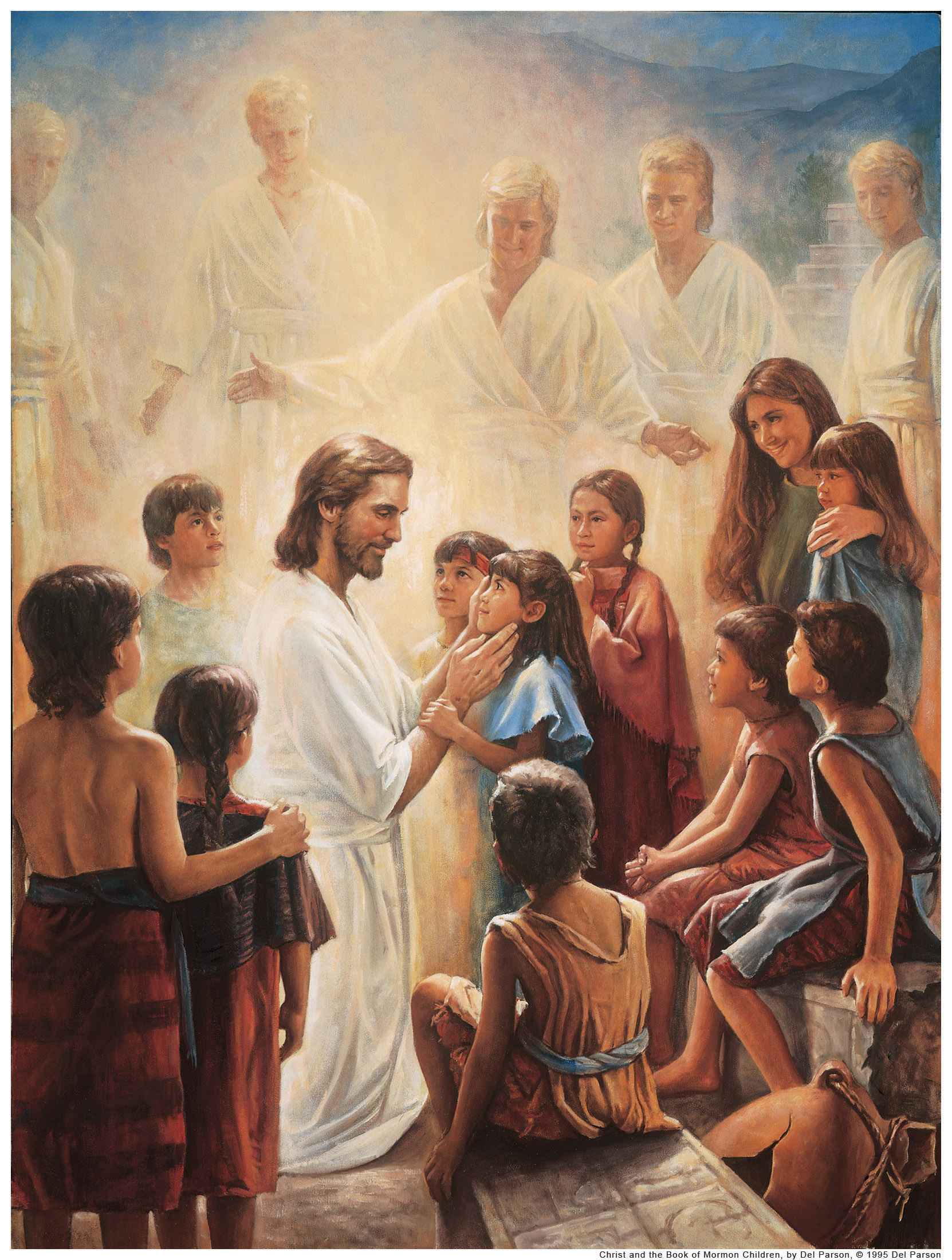
Llibre de Mormón cristians
per BretEl poble nefita del Llibre de Mormón que va habitar el continent americà entre els anys 600 aC i 400 dC van ser, en la majoria dels punts de la història, un poble just. És a dir, que tenia l'església de Crist establerta entre ells en què se'ls va ensenyar l'evangeli de Jesucrist. Vivien de la llei de Moisès i guardat els manaments que se'ls dóna pels profetes de Déu. En temps de la maldat, es va humiliar pel Senyor a través de l'espasa o la fam. En temps de la justícia, que va prosperar i se'ls va donar la força per protegir-se dels seus enemics. Això va ser d'acord a les promeses fetes pel Senyor. "I [el Senyor] ha dit que: la mesura que guardeu els meus manaments, prosperaran a la terra, però la mesura que vosaltres no guardeu els meus manaments, sereu rebutjats de la meva presència" ( 2 Nefi 01:20 ).
Hi havia moltes profecies i escriptures que els nefitas tenien i tots ells apuntaven a una Jesucrist, que encara no havia arribat. Un profeta anomenat Nefi, que va viure al voltant de l'any 600 aC, va escriure: "I parlem de Crist, ens alegrem en Crist, prediquem de Crist, profetitzat de Crist i escrivim segons les nostres profecies, perquè els nostres fills sàpiguen a què font han d'acudir per a la remissió dels seus pecats "( 2 Nefi 25:26 ). Estaven esperant a Crist tant en la mateixa forma que mirem cap enrere en la seva vida aquí a la terra i esperem la seva segona vinguda. Altres profetes, com Benjamin , Abinadí , Ànima i molts altres van ensenyar a la gent sobre Crist, donant els seus testimonis també. Tots ells sabien de Crist i sabia que vindria a redimir el seu poble.
De totes les històries, ensenyaments i profecies en el Llibre de Mormón, cap és tan poderós ni de tanta importància com quan el mateix Jesucrist va visitar les persones aquí al continent americà. Només els cinc anys anteriors al seu naixement, un profeta va ser enviat al poble anomenat Samuel. Les seves profecies eren excepcionalment clar i precís.
I vet aquí, ell els digué: Heus aquí, us dono un senyal, per cinc anys més i, heus aquí, ve el Fill de Déu per redimir a tots aquells que es creuen en el seu nom. I heus aquí, això us dono un senyal en el moment de la seva vinguda, perquè he aquí, hi haurà grans llums al cel, de tal manera que a la nit abans que ell ve no hi haurà foscor, de tal manera que es apareixerà a home com si era de dia. Per tant, hi haurà un sol dia i una nit i un dia ... i serà la nit abans de néixer. I heus aquí, hi haurà una nova estrella sorgeixen, per exemple, un u com mai heu vist. I heus aquí, això no és tot, hi haurà molts senyals i prodigis en el cel. Helaman 14:2-6
Les profecies i els signes de la mort de Crist també se'ls va donar.
Però vet aquí, com vaig dir a vostè en relació amb un altre signe, un signe de la seva mort, vet aquí ... el sol s'enfosquirà ... i també la lluna i les estrelles, i no hi haurà cap llum sobre la faç d'aquesta terra, des del el temps en que pateixi la mort ... alhora que ressuscitarà d'entre els morts. Sí, en el moment en què ell donarà l'esperit no hi haurà trons i llamps per l'espai de moltes hores, i la terra es sacsegi i tremolen ... i hi haurà molts llocs que ara es diuen valls que es converteixen en muntanyes ... I moltes carreteres es trenca, i moltes ciutats es convertirà en desolació. I moltes tombes s'obriran ... i molts sants s'apareixerà a molts. Helaman 14:20-25
Samuel també s'explica la missió de Crist a la terra i la importància de la seva vinguda. La majoria de la gent no creia les paraules de Samuel, però això no els va impedir arribar a passar. La nit va quedar il · luminada cinc anys després i una nova estrella va ser vist. Trenta-tres anys després d'això, terratrèmols i tempestes anivellat les ciutats i la foscor es va imposar per tres dies. Per als supervivents, però, Crist es va aparèixer.
Els capítols 11 al 28 de 3 Nefi contenen les seves paraules i accions entre les persones. Se'ls va permetre venir a Ell per ser testimonis de primera mà de la realitat de la seva resurrecció. Ell va escollir a 12 homes per a ser mestres i líders, donant-los l'autoritat i els manaments relacionats amb el baptisme. Llavors, els va donar a totes les persones les paraules que Ell li va donar als jueus en el Sermó de la Muntanya (vegeu Mateu 5 i 3 Nefi 12 ).
En els propers dies, ell va continuar ensenyant-los les Escriptures, curar als malalts , donar-los el sagrament , i pregar amb ells. Jo animaria a tots a llegir aquestes paraules, perquè són exemples tan commovedores d'amor de Crist pel seu poble. L'efecte que aquesta visita va tenir en el poble no va quedar en l'oblit. Durant centenars d'anys, les persones van ser diligents en el seguiment de les paraules que Jesús els havia donat i no va ser fins que s'havia allunyat d'aquestes paraules que li fallen, tal com va predir moltes vegades per endavant.
El Llibre de Mormón és un llibre extraordinari i conté moltes lliçons que són aplicables en les nostres vides. També mostra la sublim veritat que Jesús és el Crist , i que ell mateix va comunicar al seu poble aquí antigament. Ells sabien que Ell era el Salvador de la mort i el pecat i escoltat les seves paraules i van ser beneïdes. El mateix és cert per a nosaltres avui també. Per la seva testimoni i el testimoni de l'Esperit Sant, podem conèixer aquestes mateixes veritats.


Gràcies per comptar amb tanta senzillesa i tal com Crist-cèntrica del Llibre de Mormón és.
M'agradaria parlar amb tots els mormons i tots els que estan considerant la possibilitat moromonism per assegurar-se que hi ha una entesa. El Senyor Déu és l'únic Déu ... període. Només hi ha un cel, i només una manera d'arribar-hi, i que és a través de la salvació de Jesucrist. Has demanar-li al teu cor i en la teva vida com tu Salvador. Només una vegada que acceptes ho entendrà el pla que Ell té per a la teva vida. No importa quina religió ets. Baptista, Bautista del Sud, pentecostals, presbiterians, etc Déu no es preocupa sobre la religió, Ell es preocupa pel teu cor i sé que Ell coneix el seu cor. No es pot anar a l'infern i aconseguir els seus pecats netejats i se'ls permeti al cel. No ha de creure en els ensenyaments diferents dels ensenyaments del Senyor. M'encanta tot de tu i preguem perquè el Senyor t'ompli del seu Esperit Sant es diu i que s'acosti a Ell! Que vindria a conèixer-lo, i la relació personal que està a l'espera de tenir amb vostè!
Bé, gràcies per la seva opinió, Maranda. Sembla que vostè ha sentit les nostres creences d'altres persones, a més dels mormons. Per què no furgar una mica en el lloc i veure el que realment creiem?
Hola Tadeu - això és Brandon. Espero que l'excursió va bé.
Tinc unes preguntes relacionades amb els nefitas i l'arqueologia. No estic tractant de ser tan exigent o assenyalar errors, però el gran que va ser aquest grup de persones? On eren geogràficament al continent americà? Han trobat registre d'ells?
Un dels nefitas enterrar el llibre d'or que Smith va descobrir ... on va ser això? Potser tinc la història equivocat.
En fi ... gràcies pel teu temps ... només algunes preguntes que tenia.
Brandon, que bo saber de tu! En realitat no he estat caminant molt des Goblin Valley, però amb el semestre a punt d'acabar, espero que això canviï aviat.
Gràcies per fer aquestes preguntes importants. Molta de la recerca ha entrat en terres del Llibre de Mormón i una sorprenent quantitat de corroboració proves ha aparegut, però la majoria dels arqueòlegs i antropòlegs diuen que només hem tractat una part superficial.
L'opinió dominant entre els investigadors d'avui és que el Llibre de Mormón en el Nou Món va cobrir una molt limitada la geografia d'uns pocs centenars de milles, i que la família de Lehi probablement integrar-se amb les cultures que ja són aquí. En només un parell de vaixell ple de potser desenes de persones es van inflar en dos grans civilitzacions generacions de Lehi: els nefitas i els lamanitas. Més endavant en el llibre de les persones es compten per milions.
Encara hi ha certa controvèrsia sobre on exactament els nefitas i lamanitas van viure, però un creixent consens entre els estudiosos el col · loca a Mesoamèrica (sud de Mèxic i Guatemala). Els partits de la terra que es descriuen en el Llibre de Mormón, i les civilitzacions que es compten per milions sorgir allà. La civilització nefita sol coincidir amb la fi dels mayas del Preclásico, i els jareditas (un llibre anterior de Mormón grup) s'identifica amb els olmecas.
Brandon, ja que es troben a Guatemala, es troba en la envejable posició de mirar en algunes d'aquestes afirmacions a tu mateix. M'encantaria seguir discutint aquest tema amb vostè.
En general es creu que Moroni, el fill de Mormón (el tipus que en gran part compilada les planxes d'or) es va dur les plaques en un viatge fora d'Amèrica Central fins a la costa de Nova York, on els van enterrar en el turó de José Smith per trobar més tard. Per descomptat, com una sèrie casual dels esdeveniments només es pot atribuir a un miracle de Déu, però també ho és el llibre de la pròpia existència.
Moroni sabia que prendre el llibre pel seu valor nominal, seria difícil per a algunes persones. En el seu últim capítol, es proposa que anem a l'autoritat última, final i li demanem que si tot és veritat:
"Heus aquí, voldria exhortar-vos que, quan llegiu aquestes coses, si Déu jutja prudent que les llegiu, perquè vosaltres recordeu com de misericordiós del Senyor ha estat als fills dels homes, des de la creació d'Adam fins a baix fins al moment en que rebeu aquestes coses, i que ho mediteu en els vostres cors.
"I quan rebeu aquestes coses, voldria exhortar-vos que pregunteu a Déu, l'Etern Pare, en nom de Crist, si aquestes coses no són certes, i si demaneu amb un cor sincer, amb veritable intenció, tenint fe en Crist, ell us manifestarà la veritat que a vosaltres, pel poder de l'Esperit Sant.
"I pel poder de l'Esperit Sant podreu conèixer la veritat de totes les coses." Moroni 10:3-5
Sé que el Llibre de Mormón és veritable, perquè el meu Pare Celestial ha contestat la meva pregària. L'arqueologia ha servit per recolzar i enfortir aquest testimoni original, però no és l'autoritat final a l'hora de la veritat religiosa. ¿També vosaltres voleu que sigui un assumpte de pregària?
Hola Tadeo -
Gràcies per fer front a aquestes preguntes. Jo estic a Guatemala, però el que he trobat investigant la història maia no seria encoratjador per a tu. No obstant això, li va portar un punt diferent que m'agradaria discutir. No importa el que l'arqueologia va aconseguir desenterrar (literalment) no afectaria a la seva creença en la veracitat del Llibre de Mormón, així que no veig cap necessitat de discutir més a fons.
Tinc dificultats per a la conciliació dels següents versicles de 2 Pere capítol 1:
"1Simon Pere, servent i apòstol de Jesucrist, als que heu assolit fe igualment preciosa amb nosaltres a través de la justícia de Déu i Salvador nostre Jesucrist:
2Grace i pau us siguin multiplicades en el coneixement de Déu i de Jesús nostre Senyor, 3Según com el seu diví poder ens ha donat totes les coses que pertanyen a la vida ia la pietat, mitjançant el coneixement d'aquell que ens va cridar per la seva glòria i la virtut : 4Whereby ens ha donat igual grans i precioses promeses perquè per elles arribéssiu a ser participants de la naturalesa divina, havent fugit de la corrupció que hi ha al món per la concupiscència "
Pere va escriure que molt temps abans que el Llibre de Mormón va ser traduït. I Déu diu a través de Pere que a la Bíblia tenim "Segons el seu diví poder ens ha donat totes les coses que pertanyen a la vida ia la pietat."
Ell diu que se'ns ha donat "totes les coses que pertanyen a la vida ia la pietat". Es diu llavors que ens van donar les coses "a través del coneixement d'aquell que ens va cridar per la seva glòria i excel · lència, 4Whereby ens ha donat igual grans i precioses promeses perquè per elles arribéssiu a ser participants de la naturalesa divina, havent fugit de la corrupció que hi ha al món per la concupiscència "
Per què necessito el Llibre de Mormón per viure una vida virtuosa, gloriosa? Aquest passatge em diu que m'ha donat "superior a grans i precioses promeses", i "totes les coses que pertanyen a la vida ia la pietat" i que per aquestes coses que jo podria ser partícip de la naturalesa divina ", havent fugit de la corrupció que hi ha al món per la concupiscència ".
Per què necessito alguna cosa més? Segur que hi ha altres coses bones, és cert que no es troben en la Bíblia, però aquest versicle en el seu context em diu que Jesús, per la meva fe en Ell, m'ha donat totes les coses necessàries per a un sant, sant, la vida virtuosa, meravellós lliure de la corrupció que hi ha al món. Per què Déu tornar enrere i afegir una mica més tard, quan Ell ja va dir que el que Ell ens havia donat prou?
Ho admeto, em va fer aquesta: "Jo voldria exhortar-vos que pregunteu a Déu, l'Etern Pare, en nom de Crist, si aquestes coses no són certes, i si demaneu amb un cor sincer, amb veritable intenció , tenint fe en Crist, ell us manifestarà la veritat que a vosaltres, pel poder de la Ghost.And Sant pel poder de l'Esperit Sant podreu conèixer la veritat de totes les coses. "
Em va demanar que "amb un cor sincer, amb veritable intenció, tenint fe en Crist". I Déu em va portar al vers en 2 Pedro 1 i em vaig sentir una ardor molt fort en el meu pit que les coses a Moroni i la resta del Llibre de Mormón NO eren veritat, cosa que el Déu de la Bíblia és diferent a la del déu del Llibre de Mormón.
Vaig orar això, Tadeu, i Déu es manifesta a mi que el que vostè pensa que és cert és en realitat falsa i no de Déu.
Com conciliar aquestes coses?
Brandon, si aquesta és la resposta que Déu li va donar, llavors vostè ha de seguir.
Tinc raons per sospitar que no era la seva resposta, però això és un assumpte entre tu i Déu. Confio que un cristià tan madur com vostè pot dir la diferència entre l'Esperit Sant i els seus desitjos preconcebudes.
Ofereixo algunes preguntes per meditar, en privat amb el seu Pare Celestial:
1 - Quina part del Llibre de Mormón el que llegeixo?
2 - Li dono un judici just, o l'hi van rebutjar abans que el va recollir?
3 - Va ser amb la intenció real de Si Déu m'havia dit era cert, el tinc la intenció d'adoptar o que me l'han rebutjat qualsevol manera?
4 - Crec que "pel poder de l'Esperit Sant [I] pot conèixer la veritat de totes les coses?"
L'última pregunta és la clau. Si el Llibre de Mormón s'ensenya res més, deixa que t'ensenyen que pots demanar a Déu i ell us manifestarà la veritat per mitjà de l'Esperit Sant.
Vostè ja té un testimoni que, atès que va dir que va fer el manifesti en el cas. Si us plau, llegir un article que fa a aquest tema anomenat " perquè no rebeu cap testimoni sinó fins ... "
Brandon,
Vaig a tractar de respondre a la seva pregunta sobre "com podem conciliar" que l'escriptura en 2 Pere.
Es va citar a Pere: "Segons el seu diví poder ens ha donat totes les coses que pertanyen a la vida ia la pietat", i després va assenyalar que Pere va escriure que molt abans que el Llibre de Mormón va ser traduït. El seu argument-que em corregeixi si m'equivoco-és que el passatge significa que tot el que es va produir després de la declaració de Pere és d'alguna manera menys necessari?
No he de recordar-los que Pere també va escriure que abans que el Nou Testament es va afegir la Bíblia, o fins i tot havien estat escrit per complet. Si més no, la seva línia de pensament ha de conduir a la conclusió que les epístoles de Joan, l'Evangeli de Joan, el Llibre de l'Apocalipsi, i potser Judes i 2 Timoteu són innecessàries.
Creiem que Déu ha donat als seus fills totes les coses que pertanyen a la vida ia la pietat, ja fossin els hebreus Moisès al desert, els fills d'Israel en el temps d'Elies o Ezra, o la gent en l'època de Pere i el apòstols. La expiació de Jesucrist és infinit, i ningú és condemnat únicament per no tenir prou de la Bíblia. Però quan van sortir noves escriptures per a aquestes persones, que els va acceptar amb els braços oberts. Per què? Simplement perquè eren les paraules de Déu, i quan parla de Déu, que escolta.
¿Està dient que si sabia que el Llibre de Mormón conté les paraules de Déu, encara no estaria especialment interessada en la lectura d'ells, perquè Déu t'ha donat suficient?
Dave i Tadeu - gràcies pels seus comentaris.
Aquí està el punt. Si Déu parla avui, vaig a escoltar. Jo el conec perquè Ell s'ha revelat. I jo l'estimo. Estic mora amb seu Esperit Sant, que em porta a la veritat. Això no és arrogància. La seva fe. Però tot el que 'escolten' que pretén ser la "paraula de Déu" prova que en contra de la Bíblia, perquè és suficient.
El Llibre de Mormón contradiu el que tota la Bíblia ensenya sobre qui és Déu i el que fa. L'evangeli és la que ens salvem per la gràcia mitjançant la fe i per res a fer excepte posar la nostra fe en Crist només. No és el nostre comportament. No nostres esforços. No és la nostra feina. No és la nostra església.
Aquesta és la gràcia. No s'ho mereixen. Això és el que fa gràcia. Déu ens diu com li va dir a Pau que la seva gràcia és suficient per a nosaltres. La seva gràcia és tot el que es necessita. No és la gràcia més obediència a un conjunt de regles - no importa com bo són aquestes regles.
Dallin H. Oaks, diu,
"No som salvats en els nostres pecats, ja que en ser incondicionalment salvats per mitjà de confessar a Crist i després, inevitablement, cometre pecats en les nostres vides restants (vegeu Ànima 11:36-37). Som estalvis dels nostres pecats (vegeu Helaman. 05:10) per una renovació setmanal del nostre penediment i la purificació a través de la gràcia de Déu i el seu pla de benedicció de la salvació (vegeu 3 Nefi. 9:20-22). "
Si la gràcia de Crist només és suficient per a vostè després de vostè s'ha negat tota impietat, llavors la meva pregunta és - i tu? ¿S'ha negat tota impietat? Si no, llavors la seva gràcia no és suficient perquè (d'acord amb el Llibre de Mormón). Si només se salva per la gràcia Després de tot el pot fer, llavors la pregunta és - ¿Ha fet tot el possible? Fins i tot a la llum de 1 Corintis 10:13? Si fent tot el que pot significa "guardar els manaments", vol dir tots els manaments?
Aquesta va ser una pregunta del meu amic Chris, que ha publicat al meu blog, educat.
Per respondre a la seva pregunta - Estic satisfet amb la Bíblia perquè Déu em diu que, encara que la Bíblia, que la Bíblia és suficient. No es tracta del meu ésser satisfet sinó de Déu que ens diu que el que Ell ens havia donat en la Bíblia va ser suficient - especialment quan «revelació» que el nou és contrari al que ja havia estat ensenyat. I Déu sabia que la Bíblia podria contenir el que conté quan va inspirar a Pere. Si algú vingués a vostè i li va preguntar a llegir l'Alcorà o escollir el seu llibre religiós, i pregar i preguntar si era correcte, ¿ho faries?
Heus aquí un repte per als dos: Establir el Llibre de Mormón per un mes i només l'estudi de la Bíblia. Vostè creu que la Bíblia és l'Escriptura el que no ha de ser un tram per a vostè. Se'ns diu que la Bíblia és viva i eficaç, capaç de dividir les coses més profundes dins nostre. Demana-li a Déu que li ensenyi si hi ha alguna discrepància entre la Bíblia i el Llibre de Mormón i veure el que fa. Demana-li que t'ensenyi, que li reveli la veritat, pel poder de l'Esperit Sant.
Una última cosa. Tadeo va dir: "Si el Llibre de Mormón s'ensenya res més, deixa que t'ensenyen que pots demanar a Déu i ell us manifestarà la veritat per mitjà de l'Esperit Sant."
La Bíblia em diu que ja està. No necessito el Llibre de Mormón que m'ensenyés la "veritat" si aquesta "veritat" contradiu el que l'únic i veritable Déu ja m'ha ensenyat en la Bíblia.
Brandon,
Independentment de si vostè creu que el Llibre de Mormón és la paraula de Déu (que és el veritable problema aquí, crec), tinc almenys content que vostè està en el punt on vostè pot dir: "Si Déu parla avui, va a escoltar. "Bravo.
De fet, he estat prenent el desafiament per un temps. Encara que tracte de treure de tota l'escriptura en escriure aquests missatges i fer les lliçons i les coses, el meu estudi personal ha estat gairebé exclusivament en l'Antic Testament els últims temps. He de dir: sempre m'he trobat a ser tant en harmonia com la bíblia és amb si mateix. Sé que no està d'acord, però llavors tu i jo clarament tenen diferents interpretacions d'aquests passatges. (També, no les incoherències evidents entre el Llibre de Mormón i la Bíblia és més evident quan es llegeix tant totes maneres?)
Quant a la gràcia i les obres: Jo crec que el món cristià evangèlic en gran mesura no comprèn el que creiem. Anem a posar això en clar: no hi ha res que puguem fer per "merèixer" la salvació. No hi ha veritables cristians creuen que poden treballar el seu camí cap al cel, i els mormons no són una excepció.
Vostè probablement ha estat llegint sobre el que creiem per la gent que no som nosaltres. Si realment vols saber el que creiem sobre la gràcia, jo recomanaria el següent:
L'article de Megan, del nostre propi lloc (i els excel · lents articles vinculats en aquest lloc)
Aquest discurs , pronunciat a la Universitat Brigham Young pel Dr Stephen Robinson
En aquest article
En aquest article
Probablement estic amb vistes a alguns dels bons. Tadeo, qualsevol altra recomanació?
Dave,
Gràcies de nou pels seus comentaris.
"... El meu estudi personal ha estat gairebé exclusivament en l'Antic Testament lately.I han de dir: sempre m'he trobat a ser tant en harmonia com la bíblia és amb si mateix. Sé que no està d'acord, però llavors tu i jo clarament tenen diferents interpretacions d'aquests passatges. (També, no les incoherències evidents entre el Llibre de Mormón i la Bíblia és més evident quan es llegeix tant totes maneres?) "
Un és mort en aquesta interpretem passatges d'una altra manera.
I sí, la lectura, tant a la recerca d'inconsistències és el que vaig suposar que anava a fer. Em referia més a llegir la Bíblia i veure les incongruències del que ja sabia del Llibre de Mormón. No estava clar allà. El veritable problema és el de l'exegesi. (A diferència de l'exegesi) que és quan algú llegeix un significat en el text en lloc d'obtenir el seu significat en el text. És molt fàcil acostar-se a la Bíblia amb un conjunt de creences, a continuació, en llegir-lo, troba allà per donar suport a les seves creences particulars. Mira els Testimonis de Jehovà. Ells creuen en la Bíblia, però arriben a conclusions diferents vastament que qualsevol de nosaltres. Això es deu al fet que llegeixin la Bíblia per trobar suport a les seves creences. Vostè pot fer res al suport de la Bíblia vulgueu fer-ho. Jo esperava que la lectura de la Bíblia per si sola, és possible que es vegi com el que és, en lloc de a través de lents mormons. Bàsicament, ho sé mormons diverses persones que han llegit la Bíblia (NT, també) i quan llegeixen la Bíblia per si mateix, va començar a tenir seriosos dubtes pel que fa als inquilins principals de la fe mormona. Espero que tingui sentit.
"Anem a posar això en clar: no hi ha res que puguem fer per" merèixer "la salvació. No hi ha veritables cristians creuen que poden treballar el seu camí cap al cel, i els mormons no són una excepció.
Vostè probablement ha estat llegint sobre el que creiem per la gent que no som nosaltres. "
Tinc aquesta cita d'aquí per Dallin Oaks: http://www.lds.org/conference/talk/display/0 ,5232,23-1-26-23, 00.html
El context d'aquesta cita a continuació:
"Alguns cristians acusen els Sants dels Últims Dies que donen aquesta resposta de negar la gràcia de Déu per mitjà d'afirmar que poden guanyar la seva pròpia salvació. Es respon a aquesta acusació amb les paraules de dos profetes del Llibre de Mormón. Nefi va ensenyar: "Perquè nosaltres treballem diligentment. . . per persuadir els nostres fills. . . a creure en Crist, i ser reconciliats amb Déu, perquè sabem que és per la gràcia que ens salvem, després de tot el que podem fer "(2 Nefi 25:23.). I el que és "tot el que podem fer?" Sens dubte inclou el penediment (vegeu Ànima 24:11) i el baptisme, guardant els manaments i perseverar fins a la fi. Moroni va declarar: "Sí, veniu a Crist, i perfeccionaos en ell, i absteniu de tota impietat, i si us poseu de tota impietat, i l'amor de Déu amb tota l'ànima, ment i força, llavors la seva gràcia suficient per a vostè, que per la seva gràcia sigueu perfectes en Crist "(Moroni 10:32)"
Ell va dir, "perquè sabem que és per la gràcia que ens salvem, després de tot el que podem fer" Després de tot el que pugui fer? Però la Bíblia ensenya a Efesis 2, "8 Perquè per gràcia que heu estat salvats per la fe, i això no de vosaltres, és un do de Déu: 9Not de les obres, perquè ningú es gloriï. "
Ell és de fet un mormó i si vostè no creu el que ell va ensenyar, no estic segur de què dir.
Com conciliar aquesta diferència hi ha? Com interpreta vostè immediatament que diferencia entre el Llibre de Mormón i la Bíblia?
Estic realment curiós que - no només en un sentit acadèmic o de debat. Tinc un munt de preguntes d'altres també, però potser han sobrepas meva visita en aquest bloc en particular.
Brandon,
Hi ha dos tipus d'obres o accions. Obres de fidels, i les obres mortes.
Fidels obres són les coses que els cristians fan a causa de la seva fe en Jesucrist. Com James va dir: "Em mostraràs la teva fe sense les teves obres, i jo et mostraré la meva fe per les meves obres" ( Santiago 2:18 ). Pare Celestial encara requereix que ens penedim, ser batejat, llegir les Escriptures, resar, etc, però fem aquestes coses perquè tenim la fe en Jesucrist. No creiem que l'obediència ens salva per si mateixa, però l'esforç seriós per ser obedients a Déu es va acabar per la gràcia de Crist.
Les obres mortes no tenen relació amb Crist en absolut. És la mateixa raó el sacrifici de Caín era inacceptable. Ell estava passant pels moviments de sacrifici sense cap tipus de pensament d'un Salvador. El mateix passa amb els fariseus. És quan pensem en les nostres bones obres tenen el poder per esborrar nostres pecats els que estem en perill del foc de l'infern.
El que sí que crec que hem de mostrar fidels a Crist a través de les nostres accions, i no només en les nostres paraules i pensaments. Jesús va ensenyar: "No tothom qui em diu: Senyor, Senyor, entrarà al Regne del cel, sinó el qui fa la voluntat del meu Pare del cel" ( Mateu 07:21 ). Ell, després de tot el que podem fer la frase està parlant d'obres fidels.
Si vostè està interessat en discutir més aquest assumpte, si us plau llegiu els articles que ja hem recomanat en primer lloc. L'ajudarà a veure on venim.
Estimat Brandon, he estat llegint aquest anar i venir entre vostè, Thad i Dave i jo crec que és una gran discussió. És una cosa agradable de veure algú que es dedica a les seves creences, moltes gràcies.
Vull fer tres preguntes, per què creu vostè que la Bíblia, en si mateix, és suficient? Què volen dir amb això és suficient? A més, per què no pot Déu ens doni l'escriptura addicional, o els profetes de trucades avui com sempre ho ha fet?
Brandon,
En primer lloc, crec que cal donar a la gent més crèdit. Vostè pot fer això sense estar d'acord amb ells. Tothom interpreta la Bíblia a través del lent del que creuen (més que això, cada un interpreta la seva experiència de vida a través del lent del que creuen).
En llegir Mateu 25, on la diferència entre les ovelles i les cabres és el que han fet als seus semblants, sens dubte, a interpretar que l'escriptura en el sentit d'alguna cosa més que "obres són importants per a la seva salvació." Quan es llegeix de James " la fe sense obres és morta en si mateixa ", es pot argumentar que les paraules de Santiago només s'apliquen als Jueus, o alguna cosa així. Es pot argumentar que quan Pau parla de la necessitat de confessar el nom de Crist i tenir fe, que aquestes accions dels seus no limiten la lliure gràcia. Tot l'escrit s'ha d'interpretar, no hi ha manera d'evitar-ho a menys que el mateix autor explica el que va voler dir.
En qualsevol cas, un cop més, les seves preguntes són molt millor explicats pels articles I vinculats, sobretot els dos últims. Gràcies per venir! En
També gaudeix el quadre de diàleg.
Aquestes són les cites d'un dels articles que es recomana:
"Jo a ser un amb Crist, i com a socis que treballem junts perquè la meva salvació i la meva exaltació. [No crec que això]. Els meus responsabilitats i el seu flux d'actius entre si. Faig tot el que puc fer, i ell fa el que jo encara no pot fer. Els dos junts són perfectes ".
"Et diré el que passi. Tu em dones tot el que tens i una abraçada i un petó, i la moto és seva. "Bé, ella mai ha estat tan estúpid. Ella em va donar una abraçada i un petó. Ella em va donar els seixanta-un centaus de dòlar .... Vaig conduir amb lentitud al seu costat, es va acudir que aquesta era una paràbola per l'expiació de Crist. [Jo no crec que això sigui]
"Hi ha bones notícies i males notícies aquí. La mala notícia és que encara requereix del nostre millor esforç. [Requereix que per a què?] Hem d'intentar, s'ha de treballar, hem de fer tot el que puguem. Però la bona notícia és que després d'haver fet tot el possible, és suficient per ara. "
Amb base en aquestes cites de l'article que vostè recomana, tinc les següents preguntes:
1. Què passa si no faig el que puc. Si jo només faig una mica d'esforç, puc ser llevat? És la gràcia de Crist és suficient per mi si jo no faig la meva "millor esforç?"
2. Ha fet tot el possible? Segur que posis el teu millor esforç? No hi ha res més que vostè podria fer que vostè no està fent? Si no, llavors és l'obra de Crist suficient per a tu? Com ho saps?
M'agradaria explicar les nostres idees sobre això en funció del que les seves respostes són a les preguntes anteriors. Realment estima que vostès prenen el temps per abordar aquestes qüestions. El que em veuen com a problemes greus, que veuen com la sana doctrina, així que per a mi, és important que ens entenem.
Esperem la seva resposta.
bfrancisco - Vull ajudar-vos: En primer lloc obtenir aquest comentari i una resposta a aquesta. No vull afegir molt a aquest debat, però vull saber el que jo crec.
Estimat Brandon, totes aquestes són bones preguntes. Jo no vaig a tractar fins i tot a suplantar Dave o Tadeu en aquesta conversa, però aquestes són totes les preguntes que ens ocupem també. Quan és suficient prou, estic fent tot el que pugui, etc? Com he llegit en els teus missatges algunes vegades veig que vostè està realment pensant i intentant entendre el que creiem i que tots apreciem que, tu ets gran!
M'agradaria afegir el meu granet de sorra per al que val la pena. Quan entrem en les aigües del baptisme estem fent un pacte amb Déu per servir-lo i guardar els seus manaments i del seu Fill. Igual que amb qualsevol pacte que hi ha promeses d'ambdós costats. S'entén que mai serem capaços de fer tot a la perfecció, però això no ens eximeix d'intentar fer-ho el millor possible. A mesura que avancem de gràcia en gràcia a la nostra comprensió de la nostra capacitat per mantenir l'augment dels manaments. A cada punt al llarg del camí, si estem fent un esforç diligent llavors sou perfectes en Crist, això és el que vostè ha citat de Moroni 10:32-33.
So how can we know if what we are doing is sufficient? I think it is pretty easy actually. When I lay down at night I take an inventory of the day. I ask myself is there anything that I did today that was not what Jesus would have done? If there is I get down on my knees right then and ask for God's forgiveness, which forgiveness is possible because of his Son's atonement in my behalf and I promise to do better tomorrow. Then I go to church on Sunday and renew my covenants with God that I made in the waters of baptism by partaking of the sacrament. I promise that I am willing to take upon myself the name of Christ (be his disciple) and always remember him and keep his commandments which he has given me. In return for this, I am promised that I can always have the Holy Ghost with me. Being worthy to have the Holy Ghost with me at all times is God's sign to me that I am perfect in Christ. Will I make mistakes again? Sure, but I quickly repent and each week take the sacrament. Thus in essence at all times, I can be clean because of the grace of God, not because of my works, but I am giving it my best with Christ's help. Thus, my end of the covenant is upheld and by the grace of God, which is made available through his Son, I am clean and “perfect” before God. Not because I am perfect by my works, but because I am yoked to Jesus Christ and he makes me perfect.
Thank you, bfransico, for sharing your thoughts.
Oh, what a burden you bear. Reading that just makes me so sad, because the truth is that you will never
be able to do ALL that you can do. Never. You will always (this side of Heaven) sin on purpose, make foolish choices, lust in your heart, covet, wander from righteousness. You will do those things (like I will do those things), because in essence you didn't try hard enough. You could have done more in your efforts. You could have prayed more, read your books more, sacrificed more. If you could have done more, tried harder, then according to the Book of Mormon, the grace of Christ isn't sufficient.
You stated above: “As with any covenant there are promises on both sides.” This is part of the problem. This is not always true. We can look at the Abrahamic Covenant in Genesis 12:1-3. This is a covenant between the Lord and Abraham (and his decedents) It was not a conditional covenant. It did not matter what Abraham did, God would fulfill the covenant. The Davidic covenant in 2 Samuel 7:12-16 (the promised Messiah) was also a non-conditional covenant. God would fulfill (and did fulfill) His promise regardless of the obedience/works of the Israelites. Now, don't get me wrong, there are conditional covenants laid out in the Bible, but God makes it clear at the time of the covenant what is required. The final covenant is the covenant of grace, and that is the unconditional promise of God to those who believe.
You also stated that “When I lay down at night I take an inventory of the day. I ask myself is there anything that I did today that was not what Jesus would have done? If there is I get down on my knees right then and ask for God's forgiveness, which forgiveness is possible because of his Son's atonement in my behalf and I promise to do better tomorrow.” (Do you always do better tomorrow…I mean is that an appropriate promise?) As a Christian, I desire to please my Savior. I desire to obey Him in all that I do. The difference between the Bible and the Book of Mormon, is that the Bible teaches that I must first be transformed through the work of Christ (who we believe is God eternal, not created…not like us) in order to have any hope of living rightly. Then, I live rightly as a response to the grace I've been given, not as a condition of it. God will NOT remove His Spirit from me if I screw up. Even if I screw up royally, if He did, I would be screwed, b/c I have no power in myself to do good. When I screw up, or sin (which I do every time I think a bad thought, judge the heart of another, lust, get angry with my kids, act impatient on the highway, just to name a few) it is the Spirit IN me that brings me to repentance. The Holy Spirit in my life is the seal that guarantees my inheritance. It would not be a guarantee if it could be voided by my lack of trying or my sin.
The following is an aside, and I really don't want to get into a debate regarding this as we have plenty to discuss with the topic at hand. We believe in two judgments as described in the Bible. The first is the Great White Throne Judgment, where the lambs will be separated from the goats. That is basically where God judges those for either salvation, or damnation (Revelation 20:11-14). The second is the Bema seat (1 Cor. 3:10-15). This judgment is for those who are believers, and this is where works are judged as either gold/silver, or hay/straw. One will be consumed by fire, the other will be presented to Christ as an offering and a reward will be given. A reward from Christ! But regardless of what happens to the works, the person being judged at the Bema is saved from damnation. Now…I don't believe (I could be wrong) that you believe this, and I don't bring it up in order to debate this theology, only to give reason for why good works/obedience matters to the non-Mormon. No one would say that obedience does not matter. It matters very much according to the Bible (it is how we demonstrate that we love Jesus – that's important)it is just that since we can't be perfect (as you believe) and we can't even do our best to be perfect (not sure if you believe) then our works don't count as squat for our salvation. Not even 61 pennies. But they do count as a demonstration of our faith and love.
I provide the Bible references not to “Bible bash” but only to offer Biblical support for what I am saying. Of course you are invited to look those verses up and read them in context as I am sure that you will.
Grace by your definition, is not grace that is truly sufficient. If it was, then why must you “do all you can do?”
I would still like Thadeus and Dave to answer the questions that I posed in the last comment I made as well, if you have time. And one final question: Every night you repent, and every Sunday you renew your vow, your promise…what happens to the Mormon who dies before the evening? Or before Sunday morning, or who had a really busy week and forgot to really repent at all for a couple of days and then dies? (I am not asking this rhetorically…I would like to know what you believe regarding this.)
One other of the articles states that “one of the untrue doctrines found in modern Christendom is the concept that man can gain salvation (meaning in the kingdom of God) by grace alone and without obedience. This soul-destroying doctrine has the obvious effect of lessening the determination of an individual to conform to all of the laws and ordinances of the gospel.” This statement could not be more false. I do not obey because of threat of Hell. I believe in grace alone for my salvation. That makes me want to serve Him all the more. Knowing the huge debt that I have no way of paying, yet Christ paid the debt (in its entirety) makes me want to serve Him. When Christians don't desire to serve their Lord with their whole heart, it is more often because they don't understand the greatness of their penalty, and their utter and complete need for Him. I want to serve and obey my Lord Jesus because I love Him and for no other reason. I am motivated by love, not fear, for perfect love casteth out fear.
Thanks again for this discussion.
Please, if you have time, go to my blog ( http://brandonandjenny.blogspot.com/2009/03/mormons-mormons-everywhere.html ) and read the comment by Chris Pray. It is close to the bottom.
Dear Brandon,
I really appreciate how you have explained so well what you believe with regard to grace. I don't feel any burden though, I do what I do because I do love God and his Son, not because of fear or guilt. As I have thought about this subject so many times and tried to elucidate how to explain these concepts simply, I just don't know how I can explain it any better. I think it would serve us well to realize that in many ways we want the same thing–to do what Christ would do and live a life centered on Him.
Brandon, you are doing so much good in the world, or rather God is doing so much good in the world through you and I am so happy to see that you love God and want to serve him. I am sure that you are changing lives and helping others to find happiness in Christ and that is wonderful. It is too bad that there aren't more people like you in the world.
Brandon,
I know you're caught up on this “all we can do” wording. Perhaps the words in Alma 24:11 would help you:
“And now behold, my brethren, since it has been all that we could do (as we were the most lost of all mankind) to repent of all our sins and the many murders which we have committed, and to get God to take them away from our hearts, for it was all we could do to repent sufficiently before God that he would take away our stain.”
When I read this conversation, it seems ridiculous. We're talking completely past each other. You point out that we can never do “ALL we can do,” in the sense that as soon as we pass up just one little opportunity to do something, and as soon as we commit one little sin, oops! We haven't done all we can do, and we don't qualify for salvation!
That's ridiculous, and no Mormon believes that. What we're trying to say, and what Ben (if I may presume) was trying to say is that to repent before God, and to be able to witness to him that we will be willing to keep his commandments and remember him…that is all we can do. Enter into covenant relationships with God, that is all we can do.
Now, if you happen to be Calvinist (you write like one), and you believe in irresistible grace, then yes, we disagree. We think that you actually have to do something to accept the grace of God. Faith. Repentance. Baptism. But there are a lot of Arminians out there who also disagree with you on that.
I took a New Testament class from the man who gave that BYU speech. He would always complain that people misinterpreted his “parable of the bicycle.” They, like you, think of the little girl paying her sixty-one cents as a symbol of us contributing somehow to our own salvation. But just the contrary–the point is to show that we could never possibly hope to ever make even the smallest of dents in our debt to justice. That Jesus pays 100%. (This is from the man's own mouth).
Now, we do believe that salvation is dependent on our accepting it(in that we may disagree). And the “accepting” involves making and keeping covenants. But having good things be a part of accepting Jesus Christ is a far cry from being saved by your own merits.
I personally thought that the third and fourth articles I linked to you dealt with that especially well. Did you read them?
1. What if I don't do ALL I can. If I only do just a little effort, can I be saved? Is the grace of Christ sufficient for me if I don't do my “best effort?”
Jesus Christ gave himself as sacrifice to end the tyranny of condemnation under the impossibly strict law of Moses. Rather than the law judging our every fault, Jesus became our new judge and He offers mercy to the penitent (see Alma 42 ). Penitence is not measured with a laundry list of good and bad choices, but is a condition of one's heart.
Just after His ascension to heaven in Jerusalem, Jesus came to America and declared, “Ye shall offer up unto me no more the shedding of blood…and ye shall offer for a sacrifice unto me a broken heart and a contrite spirit” ( 3 Nephi 9:19-20 ).
2. Have you done all you can? Have you really put forth your best effort? There is nothing else that you could do that you aren't doing? If not, then is Christ's work sufficient for you? How do you know?
Like Dave said, it isn'ta matter of doing everything we can possibly think of without missing an iota. That just takes us back to the strictness of the law. It's a matter of doing what is available for us. “All we can do” to show Christ our broken heart and contrite spirit is to enter into prescribed covenants and honor them in our hearts, minds, and deeds.
Effort is required to maintain our penitence. We don't believe that once we first feel forgiveness, we are forgiven for every sin we will subsequently commit. Thus, humility before God and repentance are essential throughout life. The purpose of life is to become more and more like Christ each day. This kind of metamorphosis doesn't happen in an instant; it takes a lifetime or more, and it's why we're here .
We can feel assured that the Lord accepts our sacrifice of a broken heart and contrite spirit as we continue feeling our sins lifted, and as we are guided by the Holy Spirit.
Brandon, since we have very different views on this topic, would you tell us what you believe the purpose of life is?
Hello gentleman (not to offend any ladies out there – just haven't seen any post here),
Been busy. Thank you for your answers and honesty.
I'd like to answer bfrancisco's question but that will take more time than I have right now so if it's alright I will defer that until later in the week. Please excuse the delay…I'm not deflecting!
Thaddeus – You asked, “Brandon, since we have very different views on this topic, would you tell us what you believe the purpose of life is?”
I'd love to. But I'm going to steal from what some other's have said. I believe the purpose of life is to love the Lord my God with all my heart, mind, soul and strength and to love my neighbor in the same way. That sounds familiar, I know. I'll also steal from the Westminster Confession (which just because I agree with the shorter catechism doesn't make me a Calvinist). It states, “Man's chief end is to glorify God, and to enjoy him forever.”
The purpose of life is to glorify God by being in an eternal love relationship with Him.
Dave – I did read the articles and already quoted one of them. I'm not a Calvinist. I hold some of the tenets of Calvinism, but only 3-4 of the TULIP doctrines, and not limited atonement. My wife is a Methodist and I enjoy Wesleyan theology, but I'm not going to get in a fist fight defending prevenient grace either.
I think one of the issues between Mormons and Christians is that we say the same words but do not always mean the same things.
For example, when we say, “God” we mean two different things.
What I mean:
There is only one God.
Is. 44:6 “Thus says the Lord, the King of Israel and his Redeemer, the Lord of hosts:
'I am the first and I am the last,And there is no God besides Me. (Also see Deut. 6:4,Isaiah 43:11; 44:8; 45:5)
God is a Spirit without Flesh and Bones; not a man.
John 4:24 “God is spirit, and those who worship Him must worship in spirit and truth.”
What Mormon's (from my understanding and from the literature that I have read) mean:
There are more than one God. (Maybe only one God for this world, but God's father was a god, and it is also possible for you, in your theology, to someday be a god)
“And they (the Gods) said: Let there be light: and there was light (Book of Abraham 4:3)”
God is like us.
“God himself was once as we are now, and is an exalted man, and sits enthroned in yonder heavens!!! . . . We have imagined that God was God from all eternity. I will refute that idea and take away the veil, so that you may see,” (Teachings of the Prophet Joseph Smith, p. 345).
God is a man, or very like a man.
“”The Father has a body of flesh and bones as tangible as man's,” (Doctrine and Covenants 130:22; Compare with Alma 18:26-27; 22:9-10).
“Therefore we know that both the Father and the Son are in form and stature perfect men; each of them possesses a tangible body . . . of flesh and bones,” (Articles of Faith, by James Talmage, p. 38)”
When I say, “Jesus”, we mean two different things.
What I mean:
Jesus is the eternal Son. He is second person of the Trinity. He is God in flesh and man: God incarnate.
“In the beginning was the Word, and the Word was with God, and the Word was God.” John 1:1
(See also John 1:14; Col. 2;9) and the creator of all things (Col. 1:15-17).
Jesus was born of the virgin Mary.
Isaiah 7:14″Therefore the Lord Himself will give you a sign: Behold, a virgin will be with child and bear a son, and she will call His name Immanuel. See also (Matt 1:22-25, Luke 1:26-35)
What Mormon's mean (Again, our understanding, and if this is wrong, it must be clarified):
“The birth of the Saviour was as natural as are the births of our children; it was the result of natural action. He partook of flesh and blood – was begotten of his Father, as we were of our fathers,” (Journal of Discourses, vol. 8, p. 115)”
“Christ was begotten by an Immortal Father in the same way that mortal men are begotten by mortal fathers” (Mormon Doctrine, by Bruce McConkie, p. 547)”
“Jesus is the literal spirit-brother of Lucifer, a creation (Gospel Through the Ages, p. 15)”
A large reason for the miscommunication is our failure to agree on terms and their meanings. I say this with all respect to you guys as people. I am not trying to be personally critical, just critical of the texts presented in light of what the Bible teaches and in light of what the Church has taught since Christ. I have an enormous amount of respect for the diligence and the strength of your faith. As your friend (and I do consider you a friend) I feel a burden to point out what seems to me to be enormous and critical errors. Especially since these errors may have eternal significance. Please know that this entire dialog has been in the spirit of love and respect.
Brandon,
You started with asking for archaeological proofs for the Book of Mormon. Then you moved to the necessity for post-biblical revelation. Then it was grace and works. Now the trinity and the nature of God.
I'm beginning to suspect that you don't really want to know what we believe, and that you're just going to go down the well-known laundry list of favorite evangelical arguments against Mormons, and try to show that our beliefs contradict the Bible. All you will do is show that our beliefs contradict your interpretation of the Bible. We can do the same. For instance, the trinity. Here is a list of 65 scriptures in the Bible that seem to indicate that the Father and Jesus are two separate beings. I have no doubt that you will interpret them differently.
This is not a forum for arguing about whether the Bible contradicts our beliefs. This is a place where people come to find out from us what we believe, not to tell us what they think we believe and why they think it's wrong. There are probably forums for that though. For our responses to those arguments, I recommend fairlds.org and farms.byu.edu. So we'll probably just refer you to those sites, where all your questions are already answered.
The quotes you posted about the nature of God and Jesus are, in fact, quotes from early church leaders (or Bruce R. McConkie). Aside from that, I don't know anything about them. They haven't much been elaborated on. How was Jesus fathered? I don't know. Where did God come from? I don't know. You'll find that these topics are not anything like mainstream in the LDS world. I've watched the LDS general conference for ten hours twice a year for my entire life, and I've never heard any of those topics mentioned, ever. That's not to say they're not true, it's just if you're looking for some clarification, there isn't much we can do for you. Perhaps God will see fit to clarify them.
With regards, however, to Jesus and Satan being brothers, that statement is a little misleading. I refer you to this article.
Dave,
I seem to have offended you. That was not my intention. I was truly trying to clarify terms but in the process I stepped on some toes. I apologize if I said something offensive.
With all respect, however, you make too many assumptions. You assumed I was a Calvinist (which I am not) and you assume I have some grand plan to debunk Mormon theology (which I do not). The progression of thoughts in your first paragraph stem from my assumption that this was a discussion and those thoughts flowed as I sought to discover what you guys really believe. You cannot dismiss me by squeezing me into a category.
I was answering Thadeus's questions regarding the point of life, and then I just wanted to clarify what I thought were assumptions you had made because we misunderstood one another's meanings of the same words.
The title of this website is “What Mormon's Believe”. Debate and discussion are meant to bring clarity, and though you answer many of my questions very well you get defensive and throw assumptions at me to dismiss what I am saying. I am sure I often do the same thing, though I hope to avoid that.
I have Mormon neighbors. We really love them. We're watching their poodle while they are out of town. I want to understand better what they believe and so I came here for some dialog and even debate in order to better understand Mormonism. We do indeed talk to them about what we believe, but surely you understand that most conversation is about kids and how much it rained and when are you coming over for another movie night. So we came here because Thaddeus had very graciously commented on my blog and directed me here for further questions. Yet when I sought clarity by asking what I thought were genuine questions, I am dismissed.
I'm not trying to be misleading. I'm trying to figure out how Mormons believe both the Bible and the Book of Mormon can stand side-by-side as equal revelation from God and I did that by trying to get some agreement on terms.
If when I say “tree” you think of a coat tree or a parrot and I think of an Elm tree, then when I say, “Let's go look for trees in the forest” we will not be doing the same thing. I was attempting to bring clarity to our discussion by coming to an agreement on two very important things: Who is God and Who is Jesus.
It seems clear that we are indeed not talking about the same thing when we say those terms. If we cannot agree on those terms (the 'definition' so to speak of God), then our discussion may have come to an end. I hope not.
This discussion has been wonderful for me. I hope it at least of benefit to you.
Grace and peace to you, Dave.
Brandon,
You certainly haven't offended me, and I apologize for making assumptions about you being a Calvinist. I definitely know what it's like to have people assume things about what we believe, so I really should know better.
I have had a lot of that conversation with my Calvinist friends lately, who truly do believe that it is 100% grace that saves us. Being a Calvinist isn'ta bad thing either; when I said that I was just trying to point out that if you were a Calvinist, we definitely disagree on that point. And as my Calvinist friends have pointed out, anything less than irresistible grace admits that we ourselves are required to do something in order to be saved. So I was trying to point out that in the grace and works debate, the idea that God would require something of you before he saves you is not uncommon in Christianity. I apologize if that didn't come off right. And I'm happy to know that I was wrong when I said I suspected that you were just here to try to show us that our beliefs contradict the bible.
I understand what you mean about terminology. Words like “God”, “Jesus”, and “saved” are loaded with theological assumptions. I think, though, I disagree with your statement that “if we cannot agree on those terms, then our discussion may have come to an end.” I think it just boils down to understanding each other. To use your analogy, as long as I understand that when you say “tree,” you're talking about an Elm tree, I understand you completely. So we believed different things about God. As long as we both understand what we each respectively are picturing in our heads when we say things like “God” and “Jesus,” then we can have meaningful conversation without needing to agree.
I'm sorry that you feel “dismissed.” That was most definitely not my intention. On what questions do you feel dismissed?
I'm also glad that you feel this conversation has been a benefit to you. In what ways has it helped you?
Brandon,
For what it's worth, it did seem like you were just looking for the chance to one-up us in an argument, by your darting from topic to topic. Especially since we see these same tired arguments frequently from evangelical Christians who have no other object than declaring our doctrines false.
We are happy to entertain questions, but we'd prefer to do it with people who listen to our side and give our arguments full consideration.
Which is why I'm thrilled to learn you are willing to do that! We'd love to demonstrate how our theology is fully compatible with the Bible, as long as you recognize that you and we don't share the same interpretation of every verse.
Like Dave said, our beliefs don't contradict the Bible, but they may contradict your interpretation of it.
Groovy. Glad we can keep chatting. Dave, I felt dismissed on my stance on grace. But that's Ok. I know that wasn't your intention.
Well, we disagree on who God and Jesus are (at least I think that's what Dave was saying).
And our interpretation of the Bible is different. That seems clear since our conclusions are different. So…if we're both reading the same verses and we both think we're right, can both of us be right?
I only assume you guys think you are correct in your interpretation of the Bible. I sure believe I'm correct. It would be really silly for one of us to KNOW we were wrong and say we were right. But I'm almost certain neither of us is doing that.
we disagree on who God and Jesus are
I would hesitate to phrase it that way. When we talk about Jesus, we are talking about the same person, but our conceptions of Him are different. We believe different things about Jesus.
The reason I nitpick is because I've run into a few people who claim that “Mormons believe in a different Jesus,” but that leads naive listeners to think we worship some Jesus Jones from Connecticut or something.
The Jesus we believe in was born of Mary in Bethlehem. He walked on water in Galilee. He was crucified on Calvary by Roman soldiers. We believe everything that is written about Him in Matthew, Mark, Luke, John, etc. He has a LOT in common with the Jesus you believe in. So much in common, I think it's safe to assume we're talking about the same person.
We may disagree on some details of His exact nature, but we agree on who He is (in general terms). Please read an article called “ Jesus the Christ ” to see for yourself.
Sorry for the gap here. I just have not had the time.
I definitely agree that we're talking about the same guy, Jesus of Nazareth. But we do not believe the same things about Him or His nature. I say that instead of 'details of His exact nature' because I don't think the things we disagree on are not details at all, but come down to the very nature of God.
There is a wonderful book named Knowledge of the Holy by AW Tozer and I would recommend it to you guys to read. It's all about the attributes of God. In it, Tozer says,
“What comes into our minds when we think about God is the most important thing about us. The history of mankind will probably show that no people has ever risen above its religion, and man's spiritual history will positively demonstrate that no religion has ever been greater than its idea of God.”
The book is about thinking rightly about God, not just thinking about Him. It's one of my favorite devotional books.
Sorry I never got into the sufficiency of Scripture. It's really a moot point given that we will not agree on one another's interpretation.
To that point, however. Do you believe there is ONE correct interpretation of Scripture?
Our ideas about God are different
Interesting to read some people here playing doctrinal ping pong. Strike one is dealing with people we don't know in person on the Internet. I think many people see any issue as entertainment. Any situation that does not require action, that does not present consequences and accountability, is by nature, a fantasy.
Is The Book of Mormon the word of God or not? I know it is. I've paid the price to know….reading, pondering, praying about it. I worked for two years solid to create a free site for anyone who wants to really understand the Book of Mormon…..plainBookofMormon.com.
It seems that online, we find more intellectuals who want to pretend they are humble and have faith in Christ, but in the end, will be found to be egg-heads who really wanted everything their way. To be a true Christian is to be humble and teachable…..willing to do anything to further the Lord's will. It's the least we can do, if we love Him. He did say, “my sheep hear my voice”. And another man said, “If we don't follow the voice of the Good Shepard, than whose sheep are we?” I like that line of reasoning. Satan is so clever, to entrap people with their own smug form of Christian living.
I hope we can all rise above the smugness, and just do the will of the Lord, expecting His grace to save us, “after all we can do” as John wrote.
Tim
Tim
I have prayed about whether the book of Mormon was true and God's answer to me was “No”. In addition to my prayers,
When the Book of Mormon has so many errors, inconsistencies and alterations that the only way to explain them away is to say “Just pray to see if it is true”, then you've got a real problem with what you believe. I implore all Mormons to examine what you believe critically, independent of the LDS church and your elders. You cannot go to your elders with the questions the outside world is asking. They will only tell you the same thing they've always told you. That's like asking Hulk Hogan if he belives WWF is real wrestling. OF COURSE he's going to tell you “yes” and tell you what you want to hear. He IS a wrestler.
Step outside of the Mormon bubble and examine what you believe critically. Read and learn about all the true information that the rest of the world has access to about Mormonism. Believe it or not, you can really get access to all the original Mormon documents and files and see what has changed between then and your present day materials. If the Mormon scriptures are as perfect & true as the LDS church boasts, why all the changes over the years? If you ask me, the problem is a false religion coupled with cultural relativism.
And don't give me the old “so as it is correctly translated” excuse. Mormons basically took what Josheph Smith had “translated” from the tablets at face value. Furthermore, “Reformed Egyptian hieroglyphics” never existed! Talk about a “so as it is correctly translated” conundrum. And I venture to say that if both the first AND second tablets had broken, JS would have produced a third tablet……tada!
Regarding the comment “We may disagree on some details of His exact nature, but we agree on who He is (in general terms).”
The “some details” are PRETTY IMPORTANT details. Mormons basically trample the very essence of who Jesus is, based on the Holy Bible, and it's a slap in the face to Christians (yes…the “real true ultra super” Christians of the Holy Bible). …..(just poking a little fun at the latest “true Christian campaign headed up by the LDS church)
Jesus WAS NOT a brother of Satan.
Jesus IS a part of the Holy Trinity of Father-Son-Holy spirit as ONE GOD-HEAD, not three separate Gods.
GOD was, is, and always will be the same. God was NOT created from a man. The belief God came from a man basically disempowers God in blasphemy and renders Him incapable of all that He has actually done with Creation. Man cannot do what God can do. Man cannot become a God. When Mormons claim that they become Gods, they are making the same mistake Satan did.
Those are a couple of the “some details” that Mormons try to pass off as unimportant.
Mormons, I implore you to step outside your “comfort zone” and really take a look at what you believe from an impartial perspective. Take a look at all the questions and evidence available that proves Mormonism is NOT christianity and is not true . Don't hold on to something false just because you're worried what you're family will think or if your church will excommunicate you (that's some loving church). It's a tough thing to swallow your pride and humble yourselves into researching information that would prove what you believe to be wrong. Who wants to find out they've believed something false for so long? I know I wouldn't, but it would be worth it if my eternity depended on it, which it does! And so does yours!
the prolonged discussion with Brandon suggests that if God is really interested in using the scriptures to help the people understand the gospel, then more clarity is needed. Here we see a few articulate and educated individuals who can't seem to come to an agreement on what certain scriptures say or mean. Over 600 “Christian” churches have different interpretations as to what some of the key concepts of the scriptures mean. Has God just given mankind a big puzzle to figure out, which they apparently can't do, (In fact some groups have killed people over these disagreements)? Or is God interested enough in us lowly humans to provide some clarification through other scriptures and even some living prophets?
As for Terry, you sound pretty mad.?
“Over 600 “Christian” churches have different interpretations as to what some of the key concepts of the scriptures mean.”
While this is true, the interpretations of scriptures of the different “Christian” churches is still based on the same bible. As a non LDS christian, the use of the Book of Mormon by the LDS church is the part that is hard for me to reconcile.
In the end… I don't believe it matters. As long as a person accepts christ and recognizes that he is our saviour… I think he/she is in a good place.
I am a Somali young man,i live in Mogadishu,I need to know where to go after death,which religion is true? Here Islam is been used to kill people,please need advice and prayer.
I say all people who live in this world are 1 and they are brothers regardlss of colour or geographical
Abdi, you are very right. We are all brothers and sisters no matter where you live or what color of skin you have. I am glad you have found this website.
I will pray for you. You must also pray for help and to know what to do. We know that God is our Father and He loves us. He will help you find the true religion. Please read more about prayer here , and begin reading the Book of Mormon here . The Book of Mormon helps me every day to know what Heavenly Father wants me to do. I am sure it will also help you.
I wish the Church had a presence in Somalia, but right now there are no chapels or missionaries there. Abdi, if you want to keep learning about the Church of Jesus Christ of Latter-day Saints, please keep posting comments. We'd love to hear more about you and what you are thinking about.
I'm so sorry to read this Abdi! You are right as Thaddeus said, we are all brothers/sisters in Christ, created by an almighty loving God. I have my opinions on the Muslim Religion as well as the Mormon Religion, but I will leave that alone because I am not here to scrutinize or criticize anyone. I do agree with Thaddeus also in saying that you should Pray to God about this matter and he will surely give you an answer but you must pray in faith. I disagree on reading the book or Mormon however, your first source should be the Holy Bible which is the word of God, inspired by God.
God bless you Abdi and may you continue your search for Truth!
Harmony April